
A comprehensive assessment
Client Identification Information Sheet ... family, friends, carers and service providers. Involve client and their families/carers where ... form a toolkit designed specifically to provide alcohol and/or other drug (AOD) workers with the tools necessary to effectively assess and manage suicide risk in their clients.
Download A comprehensive assessment

Information
Domain:
Source:
Link to this page:
Documents from same domain

A brief cognitive-behavioural intervention for cannabis ...
ndarc.med.unsw.edu.authought processes, together with other cognitive and behavioural coping responses, can lead to a reduction in an individual's dependence on a drug. Thus, CBT is a skills-based approach, and works on helping clients to develop a range of therapeutic techniques for overcoming physiological dependence and habitual

Alcohol and young people - National Drug and Alcohol ...
ndarc.med.unsw.edu.aupurchasing or drinking alcohol until the age of 21, whereas in some European countries, including Germany and Portugal, low alcohol beverages such as beer and wine can be legally bought and consumed from the age of 16. How many young people drink alcohol in Australia? According to the 2013 National Drug Strategy Household Survey, close to one-third
SOCIAL DETERMINANTS OF DRUG USE
ndarc.med.unsw.edu.auThis report focuses on social determinants of drug use, and structural interventions to address those social determinants. It draws upon recent research on the social epidemiology of health. The report incorporates a developmental perspective, noting that the influence of the environment is important and cumulative across the life

trauma + substance use
ndarc.med.unsw.edu.autrAumA And substAnCe use • Some people increase their use of alcohol, tobacco or other drugs to cope with how they are feeling after experiencing trauma. This is often called ‘self-medication’. • While this often gives some short-term relief, unfortunately, in the long-term it can make things worse. • Alcohol, tobacco and other drug ...

anxiety + substance use
ndarc.med.unsw.edu.aumanage their substance use. Psychological therapy • Cognitive behaviour therapy (CBT) is commonly used in the treatment of anxiety, and has the best evidence of improving this disorder. CBT is also effective for managing substance use, so treatment can often be combined to target both a person’s anxiety and substance use problems.

psychosis + substance use - National Drug and Alcohol ...
ndarc.med.unsw.edu.auschizoaffective disorder A person with schizoaffective disorder experiences the symptoms of schizophrenia as well as the symptoms of a mood disorder, such as depression or mania. For more information on mood disorders, see the booklet Mood …

Methamphetamine: Forms and Use Patterns
ndarc.med.unsw.edu.auHow do people use it? The typical dose of methamphetamine is a ‘point’ (0.1 grams) of base or ice, or half a gram of the lower purity powder, which is taken once or twice over the course of an evening or a day. Methamphetamine is typically injected by dissolving the drug with water in the small resealable plastic bag in which it is sold.
Related documents
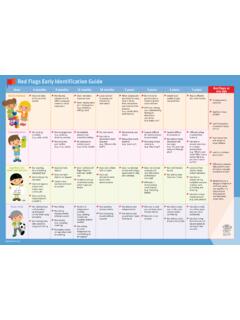
Red Flags Early Identification Guide
www.childrens.health.qld.gov.auof development. This process facilitates identification of parental concerns/questions about a child’s growth, development and activities of daily living. • A single red flag is not always an indication for concern or referral, rather the functional impact of one or more red flags on the child’s everyday functioning and participation, should
Fostering Services National Minimum Standards
assets.publishing.service.gov.uk(England) Regulations 2011 (the 2011 Regulations), form the basis of the regulatory framework under the Care Standards Act 2000 (CSA) for the conduct of fostering services. The values statement below explains the important principles which underpin ... Foster carers have a right to full information about the child. 3

DfE and ACPO drug advice for schools - GOV.UK
assets.publishing.service.gov.ukacademies, free schools, independent schools, sixth form colleges, Pupil Referral Units (PRUs) and other forms of alternative education provision. It may also be useful for: ... parents/carers, staff, governors and partner agencies. ... Most are pro-active in the early identification of children’s and young

Multi-Agency Safeguarding Thresholds Guidance
proceduresonline.com}}If you suspect that the parents/carers may be misusing substances, contact the Drug and Alcohol Action Team on 020 7356 4594/5488}}If child protection concerns emerge, discuss with your agency’s child protection lead/nominated safeguarding children advisor and/or phone the MASH on 020 7364 5601/5606 LEVEL 3}}Use the EHA to make a MASH referral

NICE decision aids: process guide
www.nice.org.uk5.1 Topic identification Potential topics for decision aids are identified during guidance scoping and development. Developers and committees are asked to identify preference-sensitive decision points as they develop the guidance. If they think that a decision aid could be useful, they complete the decision aid referral form (see appendix A).
The Nottinghamshire and Nottingham Guidelines for Care in ...
www.nottsapc.nhs.ukIdentification of patient in the last year of life using Gold Standards Framework prognostic indicators in primary care, secondary care, hospice or care home. PATIENT ReSPECT (Recommended Summary Plan for Emergency Care and Treatment Advance Care Plan Gold Standards Framework CARER PROGNOSIS Carers Needs Assessment < 1 YEAR Check …
Work health and safety guidelines - SafeWork SA
www.safework.sa.gov.auwithin the community. The range of providers, including carers, nurses, cleaners, housekeepers, property maintenance personnel and pharmacy services, highlights an increased need for guidance in managing work health and safety (WHS) challenges that arise when providing a service within homes or community settings.