
A fast learning algorithm for deep belief nets
1. There is a fast, greedy learning algorithm that can find a fairly good set of parameters quickly, even in deep networks with millions of parameters and many hidden layers. 2. The learning algorithm is unsupervised but can be ap-plied to labeled data by learning a model that generates both the label and the data. 3.
Download A fast learning algorithm for deep belief nets

Information
Domain:
Source:
Link to this page:
Documents from same domain
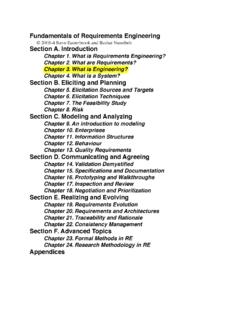
Fundamentals of Requirements Engineering …
www.cs.toronto.eduFundamentals of Requirements Engineering ... The two engineering disciplines most relevant to this book are software engineering and systems engineering.

Lecture 2 Software Re-engineering - University of …
www.cs.toronto.eduSpring 2005 ECE450H1S Software Engineering II Today … 1. Review SE process 2. Discuss Reengineering Concepts 3. Go over some case studies, a road map to our

Introduction to Operations Research
www.cs.toronto.eduIntroduction to Operations Research Deterministic Models JURAJ STACHO Department of Industrial Engineering and Operations Research
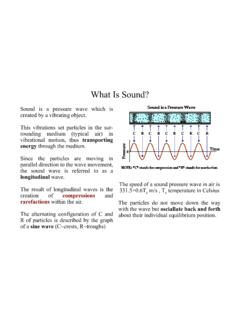
What Is Sound? - University of Toronto
www.cs.toronto.eduWhat Is Sound? Sound is a pressure wave which is created by a vibrating object. This vibrations set particles in the sur-rounding medium (typical air) in

University of Toronto Lecture 7: Why a feasibility …
www.cs.toronto.edu2 University of Toronto Department of Computer Science ©2004-5SteveEasterbrook.Thispresentationisavailablefreefor non-commercialusewithatribution underacreativecommonslicense. 5

Proposed Design of an Inventory ... - University of …
www.cs.toronto.eduProposed Design of an Inventory Database System at Process Research ORTECH System Design Prepared by Andrew Ramadeen Manojav Sridhar Kunendran Deivendran
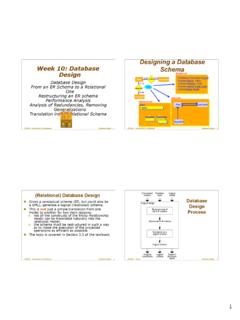
Designing a Database Week 10: Database Schema …
www.cs.toronto.eduOperational DB (OLTP - On-Line Transaction Processing) CSC343 – Introduction to Databases Database Design — 8 ... [CASE = Computer-Aided Software Engineering] CSC343 – Introduction to Databases Database Design — 46 Logical Design witha CASE Tool. Title: 10_DBDesignStG.ppt Author:
XSLT: Using XML - University of Toronto
www.cs.toronto.edu1 XSLT: Using XML to transform other XML files Introduction to databases CSC343 Fall 2011 Ryan Johnson Thanks to Manos Papagelis, John Mylopoulos, Arnold Rosenbloom
XSL - University of Toronto
www.cs.toronto.edu– XSLT is a language for transforming XML documents into other XML documents – XSLT is designed to be used independently of XSL. • However, XSLT is not intended as a completely general-purpose XML transformation language. • Rather it is designed primarily for the kinds of transformations

CSC340S - Information Systems Analysis and Design
www.cs.toronto.educsc340 Information Systems Analysis and Design page 3/18 b. Using Prototyping tools c. Purchasing a software application package
Related documents

Learning Deep Features for Discriminative Localization
cnnlocalization.csail.mit.educombine multiple-instance learning with CNN features to localize objects. Oquab et al [15] propose a method for transferring mid-level image representations and show that some object localization can be achieved by evaluating the output of CNNs on multiple overlapping patches. However, the authors do not actually evaluate the localization ability.
Psychological Safety and Learning Behavior in Work Teams
web.mit.eduratory groups, has not investigated the learning processes of real work teams (cf. Argote, Gruenfeld, and Naquin, 1999). Although most studies of organizational learning have been field-based, empirical research on group learning has primar- ily taken place in the laboratory, and little research has been

Deep Reinforcement Learning with Double Q-learning
arxiv.orgusing Q-learning (Watkins, 1989), a form of temporal dif-ference learning (Sutton, 1988). Most interesting problems are too large to learn all action values in all states sepa-rately. Instead, we can learn a parameterized value function Q(s;a; t). The standard Q-learning update for the param-eters after taking action At in state St and ...

Understanding deep learning requires rethinking …
arxiv.orgstability of a learning algorithm is independent of the labeling of the training data. Hence, the concept is not strong enough to distinguish between the models trained on the true labels (small generalization error) and models trained on random labels (high generalization error). This also

Random Forests - Springer
link.springer.comfavorably to Adaboost (Y. Freund & R. Schapire, Machine Learning: Proceedings of the Thirteenth Interna- tional conference , ∗∗∗, 148–156), but are more robust with …

Contrastive Analysis and Error Analysis
stibaiecbekasi.ac.idand learning. What is Contrastive Analysis? CA is a systematic comparison between the target language and the students’ native language to know the similarities and differences between the two. The similarities are assumed to facilitate the learning of the target language, while the differences are predicted to cause learning problems.
Contrastive Analysis, Error Analysis, Interlanguage 1
wwwhomes.uni-bielefeld.dethe two languages and cultures are similar, learning difficulties will not be expected, where they are different, then learning difficulties are to be expected, and the greater the difference, the greater the degree of expected difficulty. On the basis of such analysis, it was believed, teaching materials could be tailored to

On Calibration of Modern Neural Networks
arxiv.orgwork learning, but also provide a simple and straightforward recipe for practical settings: on most datasets, temperature scaling – a single-parameter variant of Platt Scaling – is surpris-ingly effective at calibrating predictions. 1. Introduction Recent advances in deep learning have dramatically im-

The Learning with Errors Problem
cims.nyu.eduThe Learning with Errors Problem Oded Regev Abstract In this survey we describe the Learning with Errors (LWE) problem, discuss its properties, its hardness, and its cryptographic applications. 1 Introduction In recent years, the Learning with Errors (LWE) problem, introduced in [Reg05], has turned out to

On Lattices, Learning with Errors, Random Linear Codes ...
cims.nyu.eduOn Lattices, Learning with Errors, Random Linear Codes, and Cryptography Oded Regev ⁄ May 2, 2009 Abstract Our main result is a reduction from worst-case lattice problems such as GAPSVP and SIVP to a certain learning problem. This learning problem is a natural extension of the ‘learning from parity with error’ problem to higher moduli.