
Alcohol and Medication Interactions
alcohol as well as other substances; some of those enzymes, including alcohol dehydrogenase (ADH) and cytochrome P450 are described in more detail in the section “Alcohol Metabolism in the Liver.” The contribution of stomach (i.e., gastric) enzymes to first-pass alcohol metabolism, however, is controversial. Whereas some researchers have pro-
Download Alcohol and Medication Interactions

Information
Domain:
Source:
Link to this page:
Documents from same domain
Alcohol and your health - National Institutes of …
pubs.niaaa.nih.gov“It emphasized that drinking is not bad in and of itself—it’s how much you’re doing it and how it’s affecting your life.”
Risky Drinking Can Put a Chill on Your Summer Fun
pubs.niaaa.nih.govSummer is a wonderful time for outdoor activities with family and friends. For many people, a day at the beach, on the boat, or at a backyard barbecue will include drinking alcoholic beverages.
The Role of Nurses in Care - National Institutes of …
pubs.niaaa.nih.govThe Role of Nurses in Primary Care Managing AlcoholAbusing Patients E LEANOR J. S ULLIVAN, P H ... Information on the patient’s combined characteristics forms the basis of ... ing client education, screening, and refer ral if needed (Shenk in press).
The Neurobiology of Addiction
pubs.niaaa.nih.govneurobiology. The Neurobiology of Addiction An Overview AMANDA J. ROBERTS, PH.D., AND GEORGE F. KOOB, PH.D. Addiction can be defined in part as a compulsion to use alcohol or other drugs and the occurrence of withdrawal symptoms when long-term consumption ceases. In
Neurobiology of Alcohol Dependence
pubs.niaaa.nih.govNeurobiology of Alcohol Dependence greater than 0.08 percent within a 2 hour period, may be associated with dependence (NIAAA 2004 b). Models
Stages of Change Readiness and Treatment Eagerness …
pubs.niaaa.nih.govEagerness Scale (SOCRATES) BRIEF DESCRIPTION The SOCRATES is a 19-item, self-administered instrument designed to assess client motivation to change drinking-related behavior.
Alcohol Alert Number 86 - National Institutes of Health
pubs.niaaa.nih.govAlcohol Alert Number 86 ch e human genetic makeup (the genome) decoded and genetic testing ... The altered epigenetics caused by alcohol may play a role in alcohol-induced fatty liver and the progression of liver cancer, and may contribute to widespreadchanges in other organs.
Focus on: Epigenetics and Fetal Alcohol Syndrome
pubs.niaaa.nih.govFOCUS ON: EPIGENETICS AND FETAL ALCOHOL SPECTRUM DISORDERS homocysteine cycle, methionine is activated to SAM, ultimately resulting in the formation of homocysteine.
Cognitive-Behavioral Coping-Skills Therapy for Alcohol ...
pubs.niaaa.nih.govCognitive-Behavioral Coping-Skills Therapy for Alcohol Dependence Current Status and Future Directions Richard Longabaugh, Ed.D., and Jon Morgenstern, Ph.D. Cognitive-behavioral coping-skills training (CBST) is an alcoholism treatment approach aimed

Semi-Structured Assessment for the Genetics of Alcoholism ...
pubs.niaaa.nih.govSemi-Structured Assessment for the Genetics of Alcoholism (SSAGA-II) BRIEF DESCRIPTION TARGET POPULATION The SSAGA-II was designed to assess the physical, psychological, and social manifestations of alcohol abuse or dependence and other psychiatric disorders. It is is a polydiagnostic instrument that assesses somatization
Related documents

AUDIT-C Questionnaire
anthc.org1. Within the past year, how often did you have a drink of alcohol? a. Never b. Monthly (e.g. Special occasions/Rare) c. 2-4 times a month (e.g. 1x on weekend - “Fridays only” or “every other Thursday”) d. 2-3 times a week (e.g. weekends – Friday-Saturday or Saturday-Sunday) e.
Alcohol and the Immune System
pubs.niaaa.nih.govOther Infections Alcohol abusers are more susceptible than non-abusers to other infections, such as septicemia, which is an infections of the circulating blood. In some cases, septicemia is caused by bacterial spread from pneumonia. Other infections that may lead to septicemia in the alcohol abuser include urinary tract infections and bacterial
Alcohol Use and Your Health
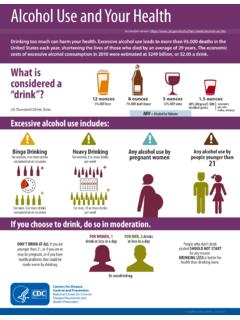
www.cdc.govExcessive alcohol use has immediate effects that increase the risk of many harmful health conditions. These are most often the result of binge drinking. Over time, excessive alcohol use can lead to the development of chronic diseases and other serious problems. Short-term health risks Injuries • Motor vehicle crashes • Falls • Drownings ...

Driving Under the Influence of or until you go to trial ...
www.dmv.virginia.govthe time of your arrest. In other words, you could end up with a criminal record because of a DUI arrest. If you are under age 21, you cannot purchase, possess or consume alcohol. If law enforcement stops you while driving after illegal consumption of alcohol, you are subject to administrative license suspension (ALS). If you are
General Recommendations References
www.faa.govalcohol consumed. In other words, whether a person consumes a few or many drinks, the rate of elimination of alcohol from the body is essentially the same. Therefore, the more alcohol an individual consumes, the longer it takes the body to get rid of it. • Even after complete elimination of all of the alcohol in

Making the Connection: Trauma and Substance Abuse
www.nctsn.orgexposure and traumatic stress symptoms. This theory suggests that youth turn to alcohol and other drugs to manage the intense flood of emotions and traumatic reminders associated with traumatic stress or PTSD, or to numb themselves from the experience of any intense emotion, whether positive or negative.