Appendix B: Work Breakdown Structure (WBS) - NASA
Core Financial System. In addition to the NASA Core Financial System requirements, projects must submit data into the CADRe system under the CADRe WBS format, shown at right. Thesedata are used by the Agency for reference in future cost estimates. Construction of a project WBS that mirrors or easily maps to the CADRe structure will
Download Appendix B: Work Breakdown Structure (WBS) - NASA

Information
Domain:
Source:
Link to this page:
Documents from same domain

Q: What do you do on the International Space …
www.nasa.govQ: What do you do on the International Space Station (ISS)? A: Astronauts and cosmonauts on the space station stay busy.There’s lots of work to operate the many science experiments on board.
NEPA RECORD OF ENVIRONMENTAL …
www.nasa.govDec 13, 2012 · JSC Form 1119 (Revised January 25, 2011)(MS Word October 2010) NEPA RECORD OF ENVIRONMENTAL CONSIDERATION (REC) Complete this form if you answered “yes” or “unknown” on any JF 1138 entries and if
Use of XSLT to transform the output of multiple …
www.nasa.govNASA IV&V International Workshop 2014 1 Use of XSLT to transform the output of multiple Static Code Analysis tools into a consistent analysis spreadsheet format

International Space Station Activity Book
www.nasa.govNational Aeronautics and Space Administration . Grades K-5 . This activity book belongs to: International Space Station Activity Book >>> For more information, check out the web sites on page 30!
Gravity, Who Needs It
www.nasa.govGravity, Who Needs It? ... six months on the space station versus three years on a Mars mission? No. ... human, being more isolated ...
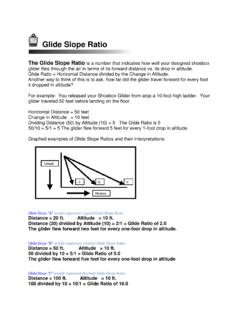
Glide Slope Ratio
www.nasa.govGlide Slope Ratio The Glide Slope Ratio is a number that indicates how well your designed shoebox glider flies through the air in terms of its forward distance vs. its drop in altitude. Glide Ratio = Horizontal Distance divided by the Change in Altitude.
Modeling, SiMulation, inforMation technology & …
www.nasa.govTA11-1 exeCuTive Summary Figure 1 is an initial draft strategic roadmap for the Modeling, Simulation, Information Technol-ogy and Processing Technology Area.
NASA Technology Roadmaps
www.nasa.gov2015 NASA Technology Roadmaps TA 11: Modeling, Simulation, Information Technology, and Processing TA 11- 2 July 2015 Foreword NASA is leading the way with a balanced program of space exploration, aeronautics, and science research.

A Journey to Inspire, Innovate, and Discover
www.nasa.govReport of the President’s Commission on 2 Implementation of United States Space Exploration Policy Transmittal Letter June 4, 2004 The Honorable George W. Bush
National Aeronautics and Space Administration Headquarters
www.nasa.govGEMS is a Category 3 project (less than $250M) in Phase B, and was requesting transition from Formulation to Implementation (Phase C) where the official Agency baseline is established and external commitments are made
Related documents

Cadre Management System - cscms.nic.in
cscms.nic.inThe Web Based Cadre Management System (WBCM) as the name suggests is a web based system meaning that the system is accessible on the Internet. The system can be accessed by using any browser such as Microsoft Internet Explorer, Google Chrome, …

DELIBERATE RISK ASSESSMENT WORKSHEET - cacadets.org
cacadets.orgCadre L +-LCC - High Ropes, Alpine Tower, & Carolina T-Wall Muscle strain and joint/connective tissue pulls L Proper warm-up. Stretching routine before events. CLS on site. How: Cadre will ensure hydration Who: Cadre L +-Dehydration and sunburn L Cadets will keep canteens filled from water source at all times. Will monitor urine and body for ...

A Framework for OFAC Compliance Commitments
home.treasury.govSenior Management’s commitment to, and support of, an organization’s risk-based SCP is one of the most important factors in determining its success. This support is essential in ensuring the SCP receives adequate resources and is fully integrated into the organization’s daily operations,
Risk Management Framework for Information Systems ... - NIST
nvlpubs.nist.govcost-effective, risk management decisions about the systems supporting their missions and business functions; and incorporates security and privacy into the system development life cycle. Executing the RMF tasks links essential risk management processes at the system level to risk management process es at the organization level.

The Status of Theory in Emergency Management - FEMA
training.fema.govorganizations. The Incident Management System is probably the most well-known model for practitioners in emergency management. It shows how unified command may take place among many organizations, while also illustrating how individuals in an agency (or multiple agencies) may fall under planning, operations, logistics and finance/records sections.
Acronyms Abbreviations &Terms - FEMA
www.fema.govAIMS 1) Arson Information Management System . 2) Automated Inventory Management System AIP 1) Agreement In Principle 2) Airport Improvement Program . 3) Assisted Imaging Processing AIPC All Indian Pueblo Council AIREP Aircraft Report AIS 1) Automated Information System . 2) Automatic Identiication System . AIT Aeromedical Isolation Team
Sendai Framework for Disaster Risk Reduction 2015 - 2030
www.preventionweb.net2. Resilience is defined as: “The ability of a system, community or society exposed to hazards to resist, absorb, accommodate to and recover from the effects of a hazard in a timely and efficient manner, including through the preservation and restoration of its essential basic structures and functions”, United Nations Office for Disaster Risk