Arterial Line Management
Obstetric observation chart MR285. Arterial line m anagement Page 6 of 17 Obstetrics & Gynaecology Flushing and monitoring ... Key points 1. Observe4,7: Hand hygiene before and after any manipulation of vascular access devices or catheter sites.2,4 See Infection Control Manual: Hand Hygiene. An aseptic technique 2,4,6 Standard ...
Download Arterial Line Management

Information
Domain:
Source:
Link to this page:
Documents from same domain
Hypertension in Pregnancy: Medical Management of
www.kemh.health.wa.gov.auHypertension: Medical management Page 4 of 26 Obstetrics & Gynaecology Recording Blood pressure in pregnancy The woman should be seated comfortably with her legs resting on a flat surface.
Neonatal Abstinence Syndrome (NAS) - kemh.health.wa.gov.au
www.kemh.health.wa.gov.auNeonatal Abstinence Syndrome (NAS) Page 6 of 15 Neonatal Directorate symptoms, adequacy of feeding, adequacy of weight gain (or severity of weight loss) and non-pharmacological interventions.
Skin Care Guidelines - kemh.health.wa.gov.au
www.kemh.health.wa.gov.auSkin Care Guidelines Page 2 of 11 Neonatal Directorate Key Points All infants admitted to the NICU must have both a skin assessment condition score, and a pressure injury …
Pregnancy: First Trimester Complications
www.kemh.health.wa.gov.auIncidence rates for ectopic pregnancy are between 1 in 200-500 pregnancies5. Gestational trophoblastic disease or molar pregnancy is rare occurring between 1 in 1000 pregnancies but is important to consider in assessment5. Support, follow up and access to counselling is an important part of care for women who experience pregnancy loss.
Niki t34 syringe pump: continuous subcutaneous infusion ...
www.kemh.health.wa.gov.auNiki t34 syringe pump: Continuous subcutaneous infusion management Page 7 of 10 Gynaecology 7. Complete the medication additive label and place on the extension line. Do not put the label on the syringe or any part of the pump (this alters the syringe diameter and the volume will be miscalculated by the pump). 8.
Measuring central venous pressure (CVP)
www.kemh.health.wa.gov.audevices or catheter sites3. See Infection Prevention and Management, Hand Hygiene policy An aseptic technique Standard precautions. See Infection Prevention and Management Manual ... prevention of intravascular catheter-related infections, 2011: Centres for Disease Control and Prevention (CDC); 2017 update. Available from:
CLINICAL PRACTICE GUIDELINE Oxygen Therapy
www.kemh.health.wa.gov.au• The use of oxygen therapy during labour in normoxic women has been associated with acidosis of cord blood Posture and oxygenation ... or the diluter jet is obstructed. The latter may be caused by clothing and can be prevented by the use of a protective hood over the jet diluter.
Antenatal care schedule - King Edward Memorial Hospital ...
www.kemh.health.wa.gov.auThe FTS includes blood collection at 9-13 weeks gestation (ideally 9-12 weeks) for biochemical analysis combined with ultrasound measurement of fetal nuchal translucency (between 11 to 13 weeks gestation. Blood collected for MSS is obtained at 14 to 20 weeks gestation (ideally between 15-17 weeks) for biochemical analysis .
Perineal care and repair (including perineal protection ...
www.kemh.health.wa.gov.au3 Cutting an episiotomy 3.1 Insert the index and middle finger in between the presenting part and the perineum, pointing downwards. Take the open scissors and position between the fingers, over the area intended for incision. Ensure there is good vision of the perineum and the incision is away from the anus and Bartholin’s gland.
Anaemia and iron deficiency in pregnancy and postpartum
www.kemh.health.wa.gov.auanaemia and/or iron deficiency may experience fatigue, reduced energy levels and reduced mental performance. Severe anaemia is associated with preterm birth, low birth weight, and a small for gestational age fetus. In the postpartum period both anaemia and iron deficiency have been found to be linked to depression, emotional
Related documents
UNITED STATES ARMY MEDICAL DEPARTMENT
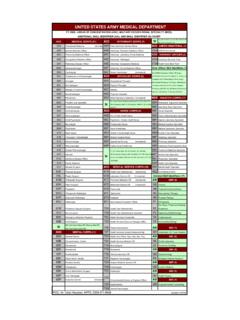
dmna.ny.gov61A Nephrologist 66G Obstetric-Gynecologic Nurse 68M Nutrition Care Specialist ... 61W Peripheral Vascular Surgeon 70A Health Care Administrator P2 Ear, Nose, Throat and Hearing Readiness 61Z Neurosurgeon 70B Health Care Administrative Assistant P3 Optometry/Ophthalmology
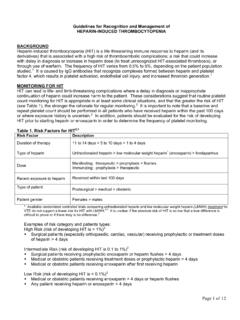
Heparin-induced thrombocytopenia Guideline
www.healthcare.uiowa.eduSurgical patients (especially orthopaedic, cardiac, vascular) receiving prophylactic or treatment doses of heparin > 4 days Intermediate Risk (risk of developing HIT is 0.1 to 1%)2 ... Medical or obstetric patients receiving enoxaparin > 4 days or heparin flushes

Fetal Physiology in relation to Electronic Fetal ...
www.england.nhs.uk32 oxia 5 The fetus lives in a relatively hypoxic environment (arterial oxygen sats at the start of labour are 70%) This can drop to 30% with uterine activity The placenta is the respiratory organ for the fetus Unlike adults, a fetus has 18-22g of fetal haemoglobin (HbF) which help increase the oxygen carrying capability of fetal blood
LUPUS ERITEMATOSO SISTÉMICO y EMBARAZO 1. …
medicinafetalbarcelona.org- Las pacientes con antecedentes recurrentes de insuficiencia vascular placentaria como muerte intrauterina, PE grave precoz, síndrome HELLP o retraso crecimiento intrauterino (RCIU) a pesar de tratamiento con aspirina y heparina, presentan un riesgo elevado de recurrencia de complicaciones obstétricas.