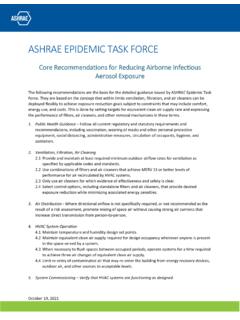
ASHRAE EPIDEMIC TASK FORCE
3. Air Distribution - Where directional airflow is not specifically required, or not recommended as the result of a risk assessment, promote mixing of space air without causing strong air currents that increase direct transmission from person-to-person. 4. HVAC System Operation 4.1 Maintain temperature and humidity design set points.
Download ASHRAE EPIDEMIC TASK FORCE

Information
Domain:
Source:
Link to this page:
Documents from same domain
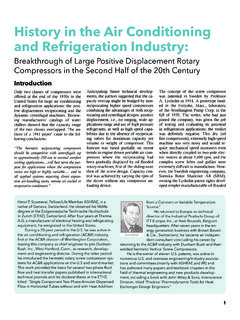
History in the Air Conditioning and Refrigeration …
www.ashrae.org1. Introduction. Only two classes of compressors were offered at the end of the 1950s in the . United States for large air conditioning and refrigeration applications: the posi-
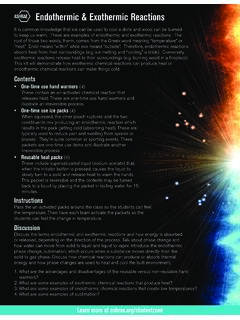
Endothermic & Exothermic Reactions - ASHRAE
www.ashrae.orgexothermic reactions release heat to their surroundings (e.g. burning wood in a fireplace). This kit will demonstrate how exothermic chemical reactions can produce heat or endothermic chemical reactions can make things cold.
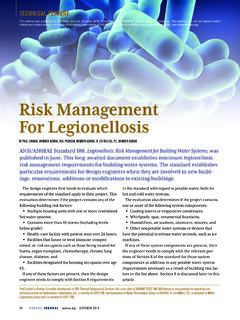
Risk Management For Legionellosis - ashrae.org
www.ashrae.orgstandard for legionellosis risk management of building water systems was produced. The document is written in code language, so that it can be adopted as desired by government bodies (see “NYC Responds to Outbreak” sidebar). ASHRAE standards are otherwise voluntary.
TOOL FOR ENERGY EFFICIENT BUILDING ENVELOPE ... - …
www.ashrae.orgTOOL FOR ENERGY EFFICIENT BUILDING ENVELOPE RETROFITTING Bandana Jha1 and Dr.Bishwajit Bhattacharjee2. 1. Architect and Research Scholar, Department of Civil Engineering, IIT, Delhi, India . 2. ... Walls are a prominent faction of a building envelope and are expected to provide thermal and acoustic comfort within a building, without ...
Classification of Laboratory Design Levels - ashrae.org
www.ashrae.orgASHRAE Technical Committee 9.10, Laboratory Systems Laboratory Classification Subcommittee In partnership with American Chemical Society ... This guide does not provide the means to assess the risk associated with air-borne chemical hazards, the risk of exposure to other laboratory hazards, or the
Standard Method of Test for the Evaluation of Building ...
www.ashrae.orgSociety of Heating, Refrigerating and Ai r-Conditioning Engineers (ASHRAE). Consensus is defined by the American National Standa rds Institute (ANSI), of which ASHRAE is a member and which has a pproved this standard as an ANS, as “substantial agreement reached
Addendum a to ANSI/ASHRAE/ACCA Standard 180-2008
www.ashrae.orgthe Air Conditioning Contractors of America on November 18, 2011; and by the American National Standards Institute on Janu- ary 26, 2012. This addendum was approved by a Standing Standard Project Committee (SSPC) for which the Standards Committee has estab-
ASHRAE Technical FAQ
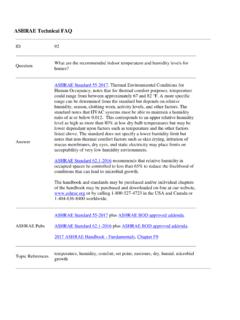
www.ashrae.orgASHRAE Technical FAQ ID 92 Question What are the recommended indoor temperature and humidity levels for homes? Answer ASHRAE Standard 55-2017, Thermal Environmental Conditions for
ASHRAE Technical FAQ
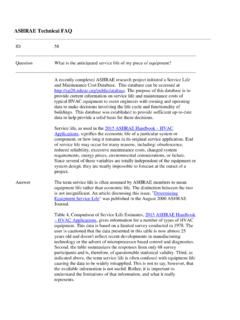
www.ashrae.orgASHRAE Technical FAQ ID 58 Question What is the anticipated service life of my piece of equipment? Answer A recently completed ASHRAE research project initiated a Service Life
Ammonia as a Refrigerant - ashrae.org
www.ashrae.orgThe ASHRAE Position Document on “Ammonia as a Refrigerant” was developed by the Society’s Refrigeration Committee. Position Document Committee formed on January 8, …
Related documents
Why Measure Carbon Dioxide Inside Buildings?
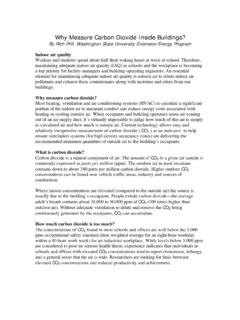
www.energy.wsu.edu1. American Society of Heating Refrigerating, and Air Conditioning Engineers (ASHRAE). 1992. ASHRAE Standard 62: Ventilation for Acceptable Indoor Air Quality. Atlanta, GA. 2. ASTM Standard D-6245 – 98 Using Indoor Carbon Dioxide Concentrations to Evaluate Indoor Air Quality and Ventilation 3.

Centralized Vs Decentralized Air Conditioning Systems
seedengr.comtemperature of the indoor air. The activity level, age, and physiology of each person affect the thermal comfort requirements of that individual. The American Society of Heating, Refrigerating, and Air-Conditioning Engineers (ASHRAE) Standard 55-1981 describes the temperature and humidity ranges that are comfortable for most
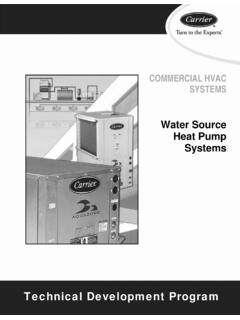
Water Source Heat Pump Systems - Sigler Commercial
siglercommercial.comOct 04, 2017 · system typically requires a dedicated outdoor air unit to maintain required ventilation levels as specified by ASHRAE (American Society of Heating, Refrigerating, and Air Conditioning Engineers) Standard 62.1. This TDP module will examine the various ways to deliver ventilation air.
BUSINESSOWNERS COVERAGE FORM
d1d8ou94pt3tsf.cloudfront.netlighting, heating, ventilation, air conditioning j. Animals, unless owned by others and boarded by you, or if owned by you, only as 3. Covered Causes Of Loss Direct physical loss unless the loss is excluded or limited under Section I – Property. 4. Limitations …

ASHRAE Position Document on Infectious Aerosols
www.ashrae.orgApr 14, 2020 · through the air is sufficiently likely that airborne exposure to the virus should be controlled. Changes to building operations, including the operation of heating, ventilating, and air-condi-tioning systems, can reduce airborne exposures. Statement on operation of heating, ventilating, and air-conditioning systems to

School Ventilation
www.centerforhealthsecurity.orgMay 26, 2021 · ASHRAE, formerly the American Society of Heating, Refrigerating and Air-Conditioning Engineers, is a professional association seeking to advance heating, ventilation, air conditioning, and refrigeration systems design and construction. The society and its members focus on building systems, energy efficiency, indoor air quality, refrigeration,
Radiation Therapy Design Guide - Veterans Affairs
www.cfm.va.govAmerican Society of Heating Refrigerating & Air-Conditioning Engineers . BGSF : Building Gross Square Feet . BTU : British Thermal Unit . ... Heating, Ventilating and Air Conditioning . IAQ : Indoor Air Quality . IBC : ... Sheet Metal and Air Conditioning Contractor’s National Association : SqM .
Heating, ventilation and air-conditioning systems in the ...
www.ecdc.europa.eurequired air exchanges during customary use are proposed by the American Society of Heating Refrigerating and Air-Conditioning Engineers (ASHRAE) as 7-10 L/s per person [33] . The Federation of European H eating, Ventilation and Air Conditioning Associations (REHVA) recommends ensuring the minimum number of air
Residential HVAC Installation Practices - Energy
www.energy.govACCA Air Conditioning Contractors of America AFUE Annual Fuel Utilization Efficiency ASHP Air-Source Heat Pump ASHRAE American Society of Heating, Refrigerating and Air-Conditioning Engineers BPM Brushless Permanent Magnet CAC Central Air Conditioning
Thermal Comfort (Relative Humidity (RH) and Air …
www7.nau.eduThe American Society of Heating, Refrigerating, and Air Conditioning Engineers, Inc (ASHRAE) provides guidelines that are intended to satisfy the majority of building occupants wearing a normal amount of clothing while working at a desk. The ASHRAE guidelines recommend 68 F to 74 F in the winter and 72 F to 80 F in the summer. The