
ASHRAE Technical FAQ
Cognizant ASHRAE Committees Refer to Organization 1 TC 4.3 ASTM 2 SSPC 62.1 3 4 5 . Title: ID Number: Author: shammerling Created Date: 5/8/2019 3:44:01 PM ...
Download ASHRAE Technical FAQ

Information
Domain:
Source:
Link to this page:
Documents from same domain
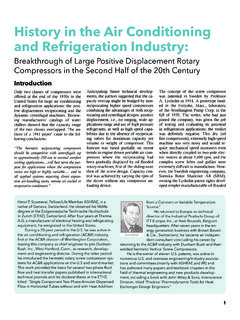
History in the Air Conditioning and Refrigeration …
www.ashrae.org1. Introduction. Only two classes of compressors were offered at the end of the 1950s in the . United States for large air conditioning and refrigeration applications: the posi-
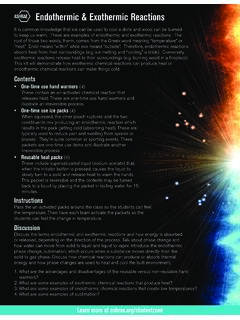
Endothermic & Exothermic Reactions - ASHRAE
www.ashrae.orgexothermic reactions release heat to their surroundings (e.g. burning wood in a fireplace). This kit will demonstrate how exothermic chemical reactions can produce heat or endothermic chemical reactions can make things cold.
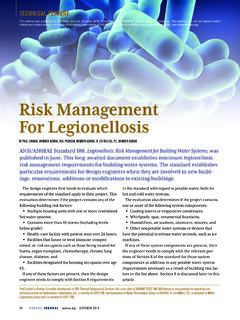
Risk Management For Legionellosis - ashrae.org
www.ashrae.orgstandard for legionellosis risk management of building water systems was produced. The document is written in code language, so that it can be adopted as desired by government bodies (see “NYC Responds to Outbreak” sidebar). ASHRAE standards are otherwise voluntary.
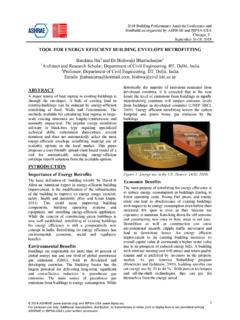
TOOL FOR ENERGY EFFICIENT BUILDING ENVELOPE ... - …
www.ashrae.orgTOOL FOR ENERGY EFFICIENT BUILDING ENVELOPE RETROFITTING Bandana Jha1 and Dr.Bishwajit Bhattacharjee2. 1. Architect and Research Scholar, Department of Civil Engineering, IIT, Delhi, India . 2. ... Walls are a prominent faction of a building envelope and are expected to provide thermal and acoustic comfort within a building, without ...
Classification of Laboratory Design Levels - ashrae.org
www.ashrae.orgASHRAE Technical Committee 9.10, Laboratory Systems Laboratory Classification Subcommittee In partnership with American Chemical Society ... This guide does not provide the means to assess the risk associated with air-borne chemical hazards, the risk of exposure to other laboratory hazards, or the
Standard Method of Test for the Evaluation of Building ...
www.ashrae.orgSociety of Heating, Refrigerating and Ai r-Conditioning Engineers (ASHRAE). Consensus is defined by the American National Standa rds Institute (ANSI), of which ASHRAE is a member and which has a pproved this standard as an ANS, as “substantial agreement reached
Addendum a to ANSI/ASHRAE/ACCA Standard 180-2008
www.ashrae.orgthe Air Conditioning Contractors of America on November 18, 2011; and by the American National Standards Institute on Janu- ary 26, 2012. This addendum was approved by a Standing Standard Project Committee (SSPC) for which the Standards Committee has estab-
ASHRAE Technical FAQ
www.ashrae.orgASHRAE Technical FAQ ID 92 Question What are the recommended indoor temperature and humidity levels for homes? Answer ASHRAE Standard 55-2017, Thermal Environmental Conditions for
ASHRAE Technical FAQ
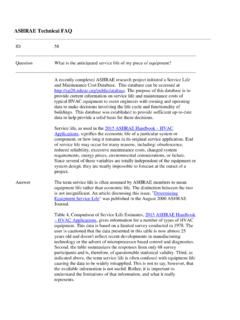
www.ashrae.orgASHRAE Technical FAQ ID 58 Question What is the anticipated service life of my piece of equipment? Answer A recently completed ASHRAE research project initiated a Service Life
Ammonia as a Refrigerant - ashrae.org
www.ashrae.orgThe ASHRAE Position Document on “Ammonia as a Refrigerant” was developed by the Society’s Refrigeration Committee. Position Document Committee formed on January 8, …
Related documents

Standards for Accreditation
www.dni.govcoordination with Accrediting Officials (AO) and Cognizant Security Authorities (CSA). a. A letter of accreditation is a formal statement on behalf of the IC element head indicating that a facility has been designed, constructed, inspected, and certified for the protection of all Sensitive Compartmented

Recruiting for Diversity - Harvard University
hr.fas.harvard.eduin the outreach and recruitment of women and minorities. But at least equally important, recruiting a diverse staff is essential to our sustainability—for your department, for the FAS, and for Harvard—for the following

Teaching Statement - Harvard University
scholar.harvard.eduAlthough I will often use a current topic of interest to motivate a lecture, I am also cognizant of the importance of clearly articulating the core principles that can help students both analyze the particular application I am addressing as well as be able to apply the concept to other situations that may be relevant to them.