
ASHRAE Technical FAQ
from 300 to 500 ppm. Thus indoor CO 2 concentrations of 1000 to 1200 ppm in spaces housing sedentary people is an indicator that a substantial majority of visitors entering the space will be satisfied with respect to human bioeffluents (body odor). Note however that CO 2 concentration is
Download ASHRAE Technical FAQ

Information
Domain:
Source:
Link to this page:
Documents from same domain
History in the Air Conditioning and Refrigeration …
www.ashrae.org1. Introduction. Only two classes of compressors were offered at the end of the 1950s in the . United States for large air conditioning and refrigeration applications: the posi-
Endothermic & Exothermic Reactions - ASHRAE
www.ashrae.orgexothermic reactions release heat to their surroundings (e.g. burning wood in a fireplace). This kit will demonstrate how exothermic chemical reactions can produce heat or endothermic chemical reactions can make things cold.
Risk Management For Legionellosis - ashrae.org
www.ashrae.orgstandard for legionellosis risk management of building water systems was produced. The document is written in code language, so that it can be adopted as desired by government bodies (see “NYC Responds to Outbreak” sidebar). ASHRAE standards are otherwise voluntary.
TOOL FOR ENERGY EFFICIENT BUILDING ENVELOPE ... - …
www.ashrae.orgTOOL FOR ENERGY EFFICIENT BUILDING ENVELOPE RETROFITTING Bandana Jha1 and Dr.Bishwajit Bhattacharjee2. 1. Architect and Research Scholar, Department of Civil Engineering, IIT, Delhi, India . 2. ... Walls are a prominent faction of a building envelope and are expected to provide thermal and acoustic comfort within a building, without ...
Classification of Laboratory Design Levels - ashrae.org
www.ashrae.orgASHRAE Technical Committee 9.10, Laboratory Systems Laboratory Classification Subcommittee In partnership with American Chemical Society ... This guide does not provide the means to assess the risk associated with air-borne chemical hazards, the risk of exposure to other laboratory hazards, or the
Standard Method of Test for the Evaluation of Building ...
www.ashrae.orgSociety of Heating, Refrigerating and Ai r-Conditioning Engineers (ASHRAE). Consensus is defined by the American National Standa rds Institute (ANSI), of which ASHRAE is a member and which has a pproved this standard as an ANS, as “substantial agreement reached
Addendum a to ANSI/ASHRAE/ACCA Standard 180-2008
www.ashrae.orgthe Air Conditioning Contractors of America on November 18, 2011; and by the American National Standards Institute on Janu- ary 26, 2012. This addendum was approved by a Standing Standard Project Committee (SSPC) for which the Standards Committee has estab-
ASHRAE Technical FAQ
www.ashrae.orgASHRAE Technical FAQ ID 92 Question What are the recommended indoor temperature and humidity levels for homes? Answer ASHRAE Standard 55-2017, Thermal Environmental Conditions for
ASHRAE Technical FAQ
www.ashrae.orgASHRAE Technical FAQ ID 58 Question What is the anticipated service life of my piece of equipment? Answer A recently completed ASHRAE research project initiated a Service Life
Ammonia as a Refrigerant - ashrae.org
www.ashrae.orgThe ASHRAE Position Document on “Ammonia as a Refrigerant” was developed by the Society’s Refrigeration Committee. Position Document Committee formed on January 8, …
Related documents

Colt Series C300 (Colt 300), C300N (Colt 300N) - Watts
media.wattswater.comBefore installing standard material product, consult your local water authority, building and plumbing codes.! ... Post indicator plate and operating nut available — consult factory* *Consult factory for dimensions ... 0 100 0200 300 400 500 600 700 800 gpm 0 380 760 11401520190022802660 3040 lpm
HARDNESS (2340)/EDTA Titrimetric Method 2-37 2340 …
beta-static.fishersci.comindicator probably is at fault. d. Standard EDTA titrant, 0.01M: Weigh 3.723 g analytical reagent-grade disodium ethylenediaminetetraacetate dihydrate, also called (ethylenedinitrilo)tetraacetic acid disodium salt (EDTA), dissolve in distilled water, and dilute to 1000 mL. Standardize against standard calcium solution (¶ 2e) as described in ...

Red Cabbage Indicator - NCSU
projects.ncsu.edu1. To prepare the red cabbage indicator, blend ¼ head of red cabbage in 300 mL of tap water. Strain the resulting mixture. This mixture can be used directly or stored for future use (for long term storage add 1% rubbing alcohol and refrigerating the solution). If used directly, this purple solution serves as the “pH 7” standard. 2.
Cryogenic Standard Tanks - Linde Engineering
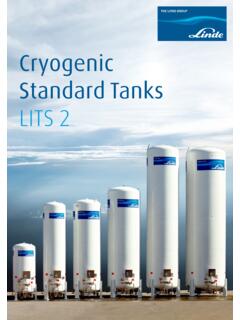
www.linde-engineering.comDischarge capacity with standard pressure building coil at 0,7 x MAWP and 8 hours operating time pressure stage 18 bar m3/h (1 bar, 15°C) LIN 150 300 300 600 600 600 m3/h (1 bar, 15°C) LOX 190 380 380 750 750

ANSUL RESTAURANT MODEL R-102 FIRE (STANDARD …
www.mideng.net1.1.1.1 UL Standard 1254 1.1.1.2 UL Standard 300 1.1.2 National Fire Protection Association (NFPA) 1.1.2.1 NFPA 96 1.1.2.2 NFPA 17A 1.2 Submittals ... The cover shall contain an opening for a visual status indicator. It shall be compatible with mechanical gas shut-off devices; or, when equipped with a field or factory- ...

USAID BUREAU FOR HUMANITARIAN ASSISTANCE …
www.usaid.govSHELTER AND SETTLEMENTS 300 NATURAL HAZARDS AND TECHNOLOGICAL RISKS 328 WATER, SANITATION, AND HYGIENE 345 PERFORMANCE INDICATOR REFERENCE SHEETS - KEYWORD INDICATORS 441 PERFORMANCE INDICATOR REFERENCE SHEET TEMPLATE FOR CUSTOM INDICATORS 448 . BHA Indicator Handbook – Page 2 ... **Note …

RESOLUTION MEPC.300(72) (adopted on 13 April 2018) CODE …
wwwcdn.imo.org.3 less than the following concentrations of indicator microbes, as a human health standard: .1 Toxicogenic Vibrio cholerae (serotypes O1 and O139) with less than 1 colony forming unit (cfu) per 100 mL or less than 1 cfu per 1 g (wet weight) of zooplankton samples; .2 Escherichia coli less than 250 cfu per 100 mL; and