
Benign Paroxysmal Positional Vertigo (BPPV)
VESTIBULAR.ORG Benign Paroxysmal Positional Vertigo (BPPV) By Timothy C. Hain, MD, Northwestern University Medical School, Chicago, Illinois; and the Vestibular Disorders Association Benign paroxysmal positional vertigo (BPPV) is the most common disorder of the inner ear’s vestibular system, which is a vital part of maintaining balance.
Download Benign Paroxysmal Positional Vertigo (BPPV)

Information
Domain:
Source:
Link to this page:
Documents from same domain
—An Effective, Evidence-Based Treatment
vestibular.orgPO BOX 13305 · PORTLAND, OR 97213 · FAX: (503) 229-8064 · (800) 837-8428 · INFO@VESTIBULAR.ORG · WWW.VESTIBULAR.ORG Vestibular Rehabilitation —An Effective, Evidence-Based Treatment
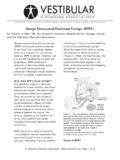
Benign Paroxysmal Positional Vertigo (BPPV)
vestibular.org© Vestibular Disorders Association www.vestibular.org Page 3 of 10 Figure 2a: Canalith repositioning procedure (CRP) for right-sided BPPV. Steps 1 & 2 of CRP are ...
Tinnitus Ringing in the Ears - Home | Vestibular …
vestibular.org© Vestibular Disorders Association www.vestibular.org Page 5 of 11 newly perceived ambient sounds or from electrical stimulation of the auditory

Vestibular Rehabilitation for Peripheral Vestibular ...
vestibular.orgThis clinical practice guideline is intended to optimize rehabilitation outcomes for persons with vestibular hypofunction undergoing vestibular physical therapy. As such,

Vestibular Rehabilitation for Peripheral Vestibular ...
vestibular.orgThis clinical practice guideline is intended to optimize reha- bilitation outcomes for persons with vestibular hypofunction undergoing vestibular rehabilitation.

Travel and Vestibular Disorders
vestibular.org© Vestibular Disorders Association www.vestibular.org Page 3 of 5 each station along your route. Pay attention to that list as you travel so

SIGNS AND SYMPTOMS OF CENTRAL VESTIBULAR DISORDERS
vestibular.orgperipheral vestibular system (the labyrinth of the inner ear, and the pathways/nerves connecting to the brainstem) or the central vestibular system (the brain and brainstem). Being able to find the vestibular system involved is key in helping the healthcare provider decide on further testing, determine the urgency of the symptoms, and develop

Persistent Postural- DISORDERS Perceptual Dizziness
vestibular.orgVestibular Balance Rehabilitation Therapy (VBRT) Vestibular/balance rehabilitation therapy works to desensitize or habituate patients to motion stimuli. In 2014, the first small study on the efficacy of VBRT specifically for PPPD patients was completed. Its results support previous clinical experience and suggest the following: • VBRT reduces ...
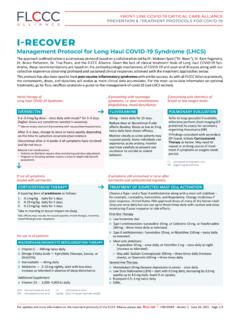
I-RECOVER | Management Protocol for Long Haul COVID-19 ...
vestibular.orgsyndrome and LHCS has been observed, and many consider post-COVID-19 to be a variant of the mast cell activation syndrome.[413] The LHCS syndrome in highly heterogenous and likely results from a variety of pathogenetic mechanisms Furthermore, it is likely that de-layed treatment (with ivermectin) in the early symptomatic phase will
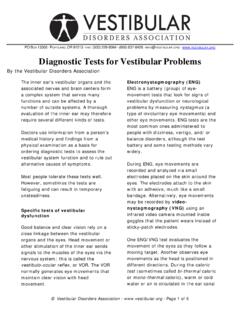
Diagnostic Tests for Vestibular Disorders - VeDA
vestibular.orgTympanometry Tympanometry helps detect the presence of fluid in the middle ear, among other problems, by examining the function of the middle ear and Eustachian tube, including the stiffness of the eardrum, when air-pressure changes are imposed through a soft probe that is inserted into the external ear canal. Acoustic-reflex testing
Related documents

NEURO-VESTIBULAR EXAMINATION
www.nanosweb.orgNeuro-Vestibular Examination David E. Newman-Toker, MD, PhD Page 2 of 12 The normal VOR response to a rapid, passive head rotation as a subject fixates on a central target is an equal and opposite eye movement that keeps the eyes stationary in space (negative h-HIT).This is sometimes referred

Vestibular Rehabilitation Exercises – Level 1
ahc.aurorahealthcare.orgVestibular Rehabilitation Exercises – Level 1, page 3 X20521 (Rev. 12/2019) ©AAHC Vertigo/Vestibular. The information presented is intended for general information and educational purposes. It is not intended to replace the advice of your health care provider. Contact your health care provider if you believe you have a health problem. 6.
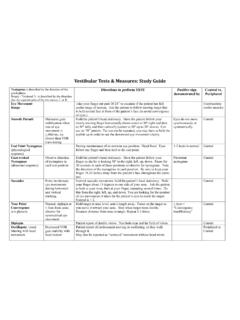
Vestibular Tests & Measures: Study Guide
geriatrictoolkit.missouri.eduVestibular hypofunction 2. Head Impulse Test. aka Head Thrust Test (eyes open: EO) The patient will need to understand what will be done so their neck is relaxed during the test. If you noted that the patient had pain or significant restriction in cervical spine mobility, this test should be performed with extreme caution or should be deferred.

Vestibular Exercises, kpeket91 - UMMC Home
umc.eduwithin the vestibular or balance system. The brain interprets information gained from the vestibular or balance system. When there is an injury or abnormality in any portion of this system, the brain must be retrained or taught to interpret correctly the information it receives. Vestibular exercises merely stimulate the vestibular apparatus.
SIGNS AND SYMPTOMS OF CENTRAL VESTIBULAR DISORDERS
vestibular.orgperipheral vestibular system (the labyrinth of the inner ear, and the pathways/nerves connecting to the brainstem) or the central vestibular system (the brain and brainstem). Being able to find the vestibular system involved is key in helping the healthcare provider decide on further testing, determine the urgency of the symptoms, and develop
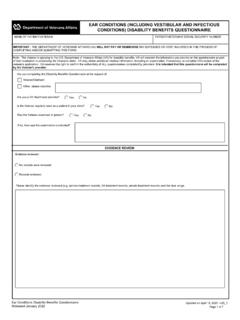
EAR CONDITIONS (INCLUDING VESTIBULAR AND …
www.benefits.va.govApr 16, 2020 · section iii - vestibular conditions 3. does the veteran have any of the following findings, signs, or symptoms attributable to meniere's syndrome (endolymphatic hydrops), a peripheral vestibular condition or another diagnosed condition from section 1?

Vestibular rehabilitation exercises - Brain and Spine
www.brainandspine.org.ukVestibular rehabilitation exercises A fact sheet for patients and carers Vestibular compensation Vestibular compensation is a process that allows the brain to regain balance control and minimise dizziness symptoms when there is damage to, or an imbalance between, the right and left vestibular organs (balance organs) in the inner ear.