
Chapter 4: Cell Membrane Structure and Function
Chapter 4: Membrane Structure and Function Types of Movement Across Membranes: 1) Passive Transport • Requires no energy • Substances move down concentration gradients A) Simple Diffusion • Small molecules pass directly through the phospholipid by-layer (e.g. CO 2, H 2O, O 2) (Figure 4.3a) Rate depends on: 1) Molecule size 2 ...
Download Chapter 4: Cell Membrane Structure and Function

Information
Domain:
Source:
Link to this page:
Documents from same domain

The Effects of High-Stakes Testing on Student Motivation ...
people.wou.eduResults from our 18 high-stakes testing states allow us to study this ques- tion. If statewide high-stakes testing policies actually improve student learning, we should see that improve- ment reflected not just in the states' own test scores but also in independent measures. For each of the 18 states, we looked at four well-respected student

EARTHQUAKES: Epicenter Determination, Seismic Waves, …
people.wou.eduBreak or rupture of rock, emanating from a focus, sending seismic waves through Earth materials 2. Primary Wave ... Epicenter Determination The epicenter of an earthquake is the point on Earth's surface at or above the ... shear strength and begin to act like a fluid. This process is called liquefaction.
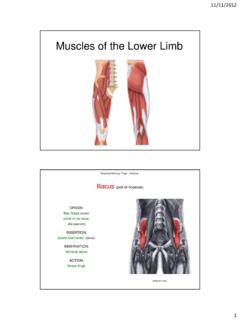
Muscles of the Lower Limb - WOU
people.wou.edufemoral nerve ACTION: flexes thigh (Anterior view) Muscles Moving Thigh - Anterior . 11/11/2012 2 Psoas major (part of iliopsoas) ORIGIN: T 12 – L 5 vertebrae ... distal phalanges 2 - 5 INNERVATION: tibial nerve ACTION: flexes toes (Posterior view) Muscles Moving Ankle / Foot / Toes - Posterior Flexor digitorum longus
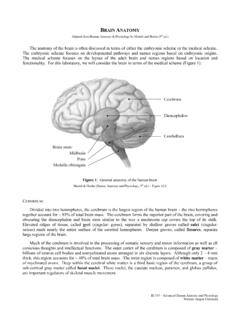
BRAIN ANATOMY - WOU
people.wou.edutracts running between the cerebrum and spinal cord. Olive Located lateral to the pyramid of the medulla oblongata; regulates impulse propagation from the cerebrum and midbrain to the cerebellum. Figure 7: Lateral view of the brain stem Marieb & Hoehn (Human Anatomy and Physiology, 9th ed.) – Figure 12.13 Exercise 3:

Introduction to Geomorphology INTRODUCTION …
people.wou.edusediment load, the river will adjust its geometry to carry the load relative to processes of erosion, transporation and deposition. (1) G.K. Gilbert and Graded Stream Concept: Streams and rivers display an equilibrium state in that the velocity of the water is …
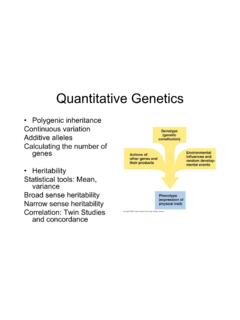
Quantitative Genetics - WOU
people.wou.eduQuantitative Genetics • Polygenic inheritance Continuous variation Additive alleles Calculating the number of genes • Heritability Statistical tools: Mean, variance Broad sense heritability Narrow sense heritability Correlation: Twin Studies and concordance . Polygenic inheritance • 2 or …
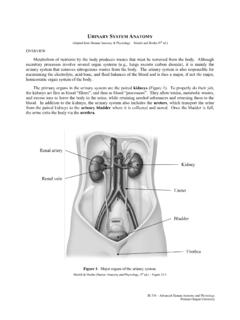
URINARY SYSTEM ANATOMY - WOU
people.wou.eduexcretory processes involve several organ systems (e.g., lungs excrete carbon dioxide), it is mainly the urinary system that removes nitrogenous wastes from the body. The urinary system is also responsible for maintaining the electrolyte, acid-base, and fluid balances of the blood and is thus a major, if not the major,
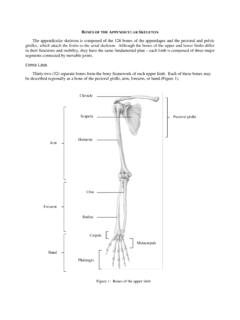
BONES OF THE APPENDICULAR SKELETON
people.wou.edu2 BI 334 – Advanced Human Anatomy and Physiology Western Oregon University Pectoral (Shoulder) Girdle (Marieb / Hoehn –Chapter 7; Pgs. 227 228) The paired pectoral girdles each consist of two bones, the anterior clavicle and the posterior scapula.

Chapter 3: Biological Molecules - WOU
people.wou.eduChapter 3: Biological Molecules What Are Lipids? • Molecules composed almost entirely of carbon and hydrogen with non-polar carbon-carbon bonds (Hydrophobic) Types of Lipids: (Figure 3.6) 1) Oils & Fats 2) Waxes: 3) Phospholipids: • Similar in structure to fats / oils except 1 of 3 fatty acids replaced by phosphate group

Math 211 Sets Practice Worksheet--Answers
people.wou.eduThere are more – any set containing only elements that are also in A 3. Refer to the diagram to answer the questions below. What set notation would you use to represent the following regions? Example: Region 3 could be written as A B i) Regions 1, 2 and 4 are all shaded ii) Only Region 2 is shaded. (A ∩ B)’ or A’ B’ A ∩ B’
Related documents

Diffusion, Osmosis, Active Transport - BiologyMad
biologymad.com• Osmosis — diffusion of water through a semipermeable membrane. High Diffusion Rate: short distance, large surface area, big concentration difference (Fick’s Law). High temperatures increase diffusion; large molecules slow diffusion. Facilitated Diffusion This is the movement of specific molecules down a concentration gradient, passing ...

Cellular Transport Review Packet Key
scampos77.weebly.com2. _d_ diffusion of water molecules through a selectively permeable membrane 3 cell swells so much that it bursts continuous movement of particles but no overall change in concentration 5. _Q_movement of particles from an area of higher concentration to one of lower concentration In the space at the left, write true if the statement is true.

Diffusion & Osmosis worksheet ANSWERS
www.loreescience.ca7. Diffusion A 8. Equal amount of water inside a cell as outside E 9. More water outside a cell than inside G 10. Osmosis C 11. More solute outside a cell than inside F 12. Selectively permeable membrane D into cells b) Amount of a substance in a certain place c) Moves water into and out of cells d) Allows some substances through

Mass Transfer and Diffusion
catalogimages.wiley.comMass Transfer and Diffusion barriers, such as membranes, differing species mass-transfer rates through the membrane govern equipment design. In a binary mixture, molecular diffusion of component A with respect to B occurs because of different potentials or driving forces, which include differences (gradients)

Lecture 18: Diffusion: Fick’s First and Second Laws
goldenberg.biology.utah.eduDiffusion Through a Membrane Pore Moles per second through the pore: 1:5moles=(s 19m2) 187:8 10 m2 = 1:2 10 moles=s Molecules per second through the pore: 1:2 2310 18 moles=s 6:02 10 molecules=mole = 7 105 molecules=s

FILTRATION, DIFFUSION, AND OSMOSIS
instruction2.mtsac.edu3. The lighter the molecule, the greater the rate of diffusion. 4. The faster molecules move, the greater the rate of diffusion. Osmosis is the diffusion of water across a semipermeable membrane. The semipermeable membrane is necessary for osmosis because it restricts the movement of certain solutes, allowing the solvent to pass through.

DIFFUSION AND OSMOSIS
orise.orau.govdiffusion • movement of molecules from high concentration to low concentration osmosis • movement of water through a semipermeable membrane from areas of higher to lower concentration . in which direction will the particles move or …

Practice Quiz Tissues
spot.pcc.edu•Diffusion and Filtration •Secretes lubricating substances in serosae. ... • Basement membrane of mucous membranes •Surrounding blood vessels Blood Vessel. ... •Contracts to propel blood through the circulatory system. Identify the tissue type and its function.
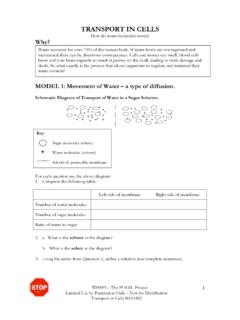
Why? MODEL 1: Movement of Water – a type of diffusion.
www.dvusd.org8. Applying what you already know about diffusion and the random movement of molecules, what will eventually happen to the concentration on both sides of the membrane? 9. Using your responses to the questions above, summarize what your group has learned so far about the movement of water through a selectively permeable membrane. 10.