
Chapter 4: Cell Membrane Structure and Function
Plasma Membrane: Thin barrier separating inside of cell (cytoplasm) from outside environment Function: 1) Isolate cell’s contents from outside environment 2) Regulate exchange of substances between inside and outside of cell 3) Communicate with other cells Note: Membranes also exist within cells forming various
Download Chapter 4: Cell Membrane Structure and Function

Information
Domain:
Source:
Link to this page:
Documents from same domain

The Effects of High-Stakes Testing on Student Motivation ...
people.wou.eduResults from our 18 high-stakes testing states allow us to study this ques- tion. If statewide high-stakes testing policies actually improve student learning, we should see that improve- ment reflected not just in the states' own test scores but also in independent measures. For each of the 18 states, we looked at four well-respected student

EARTHQUAKES: Epicenter Determination, Seismic Waves, …
people.wou.eduBreak or rupture of rock, emanating from a focus, sending seismic waves through Earth materials 2. Primary Wave ... Epicenter Determination The epicenter of an earthquake is the point on Earth's surface at or above the ... shear strength and begin to act like a fluid. This process is called liquefaction.
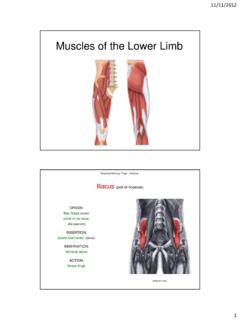
Muscles of the Lower Limb - WOU
people.wou.edufemoral nerve ACTION: flexes thigh (Anterior view) Muscles Moving Thigh - Anterior . 11/11/2012 2 Psoas major (part of iliopsoas) ORIGIN: T 12 – L 5 vertebrae ... distal phalanges 2 - 5 INNERVATION: tibial nerve ACTION: flexes toes (Posterior view) Muscles Moving Ankle / Foot / Toes - Posterior Flexor digitorum longus
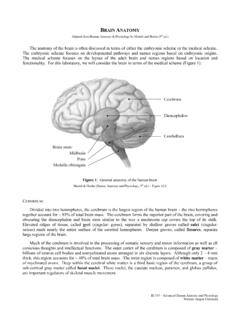
BRAIN ANATOMY - WOU
people.wou.edutracts running between the cerebrum and spinal cord. Olive Located lateral to the pyramid of the medulla oblongata; regulates impulse propagation from the cerebrum and midbrain to the cerebellum. Figure 7: Lateral view of the brain stem Marieb & Hoehn (Human Anatomy and Physiology, 9th ed.) – Figure 12.13 Exercise 3:

Introduction to Geomorphology INTRODUCTION …
people.wou.edusediment load, the river will adjust its geometry to carry the load relative to processes of erosion, transporation and deposition. (1) G.K. Gilbert and Graded Stream Concept: Streams and rivers display an equilibrium state in that the velocity of the water is …
Quantitative Genetics - WOU
people.wou.eduQuantitative Genetics • Polygenic inheritance Continuous variation Additive alleles Calculating the number of genes • Heritability Statistical tools: Mean, variance Broad sense heritability Narrow sense heritability Correlation: Twin Studies and concordance . Polygenic inheritance • 2 or …
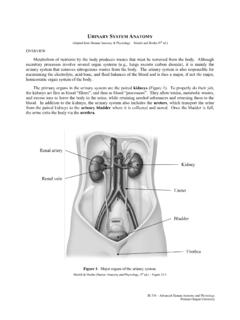
URINARY SYSTEM ANATOMY - WOU
people.wou.eduexcretory processes involve several organ systems (e.g., lungs excrete carbon dioxide), it is mainly the urinary system that removes nitrogenous wastes from the body. The urinary system is also responsible for maintaining the electrolyte, acid-base, and fluid balances of the blood and is thus a major, if not the major,
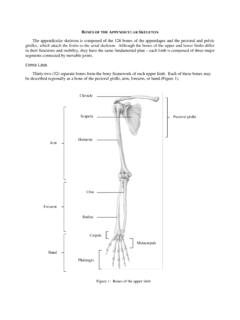
BONES OF THE APPENDICULAR SKELETON
people.wou.edu2 BI 334 – Advanced Human Anatomy and Physiology Western Oregon University Pectoral (Shoulder) Girdle (Marieb / Hoehn –Chapter 7; Pgs. 227 228) The paired pectoral girdles each consist of two bones, the anterior clavicle and the posterior scapula.

Chapter 3: Biological Molecules - WOU
people.wou.eduChapter 3: Biological Molecules What Are Lipids? • Molecules composed almost entirely of carbon and hydrogen with non-polar carbon-carbon bonds (Hydrophobic) Types of Lipids: (Figure 3.6) 1) Oils & Fats 2) Waxes: 3) Phospholipids: • Similar in structure to fats / oils except 1 of 3 fatty acids replaced by phosphate group

Math 211 Sets Practice Worksheet--Answers
people.wou.eduThere are more – any set containing only elements that are also in A 3. Refer to the diagram to answer the questions below. What set notation would you use to represent the following regions? Example: Region 3 could be written as A B i) Regions 1, 2 and 4 are all shaded ii) Only Region 2 is shaded. (A ∩ B)’ or A’ B’ A ∩ B’
Related documents

FILTRATION, DIFFUSION, AND OSMOSIS
instruction2.mtsac.eduFiltration is the passage of materials through a membrane by a physical force such as gravity. In the body filtration is also achieved by means of a physical pump, the heart, which effects the rate of filtration by effecting the pressure of the blood through the …
Unit 5: Anatomy and Physiology for Health and Social Care
qualifications.pearson.comCells: cell membrane, nucleus, cytoplasm; organelles – mitochondria, endoplasmic reticulum (smooth and rough), Golgi apparatus, lysosome Tissues: ... of gaseous exchange with the opportunity to differentiate between internal and external respiration. For the

Basic Concepts in Drug Addiction - Home - CESIE
cesie.orgwhich are structures located within a neuron or in its membrane and are characterized by selective binding to a substance and the physiological effect that accompanies the union. The presence of a drug in the body affects the presynapse, altering the production/ release of neurotransmitters. During the next step, the drug affects
Multi-Industry Per- and Polyfluoroalkyl Substances (PFAS ...
www.epa.govIX ion exchange K-9Cl-PF3ONS potassium 9 -chlorohexadecafluoro-3-oxanonane-1-sulfonate (potassium salt of F-53B major) K-11Cl-PF3OUdS potassium 11- chloroeicosafluoro-3-oxaundecane-1-sulfonate (potassium salt of F-53B minor)