CHAPTER 4 FLOW IN CHANNELS - MIT OpenCourseWare
much greater than the depth of flow is a good approximation to a flow with infinite width. 8 Take the x direction to be downstream and the y direction to be normal to the boundary, with y = 0 at the bottom of the flow (Figure 4-1). By the no-slip condition, the velocity is zero at y = 0, so the velocity must increase upward in the flow.
Download CHAPTER 4 FLOW IN CHANNELS - MIT OpenCourseWare

Information
Domain:
Source:
Link to this page:
Documents from same domain
Wireless Communications - MIT OpenCourseWare
ocw.mit.eduWireless Communications Wireless telephony Wireless LANs Location-based services 1 The Technology: ... Cellular Phone Networks Frequency reuse
SYSTEMS ENGINEERING FUNDAMENTALS - MIT …
ocw.mit.eduSystems Engineering Fundamentals Introduction iv PREFACE This book provides a basic, conceptual-level description of engineering management disciplines that
Fundamentals of Chemical Reactions - MIT …
ocw.mit.edu10.37 Chemical and Biological Reaction Engineering, Spring 2007 Prof. William H. Green Lecture 4: Reaction Mechanisms and Rate Laws Fundamentals of Chemical Reactions
The Heart of a Vampire - MIT OpenCourseWare
ocw.mit.eduThe Heart of a Vampire ... Interview with the Vampire might not have convinced me that vampires could be sexy until I read a fantasy book on the subject, ...

Heijunka Product & Production Leveling
ocw.mit.eduHeijunka Product & Production Leveling Module 9.3 Mark Graban, LFM Class of ’99, Internal Lean Consultant, Honeywell Presentation for: Summer 2004
15.501/516 Final Examination December 18, 2002
ocw.mit.edu15.501/516 Final Examination December 18, 2002 ... accounting, used for many years ... Metro Area Inc. was in severe financial difficulty and threatened to
Sloan School of Management Massachusetts …
ocw.mit.eduSloan School of Management Massachusetts Institute of Technology ... Managerial Accounting ... Financial accounting information facilitates the
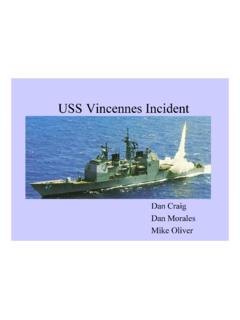
USS Vincennes Incident - MIT OpenCourseWare
ocw.mit.eduOverview • Introduction and Historical Context • Incident Description • Aegis System Description • Human Factors Analysis • Recommendations
Stochastic Processes and Brownian Motion
ocw.mit.eduChapter 1. Stochastic Processes and Brownian Motion 2 1.1 Markov Processes 1.1.1 Probability Distributions and Transitions Suppose …
Stochastic Processes I - MIT OpenCourseWare
ocw.mit.eduLecture 5 : Stochastic Processes I 1 Stochastic process A stochastic process is a collection of random variables indexed by time. An alternate view is that it is a probability distribution over a space
Related documents

Valuation: Discounted Cash Flow (DCF) Model
users.design.ucla.eduHow the DCF Works Overview ♦ Based off any available financial data (both historical and projected), the DCF, • First, projects the Company’s expected cash flow each year for a finite number of years • Second, sums all the projected cash flows from the first step • And lastly, discounts the result from the second step by some rate to yield the value in terms of present …

1.8. Flow Charts for Emergency Management
apps.who.intFlow Charts for Emergency Management Panafrican Emergency Training Centre, Addis Ababa, July 1998. WHO/EHA/EHTP Draft 1-1999 1.8. Flow Charts for Emergency Management Overhead Transparencies 1.8.1. Disasters and Health, General Flow Chart 1.8.2. Earthquake and Disaster Response, Flow Chart
THERMODYNAMICS, HEAT TRANSFER, AND FLUID FLOW, …
sites.ntc.doe.gov1.32 DESCRIBE two-phase flow including such phenomena as bubbly, slug, and annular flow. 1.33 DESCRIBE the problems associated with core flow oscillations and flow instability. 1.34 DESCRIBE the conditions that could lead to core flow oscillation and instability.
Network Flow Problems - Stanford University
web.stanford.eduMin-Cost Max-Flow A variant of the max-flow problem Each edge e has capacity c(e) and cost cost(e) You have to pay cost(e) amount of money per unit flow flowing through e Problem: find the maximum flow that has the minimum total cost A lot harder than the regular max-flow – But there is an easy algorithm that works for small graphs Min-cost Max-flow Algorithm 24
7. Basics of Turbulent Flow - Massachusetts Institute of ...
www.mit.edu7. Basics of Turbulent Flow Whether a flow is laminar or turbulent depends of the relative importance of fluid friction (viscosity) and flow inertia. The ratio of inertial to viscous forces is the Reynolds number. Given the characteristic velocity scale, …