
Chapter 9 Chapter 10 - NCERT
infectious agents are transmitted through food and water such as typhoid, amoebiasis and ascariasis. In cases of air-borne diseases such as pneumonia and common cold, in addition to the above measures, close ±
Download Chapter 9 Chapter 10 - NCERT

Information
Domain:
Source:
Link to this page:
Documents from same domain
11 UnitUnitUnit
www.ncert.nic.in317 Alcohols, Phenols and Ethers Allylic and benzylic alcohols may be primary, secondary or tertiary. (ii) Compounds containing C OHsp2 − bond: These alcohols contain —OH group bonded to a carbon-carbon double bond i.e., to a
Model Question Paper Mathematics Class XII
www.ncert.nic.inModel Question Paper Mathematics Class XII Time Allowed : 3 hours Max: Marks: 100 General Instructions (i) The question paper consists of three parts A, B and C.
Information Brochure and Application Form
www.ncert.nic.inPriority Areas : Fellowship will be given for research pertaining to the following priority areas: Rashtriya Madhyamik Shiksha Abhiyan (RMSA) : This scheme was launched in March, 2009 with the objective to enhance access to secondary education and to improve its quality.
13108 - National Council Of Educational Research …
www.ncert.nic.inForeword What is ‘Education’? What is its primary purpose, and what is not? Which approaches support it, and at which levels of cognition? So many basic questions that many of our ‘trained
Information and Communication Technology
www.ncert.nic.inInformation and Communication Technology for the School System Curricula for ICT in Education Version #1.01 Developed by Central Institute of Educational Technology
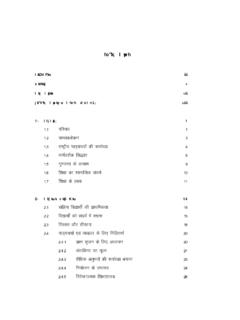
fok; lwph - National Council Of Educational …
www.ncert.nic.in2-5 Kku ,oa le> 28 2-5-1 cqfu;knh {kerk,¡ 29 2-5-2 O;ogkj esa Kku 30 2-5-3 le> ds :i 31 2-6 Kku dks fQj ls jpuk 33 2-7 cPpksa dk Kku vkSj LFkkuh; Kku 34
NCERT
www.ncert.nic.inNCERT A Pioneer in Educational Publishing An Enduring Contribution to Improve the Quality of School Education through 1. Attractive Books …
Syllabus for Bachelor of Education (B. Ed.) …
www.ncert.nic.inSyllabus for Bachelor of Education (B. Ed.) Programme DEPARTMENT OF TEACHER EDUCATION National Council of Educational Research and Training Sri Aurobindo Marg, New Delhi – 110 016
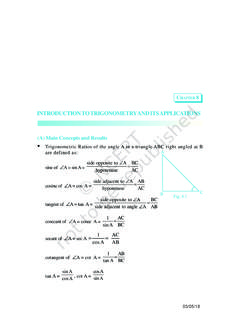
INTRODUCTION TO TRIGONOMETRY AND ITS …
www.ncert.nic.inINTRODUCTION TO TRIGONOMETRY AND ITS APPLICATIONS 89 • The ‘line of sight’ is the line from the eye of an observer to the point in the object viewed by the observer. ...
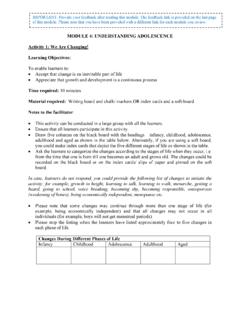
MODULE 4: UNDERSTANDING ADOLESCENCE …
www.ncert.nic.in4 Please remember to provide feedback at the end of this module 2. Do you think that Robin can be a good football player and that the coach should give him
Related documents
WATER SUPPLY AND SANITARY ENGINEERING
www.cphbooks.in5-9. Water-borne diseases 5-10. Suitability of water for trade purposes: 5-11. Water for swimming pools 5-12. Drinking water standards QUESTIONS 5 Chapter 6 TREATMENT OF WATER (SCREENS, PRE-SEDIMENTATION AND SEDIMENTATION TANKS) 6-1. General 6-2. Screens 6-3. Pre-sedimentation 6-4. Sedimentation tanks 6-4-1.Purpose and location 6-4 …
PROTECTION TRAINING MANUAL - New York City
www1.nyc.govWhat is Food-Borne Illness? Any illness that is caused by food is called food-borne illness. A food-borne illness outbreak is defined as any incident involving two or more persons becoming ill with similar symptoms from the same source. Typically these illnesses are a direct result of contamination of food by harmful microorganisms, (commonly

Water, Sanitation and Hygiene Standards for Schools in Low ...
www.who.intDiseases related to inadequate water, sanitation and hygiene are a huge burden in developing countries. It is estimated that 88% of diarrhoeal disease is caused by unsafe water supply, and inadequate sanitation and hygiene (WHO, 2004c). Many schools serve communities that have a high prevalence of diseases related to inadequate water supply,
CHAPTER 6 Houseflies - World Health Organization
www.who.inttheir food (Fig. 6.5). Most of the diseases can also be contracted more directly through contaminated food, water, air, hands and person-to-person contact. This reduces the relative importance of flies as carriers of disease. Fig. 6.4 Food market. During the day adult flies can be found in large numbers on food tables, garbage and the ground.
ASSESSMENT OF WATER QUALITY - IJSER
www.ijser.orgConsequently, water borne diseases such as cholera and typhoid often have their outbreak especially during dry season. High prevalence of diarrhea among children and infants can be due to the use of unsafe water and unhygienic practice. Thus, many infectious diseases are transmitted by water ...

Top tips how to avoid vector borne diseases (Eng)
www.euro.who.intvEctOR-BORnE disEAsEs – tOp tips ... Get rid of stagnant water (for example, in containers, flower pots and used tyres) in areas where mosquitoes breed. 7. check your body regularly for ticks. if you find one, remove it with tweezers and apply a …