
Connectionist Temporal Classification: Labelling ...
A CTC network has a softmax output layer (Bridle, 1990) with one more unit than there are labels in L. The activations of the first |L| units are interpreted as the probabilities of observing the corresponding labels at particular times. The activation of the extra unit is the probability of observing a ‘blank’, or no label.
Download Connectionist Temporal Classification: Labelling ...

Information
Domain:
Source:
Link to this page:
Documents from same domain

Fundamentals of Requirements Engineering …
www.cs.toronto.eduFundamentals of Requirements Engineering ... The two engineering disciplines most relevant to this book are software engineering and systems engineering.

Lecture 2 Software Re-engineering - University of …
www.cs.toronto.eduSpring 2005 ECE450H1S Software Engineering II Today … 1. Review SE process 2. Discuss Reengineering Concepts 3. Go over some case studies, a road map to our

Introduction to Operations Research
www.cs.toronto.eduIntroduction to Operations Research Deterministic Models JURAJ STACHO Department of Industrial Engineering and Operations Research
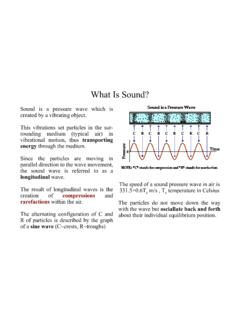
What Is Sound? - University of Toronto
www.cs.toronto.eduWhat Is Sound? Sound is a pressure wave which is created by a vibrating object. This vibrations set particles in the sur-rounding medium (typical air) in

University of Toronto Lecture 7: Why a feasibility …
www.cs.toronto.edu2 University of Toronto Department of Computer Science ©2004-5SteveEasterbrook.Thispresentationisavailablefreefor non-commercialusewithatribution underacreativecommonslicense. 5

Proposed Design of an Inventory ... - University of …
www.cs.toronto.eduProposed Design of an Inventory Database System at Process Research ORTECH System Design Prepared by Andrew Ramadeen Manojav Sridhar Kunendran Deivendran
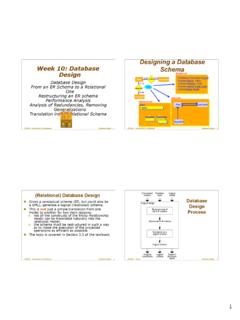
Designing a Database Week 10: Database Schema …
www.cs.toronto.eduOperational DB (OLTP - On-Line Transaction Processing) CSC343 – Introduction to Databases Database Design — 8 ... [CASE = Computer-Aided Software Engineering] CSC343 – Introduction to Databases Database Design — 46 Logical Design witha CASE Tool. Title: 10_DBDesignStG.ppt Author:

XSLT: Using XML - University of Toronto
www.cs.toronto.edu1 XSLT: Using XML to transform other XML files Introduction to databases CSC343 Fall 2011 Ryan Johnson Thanks to Manos Papagelis, John Mylopoulos, Arnold Rosenbloom

XSL - University of Toronto
www.cs.toronto.edu– XSLT is a language for transforming XML documents into other XML documents – XSLT is designed to be used independently of XSL. • However, XSLT is not intended as a completely general-purpose XML transformation language. • Rather it is designed primarily for the kinds of transformations

CSC340S - Information Systems Analysis and Design
www.cs.toronto.educsc340 Information Systems Analysis and Design page 3/18 b. Using Prototyping tools c. Purchasing a software application package
Related documents

1 Transformers in Vision: A Survey
arxiv.orgwhich is then normalized using softmax operator to get the attention scores. Each entity then becomes the weighted sum of all entities in the sequence, where weights are given by the attention scores (Fig.2and Fig.3, top row-left block). Masked Self-Attention: The standard self-attention layer attends to all entities. For the Transformer model [1]

Introduction to Convolutional Neural Networks - nju.edu.cn
cs.nju.edu.cn(L L1)-th layer as a softmax transformation of x 1 (cf. the distance metric and data transformation note). In other applications, the output xL may have other forms and interpretations. The last layer is a loss layer. Let us suppose t is the corresponding target (ground-truth) value for the input x1, then a cost or loss function can be used

A Simple Unified Framework for Detecting Out-of ...
proceedings.neurips.ccand the softmax classifier: the posterior distribution defined by the generative classifier under GDA with tied covariance assumption is equivalent to the softmax classifier (see the supplementary mate-rial for more details). Therefore, the pre-trained features of the softmax neural classifier f(x) might
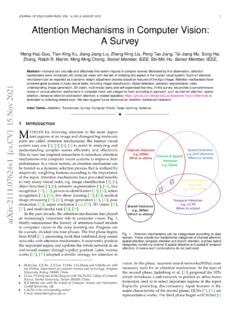
JOURNAL OF LA Attention Mechanisms in Computer Vision: A ...
arxiv.orgSoftmax softmax activation BN batch normalization [52] Expand expan input by repetition is shown in Fig.1and further explained in Fig.2: it is based around data domain. Some methods consider the question of when the important data occurs, or others where it occurs, etc., and accordingly try to find key times or locations in the data.

Convolutional Neural Networks (CNNs / ConvNets)
web.stanford.eduAnd they still have a loss function (e.g. SVM/Softmax) on the last (fully-connected) layer and all the tips/tricks we developed for learning regular Neural Networks still apply. So what does change? ConvNet architectures make the explicit assump tion that the inputs are images, which allows us to encode cer tain proper ties into the ...