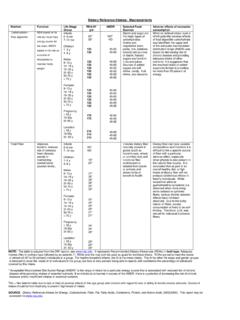
Dietary Reference Intakes: Macronutrients
sugars be limited to providing no more than 25 percent of energy. Total Fiber Improves laxation, reduces risk of coronary heart disease, assists in maintaining normal blood glucose levels.. Infants 0−6 mo 7−12 mo Children 1−3 y 4−8 y Males 9−13 y 14−18 y 19−30 y 31-50 y 50-70 y > 70 y Females 9−13 y 14−18 y 19−30 y 31-50 y
Download Dietary Reference Intakes: Macronutrients

Information
Domain:
Source:
Link to this page:
Documents from same domain
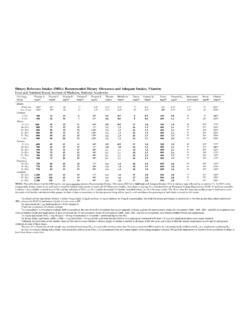
2. RDA and AIs.Vitamin and Elements - USDA
nal.usda.govj I t is aum ed thw ome nll cg400 µ f rup pl l gn y, ce on period—the critical time for formation of the neural tube. SOURCES: Dietary Reference Intakes for Calcium, Phosphorous, Magnesium, Vitamin D, and Fluoride (1997); Dietary Reference Intakes for Thiamin, Riboflavin, Niacin, Vitamin B6, Folate, Vitamin B12, Pantothenic Acid, Biotin, and Choline (1998); Dietary Reference …
DRI - USDA
nal.usda.govSUZANNE HENDRICH, Department of Food Science and Human Nutrition, Iowa State University, Ames SANFORD A. MILLER, Center for Food and Nutrition Policy, Virginia Polytechnic Institute and State University, Alexandria HARRIS PASTIDES, School of Public Health, University of South Carolina, Columbia JOHN A. THOMAS, San Antonio, Texas
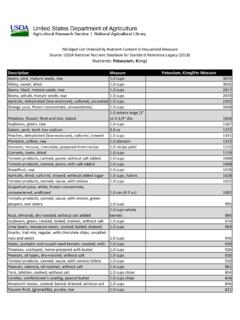
Nutrients: Potassium, K(mg) - USDA
nal.usda.govMilk, nonfat, fluid, protein fortified, with added vitamin A and vitamin D (fat free and skim) 1.0 cups 448 Pork, fresh, shoulder, whole, separable lean and fat, cooked, roasted 1.0 cups, diced 444 Fish, tuna, skipjack, fresh, cooked, dry heat 3.0 oz 444 Orange juice, chilled, includes from concentrate, with added calcium and vitamin D 1.0 cups 443

Dietary DRI Reference Intakes - USDA
nal.usda.govDietary Reference Intakes: The Essential Guide to Nutrient Requirements ... findings, conclusions, or recommendations expressed in this publication are those of the author(s) and do not necessarily reflect the view of the organizations or agencies ... date that requires it to advise the federal government on scientific and technical matters.

GMOs 101: Your Basic Questions Answered - USDA
nal.usda.govIn 2018,4 GMO soybeans made up 94% of all soybeans planted, GMO cotton made up 94% of all cotton planted, and 92% of corn planted was GMO corn. Most GMO crops are used in food for animals like cows, chickens, and fish. They are also used to make ingredients that are then used in food products like cereal, snack chips, and vegetable oils.

Nutrients: Protein (g) - USDA
nal.usda.govVeal, shank (fore and hind), separable lean and fat, cooked, braised 3.0 oz 26.81 Turkey, drumstick, from whole bird, meat only, raw 4.0 oz 26.74
Related documents
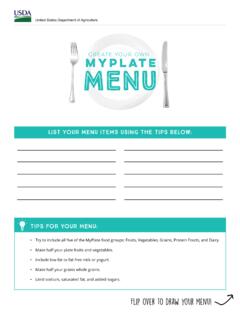
Create Your Own MyPlate Menu
myplate-prod.azureedge.netUnited States Department of Agriculture MyPlate. Menu. Tips FOR YOUR MENU: • Try to include all five of the MyPlate food groups: Fruits, Vegetables, Grains, Protein Foods, and Dairy. • Make half your plate fruits and vegetables. • Include low-fat or fat-free milk or yogurt. • Make half your grains whole grains.
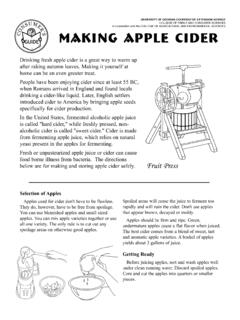
Making Apple Cider - University of Georgia
nchfp.uga.eduIn the United States, fermented alcoholic apple juice is called "hard cider," while freshly pressed, non-alcoholic cider is called "sweet cider." Cider is made from fermenting apple juice, which relies on natural yeast present in the apples for fermenting. Fresh or unpasteurized apple juice or cider can cause food borne illness from bacteria.
Concentrations of Anthocyanins in Common Foods in the ...
www.ars.usda.govUnited States and Estimation of Normal Consumption ... positions at which sugars are attached; and (3) the extent of sugar acylation and the identity of the acylating agent (4). ACNs have important functions in plant physiology. They are believed to …
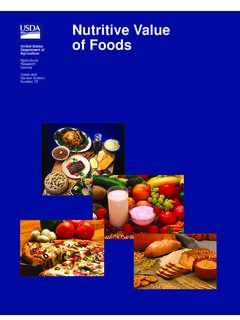
Nutritive V alue - USDA ARS
www.ars.usda.govUnited States Department of Agriculture Agricultural Research Service Home and Garden Bulletin Number 72 Susan E. Gebhardt and Robin G. Thomas U.S. Department of Agriculture, Agricultural Research Service, Nutrient Data Laboratory, Beltsville, Maryland

Biomass Basics: The Facts About Bioenergy
www.energy.govEthanol is the most widely used biofuel in the United States today, and is available . at almost every gas station. Today, more than 95% of gasoline is E-10, a blend of ... pathways that use sugars and lignin intermediates. • Thermochemical . conversion technologies involve pathways that use bio-oil and gaseous intermediates.
Ultra-processed foods, diet quality and human health
www.fao.orgMay 21, 2019 · sugars and starches, with sodium, palatable and attractive. The relative neglect of food processing is historically understandable. When dietary guidelines were first compiled and published in the first half of the last century, most food was combined with culinary ingredients and consumed in the form of dishes and meals, or was eaten as such.
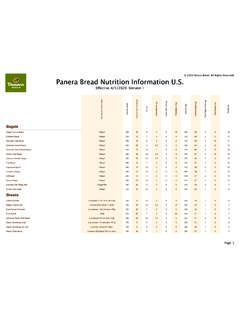
© 2022 Panera Bread. All Rights Reserved. Panera Bread ...
www.panerabread.comCalories from Fat (kcal) Fat (g) Saturated Fat (g) Trans Fatty Acid (g) Cholesterol (mg) Sodium (mg) Carbohydrates (g) Total Dietary Fiber (g) Total Sugars (g)