
Digestive: Practice Questions # 1
14. Which two organ systems provide materials required for the human body to produce ATP? A. reproductive and excretory B. digestive and respiratory C. respiratory and immune D. digestive and reproductive 15. Which order of metabolic processes converts nutrients consumed by an organism into cell parts?
Download Digestive: Practice Questions # 1

Information
Domain:
Source:
Link to this page:
Documents from same domain

Enzymes: Practice Questions #1 - Living …
lecoursedebiase.comEnzymes: Practice Questions #1 1. Compound X increases the rate of the reaction below. Compound X is most likely A. an enzyme B. a …
Human Impact: Practice Questions #1 - lecoursedebiase.com
lecoursedebiase.comHuman Impact: Practice Questions #1 1. Communities have attempted to control the size of mosquito populations to prevent the spread of certain diseases such as malaria and encephalitis.

Photosynthesis: Practice Questions #1
lecoursedebiase.comA. can be used for photosynthesis B. cannot pass through cell membranes C. is needed for aerobic respiration D. is used for the hydrolysis of proteins 29. Most of the oxygen gas present in the atmosphere is produced as a result of A. photosynthesis B. cellular respiration C. dehydration synthesis D. decomposition

Ecology: Practice Questions #1
lecoursedebiase.comEcology: Practice Questions #1 1. One biotic factor that affects consumers in an ocean ecosystem is A. number of autotrophs B. temperature variation C. salt content D. pH of water 2. A food web is represented in the diagram below. ... In a forest community, a shelf fungus and a slug live on the side of a decaying tree trunk.
Cellular Respiration: Practice Questions #1
lecoursedebiase.comCellular Respiration: Practice Questions #1 1. Which statement best describes one of the events taking place in the chemical reaction ? A. Energy is being stored as a result of aerobic respiration. B. Fermentation is taking place, resulting in the synthesis of ATP. C. Energy is being released for metabolic activities.
Endocrine System: Practice Questions #1
lecoursedebiase.comEndocrine System: Practice Questions #1 1. Removing part of gland D would most likely result in A. a decrease in the secretions of other glands B. a decrease in the blood calcium level C. an increase in the growth rate of the individual D. an increase in the blood sugar level 2.
Related documents
Anatomy, Physiology, and Pathology by Body Systems
downloads.lww.comthe lymphatic system, the respiratory system, the digestive system, the endocrine sys-tem, the urinary system, and the reproductive system. In addition, the sensory system 26 PART II Anatomy, Physiology, and Pathology by Body Systems Allen_Ch03_023-032.qxd 7/25/08 4:20 PM Page 26
THE HUMAN BODY SYSTEMS
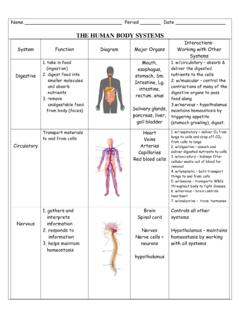
www.wsfcs.k12.nc.usSystems Muscular Allows for movement by contracting Cardiac muscle Smooth muscle Skeletal muscle tendons 1. w/skeletal – allow movement 2. w/digestive – allow organs to contract to push food through 3. w/respiratory – diaphragm controls breathing 4. w/circulatory – controls pumping of blood (heart) 5. w/nervous – controls all
E a s y M a k e & Learn Projec
www.ahabitatforlearning.orgWhich systems of the human body are featured in THE BODY BOOK? (skeletal system and muscular system) Challenge students to name the human body system that each of the organs on page 5 belongs to. (brain—nervous system; lungs—respiratory system; liver, stomach, and intestines—digestive
Human Anatomy and Body Systems
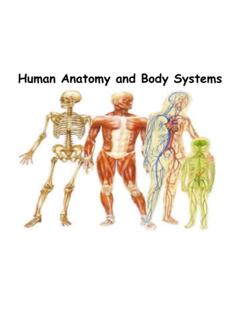
www.bisdtx.orgThe 11 Human Body Systems The 11 human body systems are as follows: -- nervous system -- integumentary system -- respiratory system -- digestive system -- excretory system -- skeletal system -- muscular system -- circulatory system -- endocrine system -- reproductive system -- lymphatic (immune) system
Grade 5 - Science - Human Organ Systems - Unit Plan
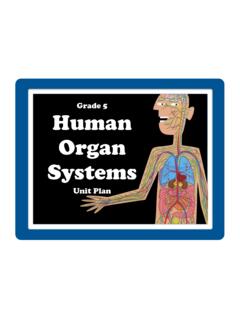
clmeyers.weebly.comdigestive systems 3.3 identify interrelationships between body systems 3.4 identify common diseases and the organs and/or body systems that they affect Objectives for Teaching the Topic By the end of this unit, students will be able to • Identify the five major organ systems (respiratory, circulatory, digestive, musculoskeletal and
The 5 levels of Organization - CPT HAMILTON'S 7TH GRADE ...
scientificrealms.weebly.comSystems 5. Organism. ∗Cells are the basic unit of all living things. ... Respiratory System lungdiseases.about.com . ∗MOUTH, ESOPHAGUS, STOMACH, SMALL INTESTINE, LARGE INTESTINE, LIVER, PANCREAS ∗Digests food into small particles to be used by the body. Digestive System www.teachnet.ie. ∗BRAIN AND NERVES ∗Controls and coordinates many ...

Cystic Fibrosis - Centers for Disease Control and Prevention
www.cdc.govmarily affects the respiratory and digestive systems in children and young adults. The sweat glands and the reproductive system are also usually involved. On the average, individuals with CF have a lifespan of approximately 30 years. CF-like disease has been known for over two centuries. The name, cystic fibrosis of

List of organs of the human body - Basic Knowledge 101
basicknowledge101.comDigestive system Respiratory system Urinary system Reproductive organs Female reproductive system ... Digestive system. Pharynx Esophagus Stomach Small intestine Duodenum Jejunum Ileum Large intestine Liver ... List of systems of the human body List of distinct cell types in the adult human body 1. Engeling, Carl. ...

Body Systems Regents Review - eiteachers.org
www.eiteachers.orgA)digestive and circulatory B)reproductive and excretory C)immune and nervous D)respiratory and muscular 3.The interaction of which two systems provides the molecules needed for the metabolic activity that takes place at ribosomes? A)glucose metabolism B)protein synthesis C)enzyme secretion D)water reabsorption