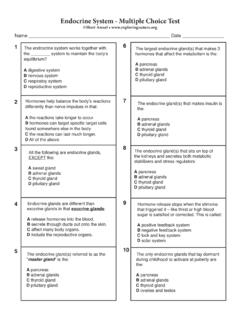
Endocrine System - Exploring Nature
B nervous system C respiratoy system D reproductive system Hormones help balance the body’s reactions differently than nerve impulses in that: A the reactions take longer to occur. B hormones can target specific target cells found somewhere else in the body. C the reactions can last much longer. D All of the above. All the following are ...
Download Endocrine System - Exploring Nature

Information
Domain:
Source:
Link to this page:
Documents from same domain

Cellular Respiration - Exploring Nature Science …
www.exploringnature.org1) photosynthesis creates glucose molecules (instead of eating) → 2) this fuels cellular respiration in the plant cells → 3) creates ATP → 4) fuels plant growth and reproduction → 5) provides carbohydrates to animals for
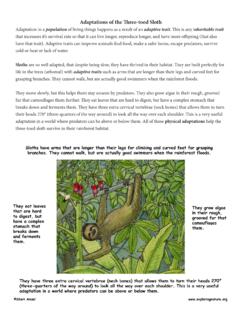
Adaptations of the Three-toed Sloth - The Exploring Nature ...
www.exploringnature.orgAdaptations of the Three-toed Sloth Adaptation in a population of living things happens as a result of an adaptive trait.This is any inheritable trait that increases it’s survival rate so that it can live longer, reproduce longer, and have more offspring (that also
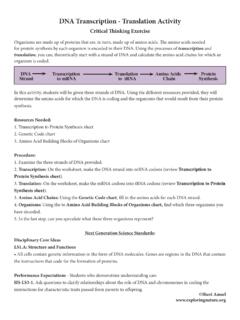
DNA Transcription - Translation Activity
www.exploringnature.orgGenes are regions in the DNA that contain the instructions that code for the formation of proteins. Performance Expectations - Students who demonstrate understanding can: HS-LS3-1. Ask questions to clarify relationships about the role of DNA and chromosomes in coding the
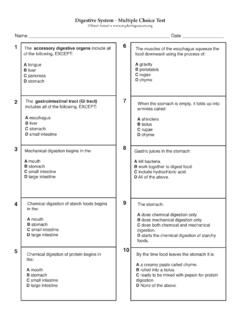
Digestive System - Multiple Choice Test - Exploring Nature
www.exploringnature.orgThe accessory digestive organs include all of the following, EXCEPT: A tongue B liver C pancreas D stomach The gastrointestinal tract (GI tract) includes all of the following, EXCEPT: A esophagus B liver C stomach D small intestine Mechanical digestion begins in the: A mouth B stomach C small intestine D large intestine
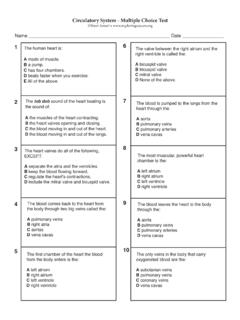
Circulatory System - Multiple Choice Test
www.exploringnature.orgB the heart valves opening and closing. C the blood moving in and out of the heart. D the blood moving in and out of the lungs. The heart valves do all of the following, EXCEPT: A separate the atria and the ventricles. B keep the blood flowing forward. C regulate the heart’s contractions. D include the mitral valve and bicuspid valve.
Matter Assessment and NGSS - Exploring Nature
www.exploringnature.orgScience and Engineering Practices: Developing and Using Models Modeling in 6–8 builds on K–5 and progresses to developing, using and revising models to describe, test, and predict more abstract phenomena and design systems. • Develop a model to predict and/or describe phenomena. (MS-PS1-1),(MS-PS1-4)
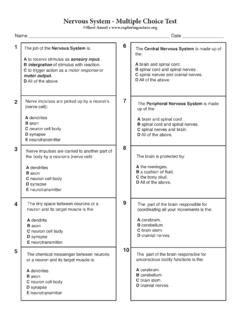
Nervous System - Multiple Choice Test - Exploring Nature
www.exploringnature.orgThe Central Nervous System is made up of the: brain and spinal cord. B spinal cord and spinal nerves. C spinal nerves and cranial nerves. D All of the above. The Peripheral Nervous System is made up of the: A brain and spinal cord. B spinal cord and spinal nerves. C spinal nerves and brain. D All of the above. The part of the brain responsible for
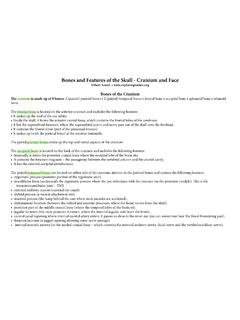
Bones and Features of the Skull - Cranium and Face
www.exploringnature.orgBones and Features of the Skull - Cranium and Face ©Sheri Amsel • www.exploringnature.org Bones of the Cranium The cranium is made up of 8 bones: 2 (paired) parietal bones • 2 (paired) temporal bones • frontal bone • occipital bone • sphenoid bone • ethmoid bone The frontal bone is located on the anterior cranium and includes the following features:

Phases of the Moon - Exploring Nature
www.exploringnature.org2. The moon takes the same amount of time to rotate once around on its axis as it does to revolve around the Earth - so the same side of the moon always faces the Earth. The moon looks different during its revolution around the Earth, because at each position its is getting a different amount of sunlight on its surface.
Water Cycle – Multiple Choice Test - Exploring Nature
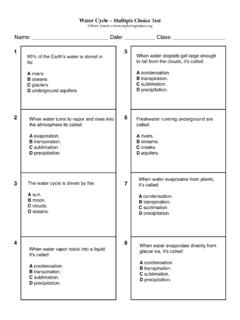
www.exploringnature.orgC creeks. D aquifers. The water cycle is driven by the: A sun. B moon. C clouds. D oceans. When water turns to vapor and rises into the atmosphere its called: A evaporation. B transpiration. C sublimation. D precipitation. When water evaporates directly from glacial ice, it’s called: A condensation. B transpiration. C sublimation. D ...
Related documents
Endocrine System: Practice Questions #1
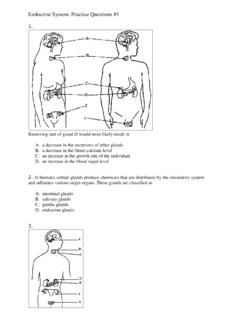
lecoursedebiase.comEndocrine System: Practice Questions #1 1. Removing part of gland D would most likely result in A. a decrease in the secretions of other glands B. a decrease in the blood calcium level C. an increase in the growth rate of the individual D. an increase in the blood sugar level 2.
Common Terminology Criteria for Adverse Events (CTCAE)
evs.nci.nih.govBlood and lymphatic system disorders 3 Cardiac disorders 6 Congenital, familial and genetic disorders 15 Ear and labyrinth disorders 16 Endocrine disorders 19 Eye disorders 22 Gastrointestinal disorders 28 General disorders and administration site conditions 55 Hepatobiliary disorders 61 Immune system disorders 65 Infections and infestations 68

Human Physiology/The gastrointestinal system - Saylor …
resources.saylor.org• Endocrine functions: Hormone secretion. • Somatostatin: inhibits the function of insulin. Produced if the body is getting too much glucose. ... The digestive system is made up by the alimentary canal, or the digestive tract, and other abdominal organs that play a part in digestion such as the liver and the pancreas. The alimentary canal ...
Body Systems Work Together Reading
www.mrsd.orgsystem, lymphatic system, and endocrine system. Each system has a special job. 5 All of your body systems have to work together to keep you healthy. Your bones and muscles work together to support and move your body. Your respiratory system takes in oxygen from the air. It also gets rid of carbon dioxide.

Endocrine System Overview - Straight A Nursing
www.straightanursingstudent.comEndocrine System Overview Endocrinology is the study of endocrine cells/organs, the hormones secreted, regulation of hormone secretion and the effects of hormones on their target cells/organs. Endocrine vs. Exocrine tissues Endocrine secretes hormones, while exocrine secretes all the other stuff (mucus, enzymes, sweat).