
ENGINE & WORKING PRINCIPLES
A heat engine is a machine, which converts heat energy into mechanical energy. The combustion of fuel such as coal, petrol, diesel generates heat. This heat is supplied to a working substance at high temperature. By the expansion of this substance in suitable machines, heat energy is converted into useful work.
Download ENGINE & WORKING PRINCIPLES

Information
Domain:
Source:
Link to this page:
Documents from same domain
Lecture 7 Cooling and lubrication - Hill Agric
hillagric.ac.inAG ENGG 243 lecture 7 1 COOLING SYSTEM A system, which controls the engine temperature, is known as a cooling system. NECESSITY OF COOLING SYSTEM
ENGINE & WORKING PRINCIPLES - Hill Agric
hillagric.ac.inENGINE & WORKING PRINCIPLES A heat engine is a machine, which converts heat energy into mechanical energy. The combustion …
Lecture 6 Fuel System - Hill Agric
hillagric.ac.inAG ENGG 243 Lecture 6 2 mixture within the cylinder after the ignition has taken place. It is an undesirable combustion and results in sudden rise in pressure, a loss of power and overheating of the engine.

Study Material Course No.: Ag Econ 122 (Production ...
hillagric.ac.inagricultural production economics involves the study of factor-product, factor-factor and product-product relationships, the size of the farm, returns to scale, credit and risk and uncertainty, etc.

History of Plant Pathology - Hill Agric
hillagric.ac.inAnton de bary (1831 – 1888) – the father of plant pathology, In 1853 he established that rust and smuts are causes not the results of disease,

PRINCIPLES OF PLANT PATHOLOGY
hillagric.ac.inPlant Pathology- Today & Future Molecular Plant Pathology – Discovery of WM Stanley in 1935 about proteinaceous nature of the TMV can be considered as beginning of the molecular Plant \Pathology, though two years later, Bawden and Pierie …

Defense Mechanism in Plants
hillagric.ac.inphenols that affect the pathogen . Role of phenol oxidizing enzymes •Enzymes like –poplyphenol oxidases- oxidises phenols to quinones ... –others such as poly acrylic acid, 2-chloroethylphosphonic acid, acetyl- salicylic acid, benzoic acid, indole-3-acetic acid, 2, 4-

Fundamentals of Rural Sociology and Educational Psychology
hillagric.ac.indevelopment. Rural sociology studies social situation s and collects social facts of rural society. Agricultural extension makes uses of such social data as basis for building up extension programmes for farmers. Rural sociology investigates the social, cultural, political and religious problems of rural society.
Chapter 5. Introduction to Remote Sensing
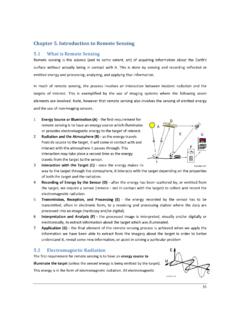
hillagric.ac.in5.6 Passive vs. Active Sensing Remote sensing systems which measure energy that is naturally available are called passive sensors. P assive sensors can only be used to detect energy when the naturally occurring energy is available. For all reflected energy, this can only take specular and diffuse reflection .

Natural resource management
hillagric.ac.insustainable methods of managing those resources to ensure their availability to future generations. Resource economists study interactions between economic and natural systems, with the goal of developing a sustainable and efficient economy. It is a multi - disciplinary field of academic research. Natural resource management
Related documents
5.1 Shell-and-Tube Heat Exchangers
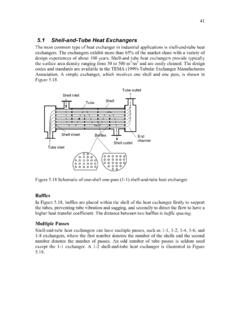
homepages.wmich.eduExample 5.2 Miniature Shell-and-Tube Heat Exchanger A miniature shell-and-tube heat exchanger is designed to cool engine oil in an engine with the engine coolant (50% ethylene glycol). The engine oil at a flow rate of 0.23 kg/s enters the exchanger at 120°C and leaves at 115°C. The 50% ethylene glycol at a rate of 0.47 kg/s enters at 90°C.

Chapter 19. Heat Engines and Refrigerators
physics.gsu.eduHeat Engines • A heat engine is any closed-cycle device that extracts heat from a hot reservoir, does useful work, and exhausts heat to a cold reservoir. • A closed-cycle device is one that periodically returns to its initial conditions, repeating the same process over

JE Pistons Performance Engine Parts Catalog
images.carid.comand is designed to reflect heat into the combustion chamber, there by increasing exhaust gas velocity and greatly improving scavenging potential. The .0015” thick coating can also assist in extending piston life by decreasing the rate of thermal transfer. PISTON COATINGS TUFF SKIRT COATING JE Pistons’ trademark coating that

Introduction to Heat Exchangers
web.iit.eduinternal combustion engine in which a circulating fluid known as engine coolant flows through radiator coils and air flows past the coils, which cools the coolant and heats the incoming ... calculate the rate of heat transfer in heat exchangers.! NTU can be defined as: H e at %Cap aci t an ce %R at e %[W / K ] % ...
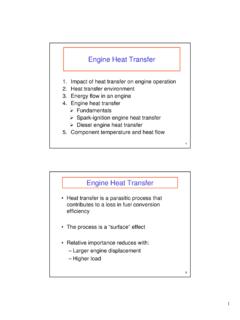
Engine Heat Transfer - MIT
web.mit.edu2 Engine Heat Transfer: Impact • Efficiency and Power: Heat transfer in the inlet decrease volumetric efficiency. In the cylinder, heat losses to the wall is a loss of availability. • Exhaust temperature: Heat losses to exhaust influence the turbocharger performance. In- c ylinder and exhaust system heat

Caterpillar 3406 Engine Service Manual - Jensales
www.jensales.comct-s-eng340670 ccaatteerrppiillllaarr service manual 3406 diesel engine s/n 70v1 & up this is a manual produced byjensales inc.without the authorization of caterpillar or it’s successors.caterpillar and it’s successors are not responsible for the …

MECHANICAL ENGINEERING IC ENGINE LAB - JIS College
www.jiscollege.ac.inIn an engine, its purpose is to transfer force from expanding gas in the cylinder to the crankshaft via a piston rod or connecting rod. MECHANICAL ENGINEERING IC ENGINE LAB ... The expansion of gases due to the heat of combustion exerts pressure on the piston due to which the piston moves downward, doing some useful work.
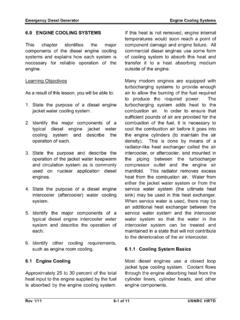
6.0 ENGINE COOLING SYSTEMS If this heat is not removed ...
www.nrc.govheat input to the engine supplied by the fuel is absorbed by the engine cooling system. If this heat is not removed, engine internal temperatures would soon reach a point of component damage and engine failure. All commercial diesel engines use some form of cooling system to absorb this heat and transfer it to a heat absorbing medium
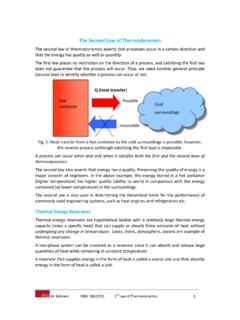
Second Law of Thermodynamics
www.sfu.caThe thermal efficiency of the heat engine increases as the heat source temperature TH is increased. TH K ηth % 1000 70 900 66.6 500 40 350 14.3 The thermal efficiency of actual heat engine can be maximized by supplying heat to the engine at the highest possible temperature (limited by material strength) and rejecting