Financial Statement Discussion and Analysis
discussion and analysis in conjunction with the entity’s annual financial statements. Definition 8. The following term is used in this Standard with the meaning specified: Financial statement discussion and analysis is an explanation of the significant items,
Download Financial Statement Discussion and Analysis

Information
Domain:
Source:
Link to this page:
Documents from same domain
INTERNATIONAL STANDARD ON AUDITING 700 …
www.ifac.org653 ISA 700 AUDITING INTERNATIONAL STANDARD ON AUDITING 700 FORMING AN OPINION AND REPORTING ON FINANCIAL STATEMENTS (Effective for audits of financial statements for periods
INTERNATIONAL STANDARD ON AUDITING 315 …
www.ifac.orgisa 315 262 international standard on auditing 315 identifying and assessing the risks of material misstatement through understanding the entity and its environment
INTERNATIONAL STANDARD ON AUDITING 710 …
www.ifac.orgCOMPARATIVES ISA 710 590 5. This ISA provides guidance on the aud itor’s responsibilities for comparatives and for reporting on them under the two frameworks in separate sections.
INTERNATIONAL STANDARD ON AUDITING 710 ... …
www.ifac.orgCOMPARATIVE INFORMATION—CORRESPONDING FIGURES AND COMPARATIVE FINANCIAL STATEMENTS ISA 710 722 Introduction Scope of this ISA 1. This International Standard on Auditing (ISA) deals with the auditor’s
INTERNATIONAL STANDARD ON RELATED …
www.ifac.orgisrs 4400 370 international standard on related services 4400 (previously isa 920) engagements to perform agreed-upon procedures regarding financial information
INTERNATIONAL STANDARD ON REVIEW …
www.ifac.orgENGAGEMENTS TO REVIEW FINANCIAL STATEMENTS 231 ISRE 2400 REVIEW Introduction 1. The purpose of this International Standard on Review …
INTERNATIONAL STANDARD ON AUDITING 300 …
www.ifac.org249 ISA 300 AUDITING INTERNATIONAL STANDARD ON AUDITING 300 PLANNING AN AUDIT OF FINANCIAL STATEMENTS (Effective for …
Good Governance in the Public Sector— …
www.ifac.orgIFAC Board Good Governance in the Public Sector— Consultation Draft for an International Framework Consultation Draft June 2013 …
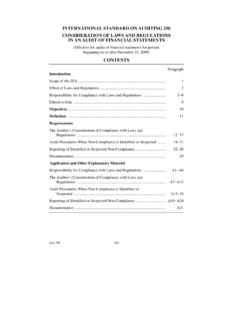
INTERNATIONAL STANDARD ON AUDITING 250 …
www.ifac.orgISA 250 198 INTERNATIONAL STANDARD ON AUDITING 250 CONSIDERATION OF LAWS AND REGULATIONS IN AN AUDIT OF FINANCIAL STATEMENTS (Effective for audits of financial statements for periods
INTERNATIONAL STANDARD ON AUDITING 600 …
www.ifac.org577 isa 600 auditing international standard on auditing 600 special considerations—audits of group financial statements (including the work of
Related documents

WRITING A GOOD DISCUSSION BOARD POST - Zovio
content.bridgepointeducation.comdiscussion board post. For every discussion post, you need to: 1. UNDERSTAND . what the discussion is asking you to do. 2. READ . all required or supplemental materials. 3. WRITE . the post, and. 4. REVIEW . using the Discussion Post Checklist. Now, let’s go through each of these important steps in more detail.
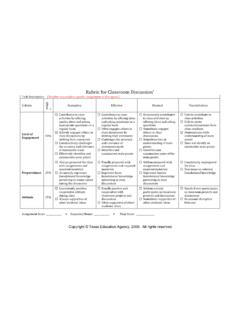
Discussion Rubric Examples - Northwestern University
www.northwestern.eduJan 04, 2016 · related research. Discussion postings are at midpoint or later in the module or contributions are only posted on the last day of the module. Discussion postings
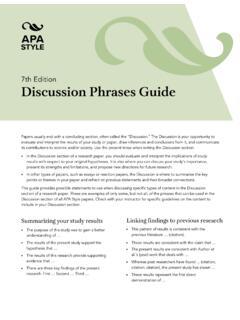
7th Edition Discussion Phrases Guide - APA Style
apastyle.apa.orgDiscussion Phrases Guide Papers usually end with a concluding section, often called the “Discussion.” The Discussion is your opportunity to evaluate and interpret the results of your study or paper, draw inferences and conclusions from it, and communicate its contributions to science and/or society.

DISCUSSION PROTOCOLS
www.gse.harvard.eduDISCUSSION PROTOCOLS P u r p o s e P o s s i b l e P r o t o c o l s N o t e : P r o t o c o l s c a n o f t e n b e u s e d o r mo d i f i e d t o s u i t mu l t i p l e p u r p o s e s Brainstorm or generate new ideas C a r ou sel B r a i n stor m A l so k n ow n a s R ota ti n g R ev i ew .

Discussion Board: Instructions to Students (Examples from ...
www2.palomar.eduDiscussion Board Guidelines. To post to the Discussion Board enter the "Discussion Board" area of the course. Then click on the title of the forum you want to enter. Make sure you check your answers for spelling and grammar. You may go back and edit your answer but not remove it. When you are ready to post your answer click "Submit". When you are

Hatch Discussion Guide - SheKnows
media.sheknows.comHATCH DISCUSSION GUIDE @sheknows #hatchkids STEP BY STEP: Step 1: Review the, “I, Too, Am Harvard” Video and Tumblr. For additional context on this student-led project please read the following article from the Washington Post.

Focus group discussion guide for communities - UNICEF
www.unicef.orgdiscussion, the notetaker should also record the behaviour of the participants (remarkable attitudes, spontaneous reactions, interactions among the participants, etc.). The notetaker should maintain confidentiality whilst recording the discussion by using letters or numbers to identify participants instead of names.