
Hydrogen
commercialization could start once the costs of producing hydrogen have fallen enough to drive uptake in more cost-sensitive industry segments. While hydrogen penetration may not reach the same rates in industry as in other segments, industry’s large energy consumption implies substantial hydrogen demand beyond 2050.
Download Hydrogen

Information
Domain:
Source:
Link to this page:
Documents from same domain

Hydrogen
hydrogencouncil.comContent Executive summary 7 Methodology 12 Our vision. The hydrogen economy in 2050. 14 Hydrogen is a central pillar of the energy transformation required to limit global
Hydrogen
hydrogencouncil.comHydrogen scaling up 8 On the demand side, too, hydrogen molecules are a critical complement to electrons in the challenge of far-reaching decarbonization.

Hydrogen Insights
hydrogencouncil.comThe EU’s stricter CO2 targets for 2030 have supported the increase of carbon prices to USD 55/tCO2, and the UK government has committed to signing the world’s most ambitious climate change target into law: cutting 1990 emission levels by 78% by 2035.

Path to hydrogen competitiveness A cost perspective
hydrogencouncil.comA path to hydrogen cost competitiveness 1 TCO defines the total costs incurred by a customer over the lifetime of using an application, including capital, operating, and financing costs. As public pressure is rising to limit global warming to 1.5 degrees Celsius, global leaders are grappling with how to best take on this unprecedented challenge.

Hydrogen for Net-Zero
hydrogencouncil.comemissions in 2030. By about 2030, hydrogen-powered vehicles (e.g., heavy-duty trucks, coaches, long-range passenger vehicles, and rail) could achieve cost parity with internal combustion engine (ICE) vehicles, leading to a significant scale-up. Given heavy payloads and long distances traveled, trucks account for the biggest share of the abatement.

Hydrogen for Net-Zero
hydrogencouncil.comDemand for hydrogen and its cost- and carbon- cutting role ... aviation and maritime applications above and beyond biofuels where feedstock availability is ... Steel could account for about 4% of hydrogen demand in 2030 while driving nearly 20% of emissions reductions that year.

Hydrogen Insights
hydrogencouncil.comContents Executive summary iii I. Introduction and methodology 2 — Hydrogen Insights is a leading global perspective on hydrogen 2 — The Hydrogen Insights report methodology 3 II. Deployment and investment 6 — Tremendous momentum exists, with over 200 H

Policy review Policy Toolbox for Low Carbon and Renewable ...
hydrogencouncil.comJul 14, 2021 · end-use sectors can pave the way for the hydrogen economy. These policy tools help provide direction and market foresight to the industry. For example, as part of the implementation of the EU Hydrogen Strategy, the European Commission recently announced its …
Roadmap towards
hydrogencouncil.comRoadmap towards zero emissions. Hydrogen Council. 12. facts about the. complementary role of BEVs and FCEVs. Why a ‘combined world’ will be greener, faster and cheaper. Roadmap towards zero emissions. Hydrogen Council. 6. Hydrogen is the cheapest . option in some segments Getting from A to B with hydro-
Related documents

China’s Biotechnology Development: The Role of US and ...
www.uscc.govagricultural biotechnology R&D, this segment may begin to see commercialization should restrictive policies and attitudes change. Due to a sizable lead, though, the US is not likely to lose its standing in the global biotech sector provided it maintains its investment in the industry.
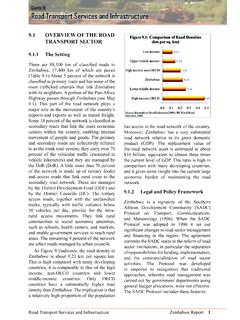
CHAPTER 9: Road Transport Services and Infrastructure
www.afdb.orgsector institutions, in particular the separation of responsibilities for funding, implementation, and the commercialization of road sector activities. The Protocol was developed in response to recognition that traditional approaches, whereby road management was carried out by government departments using ...

The United States of America
www4.unfccc.intApr 15, 2021 · • Industry: Emissions in the heavy industry sector come from energy use, including on-site fuel burning as well as electricity, and direct emissions resulting from industrial processes. The United States government will support research, development, demonstration, commercialization, and deployment of very low- and zero-carbon
National Blueprint for Lithium Batteries 2021-2030
www.energy.govthe transportation sector and provide stationary grid storage, critical to developing the clean-energy economy. The U.S. has a strong research community, a robust innovation infrastructure for technological advancement of batteries, and an …