LAND-CAPABILITY CLASSIFICATION
for crops, grasses, or trees without major reclamation. The grouping of soils into capability units, subclasses, and classes is done primarily on the basis of their capability to produce common cultivated crops and pasture plants without deterioration over a long period of time.
Download LAND-CAPABILITY CLASSIFICATION

Information
Domain:
Source:
Link to this page:
Documents from same domain
Planting Guide - USDA
www.nrcs.usda.govPlanting Guide Plant Materials <http://plant-materials.nrcs.usda.gov/> ... The Quicksand, Kentucky Plant Materials Center has relocated to Alderson, ...
[Federal Register: August 31, 2007 (Volume 72, …
www.nrcs.usda.gov[Federal Register: August 31, 2007 (Volume 72, Number 169)] ... From the Federal Register Online via GPO Access ... DEPARTMENT OF AGRICULTURE .
Urban Hydrology for Small Watersheds - Home | …
www.nrcs.usda.govNatural Resources Conservation Service Conservation Engineering Division Technical Release 55 June 1986 Urban Hydrology for Small Watersheds TR-55
NATIONAL ENGINEERING HANDBOOK 210-VI …
www.nrcs.usda.govNATIONAL ENGINEERING HANDBOOK 210-VI STRUCTURAL ENGINEERING PART 636 AMENDMENT WY-1 SUBJECT: ENG – CHAPTER 52, “STRUCTURAL DESIGN OF FLEXIBLE CONDUITS” Purpose: To provide all field offices a copy of Chapter 52 and supplemental information
Community Garden Guide - USDA
www.nrcs.usda.gov(You will need a planting guide to determine recommended spacing, depth etc. Contact your extension office if you need a guide.) If you’ve made adjustments to the per person needs in column 2, you can estimate the amount to plant using column 4.
Tillage Equipment - USDA
www.nrcs.usda.govAbout this guide... The purpose of the guide is to help you identify commonly used farm equipment. Its color photos and line drawings will facilitate communication between NRCS and our clients by
Dealing with Difficult People - USDA
www.nrcs.usda.govDifficult People Defined and Explained The Hostile Aggressive The bully that always needs to be right. They tend to be abusive, abrupt, accusatory, intimidating,
Soil Data Viewer 6.2 User Guide - USDA
www.nrcs.usda.govSOIL DATA VIEWER OUTPUT ... relieving the user from the burden of querying the soil database, processing the data and then linking the ... After downloading this ...
November 2008 Multi-story Cropping - USDA
www.nrcs.usda.govNovember 2008 The diagram above identifies the effects expected to occur when this practice is applied according to NRCS practice standards and specifications.
hop bush Plant Fact Sheet - USDA
www.nrcs.usda.govbefore summer. The flowers are fairly small and the female flowers develop into papery capsules that may be red, pink, green, yellow, or tan. Seeds are roundish, black and very small; about 1/16 inch wide. There are about 84,200 seeds per pound. D. viscosa is adapted to a wide range of habitats, from sea-level to nearly 8,000 feet and
Related documents
1-D-1 Open Space Agricultural Valuation, Wildlife ...
tpwd.texas.govPlant type established: Trees Shrubs Forbs Grasses . Hay meadow, pasture and cropland management for wildlife . Acres treated: Shelter establishment: Roadside management Terrace/wind breaks Field borders Shelterbelts Conservation Reserve Program lands management Type of vegetation: Annual Perennial Species and percent of mixture
Introduction to Organic Practices
www.ams.usda.govproducers convert forage, legumes and grasses into meat, milk, wool, and other products. Grazing livestock also provide producers with manure, a very important source of fertility in organic farming systems and an excellent means of recycling nutrients. Rotational grazing may improve forage quantity and quality, while preventing over-grazing.
Pasture Management - Livestock and Land
livestockandland.orgpasture rotation is a common and desirable technique for smaller pasture operations (Note: a small pasture operation in this context is considered to be something less than a thousand acres). Pasture rotation provides an opportunity for the pasture to rest after grazing use, and allows the manager to irrigate part of the pasture

HOME MADE ANIMAL FEED CONCENTRATES
pdf.usaid.govAs pasture plants mature, palatability, digestibility, and nutritive value decline, thus it is important to rotate and/or clip pastures to keep plants in a vegetative state. Forbs usually have higher di-gestibility and crude protein levels than grasses at similar stage of maturity. TYPES OF FEED AND CONCENTRATED FEED
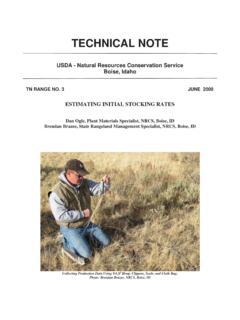
Estimating Initial Stocking Rates - USDA
www.nrcs.usda.govGrasses, Grasslikes, Forbs, Shrubs, and Trees for Idaho provides a more accurate conversion for most common range species. TABLE 3 Green Weight to Dry Weight Conversions Native Range (Green Wt x Percent = Air Dry Weight) % Dry % Dry Deciduous % Dry Grasses Matter Forbs Matter Shrubs Matter Pre-Boot 25-35% Pre-Bloom 15-25% New Foliage 25-40%

Understanding soil pH
www.dpi.nsw.gov.auThe two main laboratory methods used in Australia use calcium chloride or water. Soil pH in calcium chloride This is the standard method of measuring soil pH