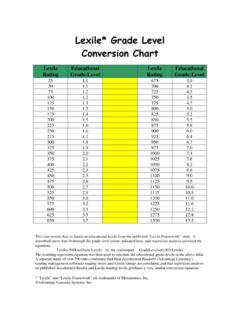
Lexile* Grade Level Conversion Chart - Language arts
Lexile* Grade Level Conversion Chart Lexile Rating Educational Grade-Level Lexile Rating Educational Grade-Level 25 1.1 675 3.9 50 1.1 700 4.1
Download Lexile* Grade Level Conversion Chart - Language arts

Information
Domain:
Source:
Link to this page:
Documents from same domain
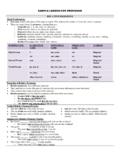
SAMPLE LESSON FOR PRONOUNS RELATIVE ... - …
languageartsreading.dadeschools.netSAMPLE LESSON FOR PRONOUNS RELATIVE PRONOUNS Quick Explanation: Pronouns stand in the place of the noun or nouns. This reduces the number of …
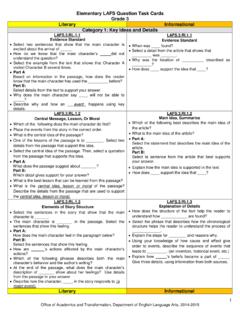
Elementary LAFS Question Task Cards Grade 3 …
languageartsreading.dadeschools.netElementary LAFS Question Task Cards Grade 3 1 Office of Academics and Transformation, Department of English Language Arts, 2014-2015 Literary Informational
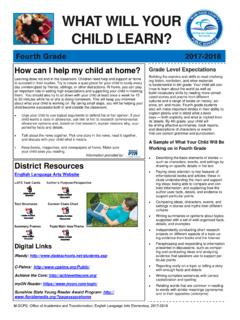
WHAT WILL YOUR CHILD LEARN?
languageartsreading.dadeschools.netWHAT WILL YOUR CHILD LEARN? Grade Level Expectations Building the stamina and skills to read challeng-ing fiction, nonfiction, and other materials
Text Reading Efficiency Procedures - Grade 7
languageartsreading.dadeschools.net3 Examiner’s Copy Oral Reading Fluency– Becoming a Firefighter- Grade 7 Script: I would like you to read out loud for me.I will use my stopwatch to tell me when I …
SAMPLE LESSON FOR NOUNS SINGULAR, PLURAL …
languageartsreading.dadeschools.netSAMPLE LESSON FOR NOUNS SINGULAR, PLURAL & COLLECTIVE NOUNS Quick Explanation: Nouns A noun is the part of speech that names a person, place, thing, or an idea. o People, places, and things can be described using one or more of the five senses.
SAMPLE LESSON FOR PRONOUNS POSSESSIVE …
languageartsreading.dadeschools.netSAMPLE LESSON FOR PRONOUNS POSSESSIVE PRONOUNS Quick Explanation: Pronouns stand in the place of the noun or nouns. This reduces the number of times the noun is repeated. There are many forms of pronouns.Among them are:
SAMPLE LESSON FOR SHOW NOT TELL SHOW …
languageartsreading.dadeschools.netSAMPLE LESSON FOR SHOW NOT TELL SHOW NOT TELL Quick Explanation: To create an interesting story, the writer needs to show not tell the reader about people, places, and things they are writing about.
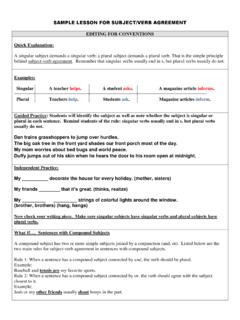
EDITING FOR CONVENTIONS Quick Explanation: …
languageartsreading.dadeschools.netEDITING FOR CONVENTIONS Quick Explanation: A singular subject demands a singular verb; a plural subject demands a plural verb. That is the simple principle behind subject-verb agreement. Remember that singular verbs usually end in s, but plural verbs usually do not. Examples:

10 Things You Need to Know about the Maasai.
languageartsreading.dadeschools.netStudents need to be engaged in some aspect of the writing process (prewriting, drafting, writing, revising, and editing) on a daily basis Collecting a handful of mentor
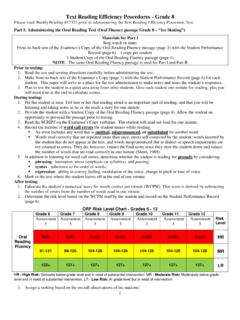
Text Reading Efficiency Procedures - Grade 8
languageartsreading.dadeschools.netreading silently and answering a few questions about the passage previously read. 2. Give the student 5 – 8 minutes to silently read the passage and answer the comprehension questions on a separate
Related documents
english Language arts Literacy in History/social studies ...
www.corestandards.orgCommon Core State StandardS for engliSh language artS & literaCy in hiStory/SoCial StudieS, SCienCe, and teChniCal SubjeCtS appendix a | 3 rarely held accountable for what they are able to read independently (Heller & Greenleaf, 2007).
english Language arts Literacy in History/social studies ...
www.corestandards.orgCommon Core State StandardS for engliSh language artS & literaCy in hiStory/SoCial StudieS, SCienCe, and teChniCal SubjeCtS appendix b | 2 exemplars of reading text complexity, Quality, and range
Academic Standards for English Language Arts
static.pdesas.orgPENNSYLVANIA CORE STANDARDS English Language Arts Grade Pre K–5 March 1, 2014 2 INTRODUCTION These standards describe what students should know and be able to do with the English language, prekindergarten through Grade 12.
Older Struggling Readers: What Works?
www.balancedreading.comOlder Struggling Readers: What Works? The BIG Picture Many middle and high schools report large numbers of students who are reading 3, 4, and 5
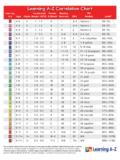
Learning Accelerated Fountas Reading PM A-Z Ages Grade ...
www.readinga-z.comLearning A-Z Correlation Chart This correlation chart illustrates how Learning A-Z levels approximately correlate to other leveling systems commonly
Contents
assets.readingeggsassets.comlevel 6 level 7 level 8 level 9 level 10 level 11 level 12 level 13 level 14 level 15 level 16 level 17 level 18 level 19 level 20 level 21 level 22 level 23 level 24

The 2018 Grades 3-8 New York State Assessments: What ...
www.p12.nysed.govThe 2018 Grades 3-8 New York State Assessments: What Parents Need to Know Every spring, the Grades 3-8 English Language Arts (ELA) and Mathematics Tests are administered to students across
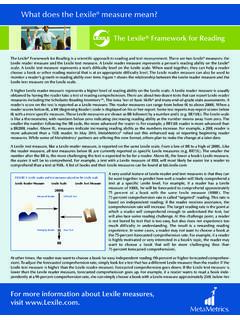
What does the LM mean - lexile.com
lexile.comWhat does the Lexile® measure mean? The Lexile® Framework for Reading The Lexile® Framework for Reading is a scienti˜c approach to reading and text measurement.
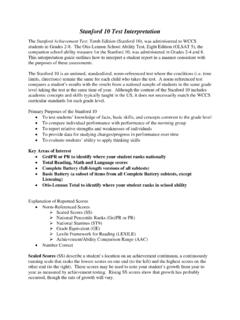
Stanford 10 Test Interpretation
www.wccs.orgStanford 10 Test Interpretation The Stanford Achievement Test, Tenth Edition (Stanford 10), was administered to WCCS students in Grades 2-8. The Otis-Lennon School Ability Test, Eight Edition (OLSAT 5), the companion school ability measure for the Stanford 10, was administered in Grades 2 …