
Living in Space
decompression sickness (“the bends”). It is neither important nor practical to reclaim this nitrogen. (return) Water: 7. Reclaiming water is a more complex process than recycling air. Because water on the space shuttle is produced by fuel cells and then stored, water recycling is not an issue. On the ISS, however, there are no fuel cells.
Download Living in Space

Information
Domain:
Source:
Link to this page:
Documents from same domain
Q: What do you do on the International Space …
www.nasa.govQ: What do you do on the International Space Station (ISS)? A: Astronauts and cosmonauts on the space station stay busy.There’s lots of work to operate the many science experiments on board.
NEPA RECORD OF ENVIRONMENTAL …
www.nasa.govDec 13, 2012 · JSC Form 1119 (Revised January 25, 2011)(MS Word October 2010) NEPA RECORD OF ENVIRONMENTAL CONSIDERATION (REC) Complete this form if you answered “yes” or “unknown” on any JF 1138 entries and if
Use of XSLT to transform the output of multiple …
www.nasa.govNASA IV&V International Workshop 2014 1 Use of XSLT to transform the output of multiple Static Code Analysis tools into a consistent analysis spreadsheet format
International Space Station Activity Book
www.nasa.govNational Aeronautics and Space Administration . Grades K-5 . This activity book belongs to: International Space Station Activity Book >>> For more information, check out the web sites on page 30!
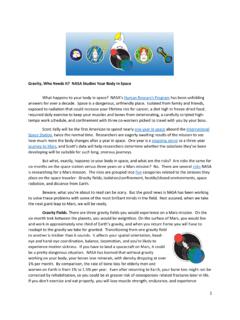
Gravity, Who Needs It
www.nasa.govGravity, Who Needs It? ... six months on the space station versus three years on a Mars mission? No. ... human, being more isolated ...
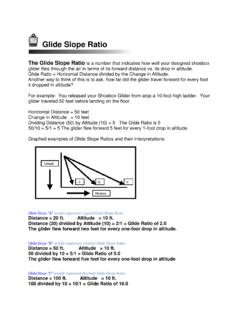
Glide Slope Ratio
www.nasa.govGlide Slope Ratio The Glide Slope Ratio is a number that indicates how well your designed shoebox glider flies through the air in terms of its forward distance vs. its drop in altitude. Glide Ratio = Horizontal Distance divided by the Change in Altitude.
Modeling, SiMulation, inforMation technology & …
www.nasa.govTA11-1 exeCuTive Summary Figure 1 is an initial draft strategic roadmap for the Modeling, Simulation, Information Technol-ogy and Processing Technology Area.
NASA Technology Roadmaps
www.nasa.gov2015 NASA Technology Roadmaps TA 11: Modeling, Simulation, Information Technology, and Processing TA 11- 2 July 2015 Foreword NASA is leading the way with a balanced program of space exploration, aeronautics, and science research.
A Journey to Inspire, Innovate, and Discover
www.nasa.govReport of the President’s Commission on 2 Implementation of United States Space Exploration Policy Transmittal Letter June 4, 2004 The Honorable George W. Bush
National Aeronautics and Space Administration Headquarters
www.nasa.govGEMS is a Category 3 project (less than $250M) in Phase B, and was requesting transition from Formulation to Implementation (Phase C) where the official Agency baseline is established and external commitments are made
Related documents

Pathway Analysis : An Introduction
bioinformatics.mdanderson.org6 Decompression Sickness 7.14 9.71E-08 7 Barotrauma 7.14 9.71E-08 8 Vaccinia 14.29 2.05E-07 9 Poxviridae Infections 14.29 4.19E-07 10 Leukemia, B-Cell 14.29 8.59E-07 11 Lymphoma, B-Cell 26.19 9.68E-07 12 Lymphoma, High-Grade 14.29 3.27E-06
altitude decompression sickness
www.faa.govDecompression sickness (DCS) describes . a condition characterized by a variety of symptoms resulting from exposure to low barometric pressures that cause inert gases (mainly nitrogen), normally dissolved in body fluids and tissues, to come out of physical solution and form bubbles.
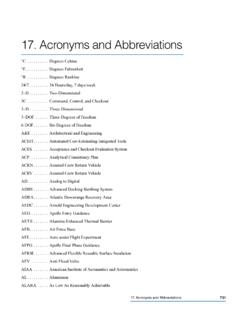
17. Acronyms and Abbreviations - NASA
www.nasa.gov17. Acronyms and Abbreviations 733 BLS. . . . . . . . . .Bureau.of.Labor.Statistics BMI. . . . . . . . . .Bismaleimide BOGS. . . . . . . .Blade.Outer.Gas.Seal

HEALTH & SAFETY RISK ASSESSMENTS
www.newcastle.edu.au•What can physically or psychologically injure or damage a person (harm); • The level of possible harm; • What is currently being done to avoid the harm (the Control); • Whether that control will be effective to avoid the harm; • Whether or not additional controls need to be put in place to better avoid the harm. A Health and Safety Risk Assessment is a process where you identify ...

Ⅰ.推奨グレードの決定およびエビデンスレベルの分類
www.japanpt.or.jp1) Yoshiyama M, Asamoto S, Kobayashi N, et al.: Spinal cord decompression sickness associated with scuba diving: correlation of immediate and delayed magnetic resonance imaging findings with severity of neurologic impairment--a report on 3 cases. Surg Neurol 67: 283-287, 2007. 2.理学所見 1)呼吸機能評価 推奨グレードB