<insert self-management goal> Quick Reference Guide
Foot: Monofi lament/Vibration yearly or more if abnormal Kidney: Test eGFR and ACR yearly, or more if abnormal Retinopathy: type 1 - annually; type 2 - q1-2 yrs SS mokingƒcessation If smoker: Ask permission to give advice, arrange therapy and provide support S Self-management, stress, other barriers Set personalized goals (see ...
Download <insert self-management goal> Quick Reference Guide

Information
Domain:
Source:
Link to this page:
Documents from same domain
Canadian Journal of Diabetes
guidelines.diabetes.caindependence is lost and/or life expectancy shortens, the benefit of lower glycemic targets is diminished and the risk of hypoglyce-mia increases (40–42).

DiabetesCanadaClinicalPracticeGuidelinesExpertCommittee ...
guidelines.diabetes.caType2DiabetesinChildrenandAdolescents,p.S247 DiabetesandPregnancy,p.S255 Relevant Appendices Appendix 5. Self-Monitoring of Blood Glucose (SMBG) RecommendationToolforHealth-CareProviders

ÉTAPE 1 - guidelines.diabetes.ca
guidelines.diabetes.caSuggestions pour l’amorçage et le titrage de l’insuline dans les cas de diabète de type 2 Les personnes qui commencent à prendre de l’insuline doivent être renseignées sur la prévention, la reconnaissance et le traitement de l’hypoglycémie.
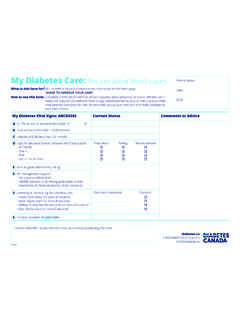
My Diabetes Care: Patient Name
guidelines.diabetes.caA1C The A1C is a blood test that will help you know whether your blood sugar has been at target over the past 3 months. A lower A1C will reduce your risk A lower A1C will reduce your risk of heart disease, stroke, kidney disease, eye problems, nerve damage, and foot problems.

High blood pressure and diabetes - guidelines.diabetes.ca
guidelines.diabetes.caWhy is controlling blood pressure important for people with diabetes? When blood pressure is high, it puts stress on the body. This can cause damage to the heart, brain, kidneys,
<insert self-management goal> Quick Reference Guide
guidelines.diabetes.caA1C <1.5% above target A1C ≥1.5% above target Symptomatic hyperglycemia and/or metabolic decompensation* Add additional antihyperglycemic agent best suited to the individual based on the following: Clinical Considerations Choice of Agent Avoidance of hypoglycemia and/or weight gain with adequate glycemic effi cacy

Pharmacologic Glycemic Management of Type 2 Diabetes in ...
guidelines.diabetes.ca2018 (1). New evidence has been published since the 2018 guide-lines, prompting this update to our recommendations for Chapter 13, “Pharmacologic Glycemic Management of Type 2 Diabetes in Adults” (1). What’s New in 2020 First, additional agents approved for use in Canada have been shown to have cardiovascular (CV) benefits in patients ...

Glycemic Index Food Guide - Diabetes Canada
guidelines.diabetes.caTry these meal planning ideas to lower meal GI: &RRN\RXUSDVWDDOGHQWH 4UP &KHFN\RXU pasta package instructions for cooking time. Make fruits and milk part of your meal plate (Figure 1). These foods often have a low GI and make a healthy dessert. Try lower GI grains, such as barley and bulgur. Pulses can be grains and starches or meat and
Glycemic Index Food Guide - Diabetes Canada
guidelines.diabetes.caThe glycemic index (GI) is a scale that ranks a carbohydrate-containing food or drink by how much it raises blood sugar levels after it is eaten or drank. Foods with a high GI increase blood sugar higher and faster than foods with a low GI. There are three GI categories:

Lows and highs: blood sugar levels - Diabetes Canada
guidelines.diabetes.caWhat is LOW blood sugar? When the amount of blood glucose (sugar in your blood) has dropped below your target range (less than 4 mmol/L), it is called low blood sugar or hypoglycemia. What are the signs of a LOW blood sugar level? You may feel: • Shaky, light-headed, nauseated • Nervous, irritable, anxious • Confused, unable to concentrate
Related documents
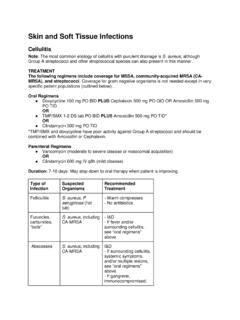
Skin and Soft Tissue Infections - UCLA Health
asp.mednet.ucla.eduDiabetic Foot Infections . TREATMENT . Treatment depends on clinical severity . Infection Severity Clinical Manifestations. Uninfected No purulence or inflammation Mild Presence of purulence and ≥ 1 signs of inflammation* and cellulitis (if present) ≤ 2 cm around ulcer limited to skin or superficial subcutaneous tissue Moderate Same as mild ...
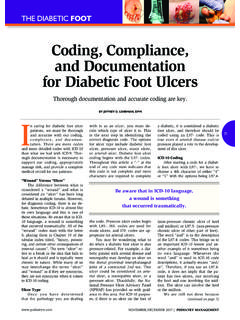
Coding, Compliance, and Documentation for Diabetic Foot …
www.podiatrym.comes, if there is an ulcer on the foot of Thorough documentation and accurate coding are key. Coding, Compliance, and Documentation for Diabetic Foot Ulcers By Jeffrey D. Lehrman, DPm Be aware that in ICD-10 language, a wound is something that occurred traumatically. Continued on page 72 THE DIABETIC fOOT

Conducting a Comprehensive Skin Assessment
www.ahrq.gov–Preulceration in the diabetic foot –Inflammation or infection 15. Parameter 2: Skin Turgor (Firmness) •Skin normally returns to its original state quickly when stretched. •Can you “tent” the skin? •Skin may be slow to return to its original shape in older or dehydrated patients. 16.

Save up to 30% on eligible expenses
www.tasconline.com• Foot care (corn/wart medication, antifungal treatments, etc.) • Hemorrhoid creams & treatments • Hydrogen peroxide & rubbing alcohol • Itch relief (calamine lotion, Cortizone cream, etc.) • Nasal spray • Oral care (denture cream, pain reliever, teething gel, etc.) • Pain relievers - internal/external (Tylenol, Advil, Bengay, etc.)

Guidelines on the diagnosis and treatment of foot ...
iwgdfguidelines.orgdiabetic foot, diagnosis, foot ulcer, guidelines, infection, microbiology, osteomyelitis LIST OF RECOMMENDATIONS 1. (a) Diagnose a soft tissue diabetic foot infection clinically, based on the presence of local or systemic signs and symptoms of inflamma-tion. (Strong; low) (b) Assess the severity of any diabetic foot infection using the
Pie Diabético - FESEMI
www.fesemi.orgClinical Care of the Diabetic Foot. David G: Amstrong and lawrence A. Lavery, editors. Alexandria, VA: American Diabetes Association, 2005 . Diabetes: Importancia Regla del 50% 50% de las amputaciones Transfemoral / Transtibial 50% de los amputados 2ª amputación ≤ 5 años 50% de los pacientes Mueren en ≤ 5 años ...