<insert self-management goal> Quick Reference Guide
A1C <1.5% above target A1C ≥1.5% above target Symptomatic hyperglycemia and/or metabolic decompensation* Add additional antihyperglycemic agent best suited to the individual based on the following: Clinical Considerations Choice of Agent Avoidance of hypoglycemia and/or weight gain with adequate glycemic effi cacy
Download <insert self-management goal> Quick Reference Guide

Information
Domain:
Source:
Link to this page:
Documents from same domain
Canadian Journal of Diabetes
guidelines.diabetes.caindependence is lost and/or life expectancy shortens, the benefit of lower glycemic targets is diminished and the risk of hypoglyce-mia increases (40–42).

DiabetesCanadaClinicalPracticeGuidelinesExpertCommittee ...
guidelines.diabetes.caType2DiabetesinChildrenandAdolescents,p.S247 DiabetesandPregnancy,p.S255 Relevant Appendices Appendix 5. Self-Monitoring of Blood Glucose (SMBG) RecommendationToolforHealth-CareProviders

ÉTAPE 1 - guidelines.diabetes.ca
guidelines.diabetes.caSuggestions pour l’amorçage et le titrage de l’insuline dans les cas de diabète de type 2 Les personnes qui commencent à prendre de l’insuline doivent être renseignées sur la prévention, la reconnaissance et le traitement de l’hypoglycémie.
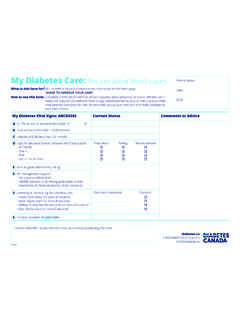
My Diabetes Care: Patient Name
guidelines.diabetes.caA1C The A1C is a blood test that will help you know whether your blood sugar has been at target over the past 3 months. A lower A1C will reduce your risk A lower A1C will reduce your risk of heart disease, stroke, kidney disease, eye problems, nerve damage, and foot problems.

High blood pressure and diabetes - guidelines.diabetes.ca
guidelines.diabetes.caWhy is controlling blood pressure important for people with diabetes? When blood pressure is high, it puts stress on the body. This can cause damage to the heart, brain, kidneys,
<insert self-management goal> Quick Reference Guide
guidelines.diabetes.caA1C <1.5% above target A1C ≥1.5% above target Symptomatic hyperglycemia and/or metabolic decompensation* Add additional antihyperglycemic agent best suited to the individual based on the following: Clinical Considerations Choice of Agent Avoidance of hypoglycemia and/or weight gain with adequate glycemic effi cacy

Pharmacologic Glycemic Management of Type 2 Diabetes in ...
guidelines.diabetes.ca2018 (1). New evidence has been published since the 2018 guide-lines, prompting this update to our recommendations for Chapter 13, “Pharmacologic Glycemic Management of Type 2 Diabetes in Adults” (1). What’s New in 2020 First, additional agents approved for use in Canada have been shown to have cardiovascular (CV) benefits in patients ...

Glycemic Index Food Guide - Diabetes Canada
guidelines.diabetes.caTry these meal planning ideas to lower meal GI: &RRN\RXUSDVWDDOGHQWH 4UP &KHFN\RXU pasta package instructions for cooking time. Make fruits and milk part of your meal plate (Figure 1). These foods often have a low GI and make a healthy dessert. Try lower GI grains, such as barley and bulgur. Pulses can be grains and starches or meat and
Glycemic Index Food Guide - Diabetes Canada
guidelines.diabetes.caThe glycemic index (GI) is a scale that ranks a carbohydrate-containing food or drink by how much it raises blood sugar levels after it is eaten or drank. Foods with a high GI increase blood sugar higher and faster than foods with a low GI. There are three GI categories:

Lows and highs: blood sugar levels - Diabetes Canada
guidelines.diabetes.caWhat is LOW blood sugar? When the amount of blood glucose (sugar in your blood) has dropped below your target range (less than 4 mmol/L), it is called low blood sugar or hypoglycemia. What are the signs of a LOW blood sugar level? You may feel: • Shaky, light-headed, nauseated • Nervous, irritable, anxious • Confused, unable to concentrate
Related documents

A1C to Blood Glucose Conversion Table - Coping.us
coping.usmeals, activity, medications and stress affect your blood sugar at a single moment in time, as well as over the course of a d ay or week. A1C Glucose A1C Glucose A1C Glucose A1C Glucose A1C Glucose A1C Glucose 4 68 6 126 8 183 10 240 12 298 14 355 4.1 71

Diabetes Meds on a Budget
diabetesed.netFor patients with A1c above target on oral medications, the addition of basal or long acting insulin is a usual next step. When the basal insulin dose exceeds more than 0.25 units of insulin per kg and blood glucose levels are still above target, the addition of …

Management of Type 2 Diabetes Mellitus
www.med.umich.eduJan 01, 2003 · Target A1c: assess individual’s risks and benefits of treatment. Factors heightening risk of tight control (hypoglycemia) History of severe hypoglycemia (inability to treat without assistance). Hypoglycemia unawareness. Advanced cardiovascular, cerebrovascular and especially renal disease.

Blood Sugar and A1c Charts - Diabetes Meal Plans
diabetesmealplans.comcomplications. By controlling your blood sugar, and bringing it back within, or close to normal range, you improve your health and reduce your risk of nasty consequences. HbA1c Hemoglobin A1c (HbA1c or A1c) is a blood test that reflects the average amount of glucose in your blood from the previous 3 month period.

Toolkit No. 15 All About Blood Glucose
professional.diabetes.orgAsk your health care team for this test at least twice a year. If your average blood glucose is too high, you may need a change in your diabetes care plan. What does my A1C number mean? Find your A1C number on the left. Then, look at the number on the right under eAG to see your estimated Average Glucose for the past 2 to 3 months.
DEPARTMENT OF THE AIR FORCE AIR FORCE RESERVE …
media.defense.govMay 17, 2019 · 5. For uncommon evaluations (e.g. CRO or Referral) coordinate with your CSS to ensure all requirements for the evaluation have been met. Typically, CRO reports are required when a rater has changed and they have completed …

Care Management Toolkit - Mi-CCSI
www.miccsi.orgThe goal of case management is to help you manage your health and bring about a better quality of life. ... Have you and Dr. _____ set a target for your blood pressure? Y N If no – this is a f/u action for the care manager ... PHQ9 for depression, Blood Sugars or A1C for diabetics, Blood Pressure for HTN, Fluids/weights for heart failure ...

User’s Manual
freestyleserver.comTarget Glucose Range The Target Glucose Range is displayed on some glucose graphs and used to calculate your Time in Target. You can select a range within 70 to 180 mg/dL (3.9 to 10.0 mmol/L). Note: The range must be at least 30 mg/dL (1.7 mmol/L) wide (e.g. 90 to 120 mg/dL (5.0 to 6.7 mmol/L)) in order to generate reports.