<insert self-management goal> Quick Reference Guide
• Refer to diabetes clinic 416569-18 2018 Clinical Practice Guidelines Quick Reference Guide guidelines.diabetes.ca diabetes.ca | 1-800-BANTING (226-8464) Individualized goal setting Potential Self-management Goals Examples Eat healthier See a dietitian to help develop a healthy eating plan. Be more active Increase physical activity with the ...
Download <insert self-management goal> Quick Reference Guide

Information
Domain:
Source:
Link to this page:
Documents from same domain
Canadian Journal of Diabetes
guidelines.diabetes.caindependence is lost and/or life expectancy shortens, the benefit of lower glycemic targets is diminished and the risk of hypoglyce-mia increases (40–42).

DiabetesCanadaClinicalPracticeGuidelinesExpertCommittee ...
guidelines.diabetes.caType2DiabetesinChildrenandAdolescents,p.S247 DiabetesandPregnancy,p.S255 Relevant Appendices Appendix 5. Self-Monitoring of Blood Glucose (SMBG) RecommendationToolforHealth-CareProviders

ÉTAPE 1 - guidelines.diabetes.ca
guidelines.diabetes.caSuggestions pour l’amorçage et le titrage de l’insuline dans les cas de diabète de type 2 Les personnes qui commencent à prendre de l’insuline doivent être renseignées sur la prévention, la reconnaissance et le traitement de l’hypoglycémie.
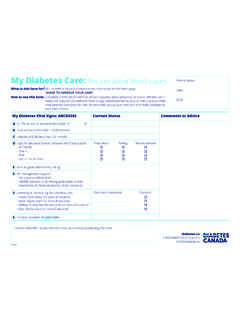
My Diabetes Care: Patient Name
guidelines.diabetes.caA1C The A1C is a blood test that will help you know whether your blood sugar has been at target over the past 3 months. A lower A1C will reduce your risk A lower A1C will reduce your risk of heart disease, stroke, kidney disease, eye problems, nerve damage, and foot problems.

High blood pressure and diabetes - guidelines.diabetes.ca
guidelines.diabetes.caWhy is controlling blood pressure important for people with diabetes? When blood pressure is high, it puts stress on the body. This can cause damage to the heart, brain, kidneys,
<insert self-management goal> Quick Reference Guide
guidelines.diabetes.caA1C <1.5% above target A1C ≥1.5% above target Symptomatic hyperglycemia and/or metabolic decompensation* Add additional antihyperglycemic agent best suited to the individual based on the following: Clinical Considerations Choice of Agent Avoidance of hypoglycemia and/or weight gain with adequate glycemic effi cacy

Pharmacologic Glycemic Management of Type 2 Diabetes in ...
guidelines.diabetes.ca2018 (1). New evidence has been published since the 2018 guide-lines, prompting this update to our recommendations for Chapter 13, “Pharmacologic Glycemic Management of Type 2 Diabetes in Adults” (1). What’s New in 2020 First, additional agents approved for use in Canada have been shown to have cardiovascular (CV) benefits in patients ...

Glycemic Index Food Guide - Diabetes Canada
guidelines.diabetes.caTry these meal planning ideas to lower meal GI: &RRN\RXUSDVWDDOGHQWH 4UP &KHFN\RXU pasta package instructions for cooking time. Make fruits and milk part of your meal plate (Figure 1). These foods often have a low GI and make a healthy dessert. Try lower GI grains, such as barley and bulgur. Pulses can be grains and starches or meat and
Glycemic Index Food Guide - Diabetes Canada
guidelines.diabetes.caThe glycemic index (GI) is a scale that ranks a carbohydrate-containing food or drink by how much it raises blood sugar levels after it is eaten or drank. Foods with a high GI increase blood sugar higher and faster than foods with a low GI. There are three GI categories:

Lows and highs: blood sugar levels - Diabetes Canada
guidelines.diabetes.caWhat is LOW blood sugar? When the amount of blood glucose (sugar in your blood) has dropped below your target range (less than 4 mmol/L), it is called low blood sugar or hypoglycemia. What are the signs of a LOW blood sugar level? You may feel: • Shaky, light-headed, nauseated • Nervous, irritable, anxious • Confused, unable to concentrate
Related documents

Contour Diabetes app User Guide
www.contournextone.comThe CONTOUR DIABETES app is intended for use by individuals with insulin and non-insulin treated diabetes, and/or their caregivers, to store, view, trend and share blood glucose meter readings, either manually entered in the

Ambetter Quick Reference Guide
ambetter.pshpgeorgia.comQUICK REFERENCE GUIDE General Information Provider and Member Services Phone: 1-877-687-1180 or TTY/TDD 1-877-941-9231 . After Hours Phone: 1-877-687-1180 or TTY/TDD 1-877-941-9231 . Website Ambetter.pshpgeorgia.com . Website services include verifying eligibility, benefits, cost shares, submit prior authorizations, submission of claims,
VETERINARY PRACTICE GUIDELINES 2018 AAHA Diabetes ...
www.aaha.orgQuick-reference algorithms on responding to hypoglycemia, DM monitoring, and DM troubleshooting. New information on commercially available insulin formula-tions and recommendations for their use in dogs and cats. Recommendations for home monitoring of DM, a disease management approach that can contribute substantially to a favorable treatment ...
Wound Assessment
www.woundcareresource.comquick method and works best with regularly shaped, small to medium sized wounds like the one in the photo on the right(3, 4). Multiply length x width to convert to an area measurement. In irregularly shaped wounds, it is more accurate to trace the wound onto acetate and measure the area by placing the tracing on grid

COVID-19 Adult Quick Clinical Guide: Initial ...
med.stanford.eduMar 17, 2020 · COVID-19 Adult Quick Clinical Guide: Inpatient Management Respiratory Management • Non-invasive ventilation (BiPAP, CPAP), High Flow Nasal Cannula (HFNC), Humidified Venturi Masks, and nebulizers all increase aerosolization and should not be usedin caring for PUI or COVID-19 patients.