<insert self-management goal> Quick Reference Guide
Guide guidelines.diabetes.ca diabetes.ca | 1-800-BANTING (226-8464) Individualized goal setting Potential Self-management Goals Examples Eat healthier See a dietitian to help develop a healthy eating plan. Be more active Increase physical activity with the goal of getting to 150 minutes aerobic activity/week and resistance exercise 2-3 times/week.
Download <insert self-management goal> Quick Reference Guide

Information
Domain:
Source:
Link to this page:
Documents from same domain
Canadian Journal of Diabetes
guidelines.diabetes.caindependence is lost and/or life expectancy shortens, the benefit of lower glycemic targets is diminished and the risk of hypoglyce-mia increases (40–42).

DiabetesCanadaClinicalPracticeGuidelinesExpertCommittee ...
guidelines.diabetes.caType2DiabetesinChildrenandAdolescents,p.S247 DiabetesandPregnancy,p.S255 Relevant Appendices Appendix 5. Self-Monitoring of Blood Glucose (SMBG) RecommendationToolforHealth-CareProviders

ÉTAPE 1 - guidelines.diabetes.ca
guidelines.diabetes.caSuggestions pour l’amorçage et le titrage de l’insuline dans les cas de diabète de type 2 Les personnes qui commencent à prendre de l’insuline doivent être renseignées sur la prévention, la reconnaissance et le traitement de l’hypoglycémie.
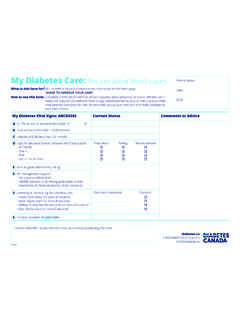
My Diabetes Care: Patient Name
guidelines.diabetes.caA1C The A1C is a blood test that will help you know whether your blood sugar has been at target over the past 3 months. A lower A1C will reduce your risk A lower A1C will reduce your risk of heart disease, stroke, kidney disease, eye problems, nerve damage, and foot problems.

High blood pressure and diabetes - guidelines.diabetes.ca
guidelines.diabetes.caWhy is controlling blood pressure important for people with diabetes? When blood pressure is high, it puts stress on the body. This can cause damage to the heart, brain, kidneys,
<insert self-management goal> Quick Reference Guide
guidelines.diabetes.caA1C <1.5% above target A1C ≥1.5% above target Symptomatic hyperglycemia and/or metabolic decompensation* Add additional antihyperglycemic agent best suited to the individual based on the following: Clinical Considerations Choice of Agent Avoidance of hypoglycemia and/or weight gain with adequate glycemic effi cacy

Pharmacologic Glycemic Management of Type 2 Diabetes in ...
guidelines.diabetes.ca2018 (1). New evidence has been published since the 2018 guide-lines, prompting this update to our recommendations for Chapter 13, “Pharmacologic Glycemic Management of Type 2 Diabetes in Adults” (1). What’s New in 2020 First, additional agents approved for use in Canada have been shown to have cardiovascular (CV) benefits in patients ...

Glycemic Index Food Guide - Diabetes Canada
guidelines.diabetes.caTry these meal planning ideas to lower meal GI: &RRN\RXUSDVWDDOGHQWH 4UP &KHFN\RXU pasta package instructions for cooking time. Make fruits and milk part of your meal plate (Figure 1). These foods often have a low GI and make a healthy dessert. Try lower GI grains, such as barley and bulgur. Pulses can be grains and starches or meat and
Glycemic Index Food Guide - Diabetes Canada
guidelines.diabetes.caThe glycemic index (GI) is a scale that ranks a carbohydrate-containing food or drink by how much it raises blood sugar levels after it is eaten or drank. Foods with a high GI increase blood sugar higher and faster than foods with a low GI. There are three GI categories:

Lows and highs: blood sugar levels - Diabetes Canada
guidelines.diabetes.caWhat is LOW blood sugar? When the amount of blood glucose (sugar in your blood) has dropped below your target range (less than 4 mmol/L), it is called low blood sugar or hypoglycemia. What are the signs of a LOW blood sugar level? You may feel: • Shaky, light-headed, nauseated • Nervous, irritable, anxious • Confused, unable to concentrate
Related documents
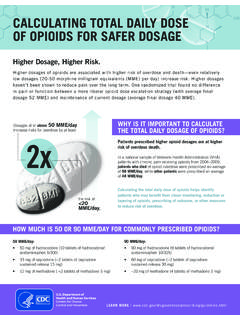
Calculating Total Daily Dose of Opioids For Safer Dosage
www.cdc.govpatients with chronic pain receiving opioids from 2004–2009, patients who died. of opioid overdose were prescribed an average of . 98 MME/day, while . other patients. were prescribed an average of . 48 MME/day. Calculating the total daily dose of opioids helps identify patients who may beneit from closer monitoring, reduction or

Inpatient Management of Opioid Use Disorder: …
cha.comSplit Dosing: o Split dosing may be necessary for patient with acute or chronic severe pain o Pregnancy Only: As gestational age increases, plasma levels of buprenorphine change secondary to a decrease in half-life and an increase in clearance and volume of distribution. This generally occurs during the second and third trimester.
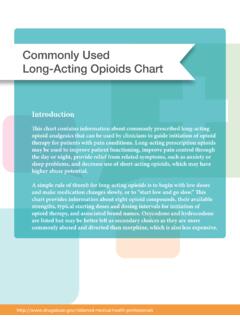
Commonly Used Long-Acting Opioids Chart
www.drugabuse.govopioid analgesics that can be used by clinicians to guide initiation of opioid therapy for patients with pain conditions. Long-acting prescription opioids may be used to improve patient functioning, improve pain control through the day or night, provide …
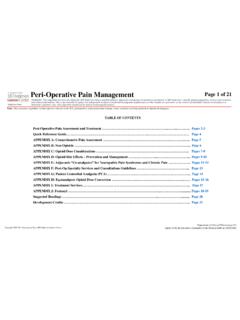
Peri-Operative Pain Management Page 1 of 21
www.mdanderson.orgDosing frequency: For long-acting opioids, dosing frequency is typically every 12 hours to every 24 hours depending on the agent. Refer to Appendix C for Opioid Dose Considerations. Breakthrough pain: Doses of short-acting opioids for breakthrough pain should be 10 to 20% of the total daily dose given every 1 to 4 hours as needed.
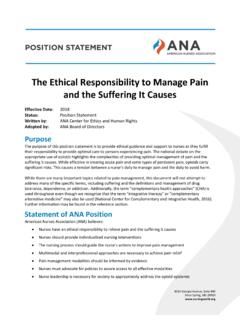
The Ethical Responsibility to Manage Pain and the ...
www.nursingworld.orgtool to help determine the appropriate dosing plan for an individual’s pain management (Montgomery et al., 2017). Ethical considerations The nurse “uses advocacy, education, and a supportive approach to honor the patient’s right to self-determination, autonomy, and dignity” (ANA, 2016, p. 24). All nurses have an ethical obligation to ...

Constipation in Children - Medical Management
www.ohsu.eduRecommended management approach • Maintenance stool softeners and/or laxatives should be in sufficient amounts to elicit a daily, mushy bowel movement. Most children require this aggressive approach for 9-18 months to break the cycle of fear of pain with defecation and stool withholding. Weaning too soon is a common mistake.

BUPRENORPHINE/NALOXONE SUBOXONE GUIDE DOSAGE …
www.rxfiles.caUSE IN PAIN MANAGEMENT SIDE EFFECTS AND MANAGEMENT Headache Due to the long onset and duration of action of buprenorphine, NOT appropriate for acute pain management → use analgesics (NSAIDs/ Tylenol Only used for moderate-severe chronic pain (may require multiple daily doses vs once daily dose for ODT) when patient is stabilized

PATIENT SAFETY CARD FOR EMERGENCY PAIN MANAGEMENT
www.vivitrol.comPlease see attached Prescribing Information and Medication Guide. Please review Medication Guide with your healthcare provider. VIV-005896 Important Information For Emergency Pain Management I am currently taking VIVITROL® (naltrexone for extended-release injectable suspension), an opioid antagonist.