Medication Administration in Child Care Programs
emy of Pediatrics and the American Public Health Association, 2002). ... Antihistamines (e.g. Benadryl) – used to treat aller-gic reactions such as runny nose or hives. ... its use must be provided by the parent and health care provider. There is a form available from CCL
Download Medication Administration in Child Care Programs

Information
Domain:
Source:
Link to this page:
Documents from same domain
Safe Infant Sleep: Reducing the Risk of SIDS and …
cchp.ucsf.eduProduct Safety Commission (CPSC ... Safe Infant Sleep: Reducing the Risk of SIDS ... National Resource Center for Health and Safety in Child Care and Early ...
California Child Care Disaster Plan 2016
cchp.ucsf.eduANNEX TO THE STATE OF CALIFORNIA EMERGENCY PLAN California Child Care Disaster Plan 2016 Developed by the UCSF California Childcare Health Program with
Health and Safety Checklist for Early Care and …
cchp.ucsf.eduWe would also like to thank the child care health consultants, child care health advocates and other health and safety experts who participated in the online survey to identify CFOC3 standards to include in the Checklist.
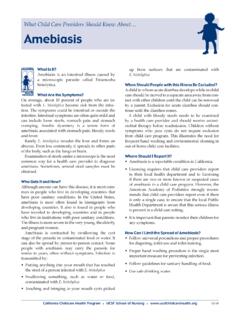
What Child Care Providers Should Know About… Amebiasis
cchp.ucsf.eduWhat Child Care Providers Should Know About… California Childcare Health Program • UCSF School of Nursing • www.ucsfchildcarehealth.org 05/09 Amebiasis What Is It? Amebiasis …
Health and Safety Checklist for Early Care and Education ...
cchp.ucsf.eduUser Manual . Health and Safety Checklist for Early Care and Education Programs: Based on. Caring for Our Children . National Health and Safety Performance Standards, Third Edition
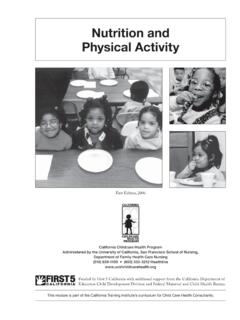
Nutrition and Physical Activity - University of California ...
cchp.ucsf.eduNutrition and physical activity are an important part of a healthy childhood. For optimal health, children need a variety of safe and nutritious foods, accompanied by daily physical activity.
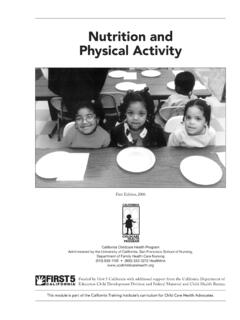
Nutrition and Physical Activity - University of California ...
cchp.ucsf.eduNutrition and physical activity are an important part of a healthy childhood. For good health, children need a variety of safe and nutritious foods, along with daily physical activity.
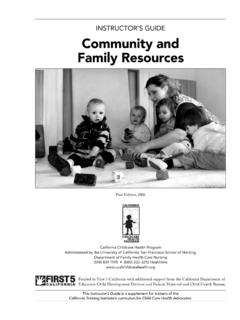
INSTRUCTOR’S GUIDE Community and Family Resources
cchp.ucsf.eduINSTRUCTOR’S GUIDE Community and Family Resources This Instructor’s Guide is a supplement for trainers of the California Training Institute’s curriculum for Child Care Health Advocates. California Childcare Health Program
Fact Sheets for Families Helping Young Children Develop ...
cchp.ucsf.eduFact Sheets for Families 06/10 Helping Young Children Develop Self-Esteem Self-esteem or feelings of self-worth are linked to success in life, and play an important role in the development of

Health & Safety Notes Supporting Breastfeeding Families
cchp.ucsf.eduThe feeding care plan for an infant should respect California Childcare Health Program • 1950 Addison Street, Suite 107 • Berkeley, CA 94704-1182 Telephone 510–204-0930 • Fax 510–204-0931 • Healthline 1-800-333-3212 • www.ucsfchildcarehealth.org
Related documents
Chronic Cough: Evaluation and Management
www.aafp.orgNov 01, 2017 · inhibitor use, environmental triggers, tobacco use, chronic obstruc- ... antihistamines are also reasonable options. 10. ... chronic cough in pediatrics: ACCP evidence-based clinical practice ...

How to use an EpiPen (epinephrine injection, USP) Auto ...
www.med.unc.eduUse EpiPen ® (epinephrine injection, USP) 0.3 mg or EpiPen Jr (epinephrine injection, USP) 0.15 mg Auto-Injectors right away when you have an allergic emergency (anaphylaxis). Get emergency medical help right away. You may need further medical attention. Only a …

Pediatric (Age > 2 Months) Acute Otitis Media (AOM) Guideline
doh.sd.govPediatrics in Review, 31(3):102-116. 3. Lieberthal, A., et al. (2013, February 25). The Diagnosis and Management of Acute Otitis Media. ... antihistamines or decongestants are not recommended • Access to follow up is very important and when not available, Safety Net Antibiotic Prescription (SNAP) (TABLE D) option should

PRODUCT MONOGRAPH GRAVOL
pdf.hres.caPediatrics (< 12 years of age): For infants and children especially, antihistamines in overdosage may cause hallucinations, convulsions, or death (see CONTRAINDICATIONS). As in adults, antihistamines may diminish mental alertness in pediatric patients. Antihistamines may also
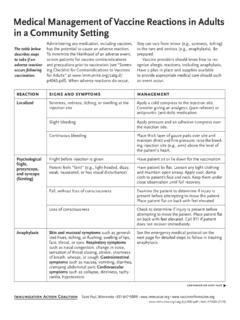
Medical Management of Vaccine Reactions in Adults in a ...
www.immunize.organtihistamines: slow systemic absorption of antigen and anaphylactic relieve itching and urticaria (hives). These medications DO NOT relieve upper or lower airway obstruction, hypo-tension, or shock. Consider giving diphenhydramine (e.g., Benadryl) for relief ... * …

Unit 23: Support Use of Medication in Social Care Settings
www.fwsolutions.netresponsibilities of those involved with the use of medication in social care settings and techniques for the administration of medication. You will be able to receive, store and dispose of medication supplies safely, in line with agreed ways of working, support the use of medication and be able to record and report on its use.

Outpatient Croup Care Guideline - CHOC
www.choc.orgshorter ED stays and decreased use of epinephrine 2. Even in mild croup, can show a decrease in return visits (7% vs. 15%, p<0.01) 3. Oral and IM forms are equally effective. Can be given IV but will have a shorter duration of action. 4. Standard dose is 0.6 mg/kg (max 10 mg) 5. Oral dexamethasone is unpalatable with a concentration of 1 mg/mL.

IDSA Clinical Practice Guideline for Acute Bacterial ...
asap.nebraskamed.comIDSA GUIDELINES IDSA Clinical Practice Guideline for Acute Bacterial Rhinosinusitis in Children and Adults Anthony W. Chow,1 Michael S. Benninger,2 Itzhak Brook,3 Jan L. Brozek,4,5 Ellie J. C. Goldstein,6,7 Lauri A. Hicks,8 George A. Pankey,9 Mitchel Seleznick,10 Gregory Volturo,11 Ellen R. Wald,12 and Thomas M. File Jr13,14 1Division of Infectious Diseases, Department of …

Octagam®
www.albertahealthservices.caSome patients may require pretreatment with antihistamines, anti-inflammatories and corticosteroids, particularly if they have a past history of reaction Serious but rare complications of IVIG include anaphylaxis, hemolytic anemia (delayed reaction up to 10 days ... ADULTS and PEDIATRICS Yes Yes q1h 20-30 min post, then PRN Note: Vital signs ...