
Moderate (Conscious) Sedation Protocol
90%. The steep part of curve occurs at 90% O. 2. sat. resulting in a rapid drop in O. 2. sat.
Download Moderate (Conscious) Sedation Protocol

Information
Domain:
Source:
Link to this page:
Documents from same domain

Physician Health Policy - atriumhealth.org
atriumhealth.orgPHYSICIAN HEALTH POLICY POLICY STATEMENT: ... necessary to address and resolve the impairment, the Physician Health Committee may recommend that the individual’s clinical privileges be reinstated. In making this recommendation, patient care interests must be considered as paramount. 2. Prior to making a recommendation for reinstatement, the ...

Carolinas College of Health Sciences - atriumhealth.org
atriumhealth.orgThe catalog/student handbook of Carolinas College of Health Sciences is published to serve as an informational guide to the programs, services, and policies of the College. The College reserves the right to make changes without notice whenever such action is warranted.
Preventing IV Catheter Associated Infections
atriumhealth.orgA CLABSI is a Central Line Associated Bloodstream Infection. It is a CDC/NHSN surveillance term for a primary bloodstream infection (BSI) that is not secondary to an infection at another site and develops in a patient with a central line in place for more than 2 calendar days. How Peripheral/Central Line Associated Infections Occur 5

End Stage Renal Disease - Atrium Health
atriumhealth.org- Floor nurse should not “reschedule” on the Electronic Medical Administration Record (eMAR) to allow dialysis nurse to document - Phosphate binders do not have to be sent to the dialysis unit with the patient (KDU has stock) Common Medications (continued) 10

Balance Error Scoring System (BESS) - Atrium Health
atriumhealth.orgScript for the BESS Testing Protocol Direction to the subject: I am now going to test your balance. Please take your shoes off, roll up your pant legs above ankle (if applicable), and remove any ankle taping (if applicable). This test will consist of 6 - twenty second tests with three different stances on two different surfaces.

SPINAL CORD INJURY PATIENT HANDBOOK - Atrium Health
atriumhealth.orgThe spinal nerves branch off the spinal cord between the vertebrae along the neck and back. These spinal nerves carry sensory and motor information. Sensory refers to your ability to feel, and motor refers to your ability to move. The sensory information goes from your arms and legs to your brain and the motor
Stool Management System: Insertion and Management
atriumhealth.orgB. A Stool Management System is indicated only after the patient has been determined as an inappropriate candidate for the rectal pouch. C. Different Stool Management Systems exist, therefore, manufacturer instruction guidelines must be followed to prepare the system, insert the device, and maintain device. D.

Atrium Health Urgent Care Locations
atriumhealth.orgStandard Urgent Care Locations Treat: • Allergies • Infections (bladder, sinus, ear and eye) • Cough, fever, headache, stomach pain and sore throat • Minor cuts, burns or rashes • Sprains and strains • Minor bone breaks • COVID-19 and flu tests* *COVID-19 and flu tests can also be administered by your primary care provider or ...

Detailed instructions for goRemote.carolinas.org Section 1 ...
atriumhealth.orggoRemote.carolinas.org Detailed instructions for goRemote.carolinas.org Section 1. Registering your account in the goRemote portal To setup your access to goRemote.carolinas.org, please follow these steps:
Related documents

Managing Neurostorming in a Patient with Severe Brain Injury
www.nacns.orgTachypnea HYPOTENSION (sepsis) Pharmacology 1. Pain management 2. Sedation 3. Sympathetic blockade Pain Management Probable drip initially Scheduled- Ex. 5 or 10mg Roxicodone q 4 hours PRN- for break through storms. Ex. Morphine 4mg q 4 hours

Neonatal Lab Interpretation - BCH Outreach
bchsfoutreach.ucsf.eduA Decreased Hypotension Tachy Tachypnea, Pallor B Same as before incident Hypotension Tachy Pallor, cap ref 3 sec, respdistress C Same Hypotension Brady Apnea, cyanosis D Decreased Same as Same Hepatosplenomegaly. Clinical Findings Varies with the volume of blood loss and the time period
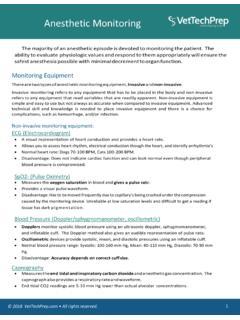
Anesthetic Monitoring - VetTechPrep
vettechprep.comTachypnea Tachypnea can be caused by a light anesthetic plane, pain, hypercarbia, hypovolemia, hypoxemia, drugs, and cerebral spinal fluid acidosis. Apnea Apnea can be caused by a deep anesthetic plane, hypothermia, recent hyperventilation, musculoskeletal paralysis, and drugs. Tachycardia

Vaping coding guidance 2019 - Centers for Disease Control ...
www.cdc.govOct 17, 2019 · • R06.82 Tachypnea, not elsewhere classified • R07.9 Chest pain, unspecified . ICD-10-CM Coding Guidance Vaping related disorders (October 17, 2019) 3 • R09.02 Hypoxemia • R09.89 Other specified symptoms and signs involving the circulatory and respiratory
Streptococcus pneumoniae Streptococcus pneumonia
www.cdc.govtachypnea, hypoxia, tachycardia, malaise, weakness Pneumococcal bacteremia Can lead to arthritis, meningitis, and endocarditis 12% overall case fatality ratio Pneumococcal meningitis Symptoms: Headache, lethargy, vomiting, irritability, fever, nuchal rigidity, cranial nerve signs, seizures, coma 14% case fatality ratio

COVID-19 (Acute COVID and MIS-C) Care
www.seattlechildrens.orgas tachypnea, retractions, abnormal chest xray, etc.) AND • No sustained hypoxia Severe • Signs or symptoms of pneumonia AND • New or increased oxygen requirement Critical • Pneumonia AND one of the following: • Requiring positive pressure ventilation OR • Signs of sepsis or multi-organ failure Lab Evidence of Hyperinflammation

CSW Bronchiolitis Pathway - Seattle Children's
www.seattlechildrens.orgdifficulty, tachypnea, wheeze, fever Exclusion Criteria · Cardiac disease requiring baseline medication · Anatomic airway defects · Neuromuscular disease · Immunodeficiency · Chronic lung disease RESPIRATORY SCORE (RS) Variable 0 points 1 point 2 points 3 points RR <2 mo 61-69 2-12 mo 51-59 1-2 yr 41-44