
National Geologic Map Database
A–37–3 37.2—Metamorphic-rock, igneous-rock, and vein-matter lithologic patterns 37—LITHOLOGIC PATTERNS (continued) [Lithologic patterns are usually reserved for use on stratigraphic columns, sections, or charts]
Download National Geologic Map Database

Information
Domain:
Source:
Link to this page:
Documents from same domain
Geologic Nomenclature and Description - USGS
ngmdb.usgs.govChronostratigraphic Units (arts. 66—79 of the Code) Chronostratigraphic units of a standard geologic time scale designate the position of a material unit relative to the sequence of rocks or sediments of a standard section (global boundary stratotype section and points, GSSPs)1. Examples of chronostratigraphic terms (in
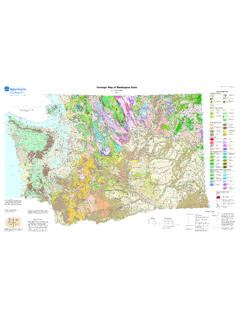
Geologic Map of Washington State - USGS
ngmdb.usgs.govmetamorphic rocks Mesozoic amphibolite Mesozoic–Paleozoic amphibolite Tertiary–Cretaceous gneiss Mesozoic gneiss Paleozoic gneiss Tertiary–Cretaceous orthogneiss Mesozoic orthogneiss Mesozoic migmatite and mixed metamorphic and igneous rocks Glaciers and ice fields ƒi Tectonic zones; areas of intense cataclasis, including mylonitization ...

Pattern Chart - USGS
ngmdb.usgs.govGLACIAL AND PERIGLACIAL PATTERNS (Series 500) Glacial patterns (521–524) Periglacial patterns (591–595) SEDIMENTARY PATTERNS (Series 200) IGNEOUS PATTERNS (Series 300) SURFICIAL PATTERNS (Series 100) 601 Gravel or conglomerate (1st option) 602 Gravel or conglomerate (2nd option) 603 Crossbedded gravel or conglomerate 605 Breccia (1st option ...
Related documents

Evaluating Scour at Bridges - San Diego State University
ponce.sdsu.eduThere is a new chapter on soils, rock and geotechnical considerations related to scour. Additional changes include: a npproach for pier scour in coarse materialew a , new sections on pier scour in cohesive materials and pier scour in erodible rock, revised guidance for vertical contraction scour

B.Tech. (Electrical Engineering)
www.iitk.ac.in23 (without and with thermal strains), Complete equations of elasticity, Torsion of circular shafts and thin-walled tubes (plastic analysis and rectangular shaftsnot to be discussed), Bending of beams with symmetric cross-section (normal and shear stresses) (shear centre and plastic analysis not to be discussed),Combined stresses, Yield criteria, Deflection due to bending, …
Rocks & Minerals
www.kean.eduEach rock group is further subdivided into subgroups that are defined by the mode of origin of the rocks. Igneous rocks form when magma, molten rock, rises upward toward the surface and are classified into two types on the basis of texture (grain size) and composition. Metamorphic rocks form when changes in the composition and/or texture of a rock

METAMORPHIC ROCKS & PROCESSES
www.lakeheadu.cametamorphic rocks allows geologists to assess the temperatures and pressures the parent rock encountered. • Knowledge of metamorphic processes and rocks is valuable, because metamorphic minerals and rocks have economic value. For example, slate and marble are building materials, garnets are used as gemstones
Rock mass classification - Rocscience Inc.
www.rocscience.coma. Rock type origin (igneous, metamorphic, sedimentary). b. Rock hardness (hard, medium, soft, decomposed). c. Geologic structure (massive, slightly faulted/folded, moderately faulted/folded, intensely faulted/folded). 2. Parameter B, Geometry: Effect of discontinuity pattern with respect to the direction of . the tunnel drive on the basis of: a.

KM 654e-20190411123206
www.uek12.orgThe metamorphic rock at location A The photograph shows a large outcrop of rock composed primarily of isible crystals of mica, quartz, and feldspar. Based on the composition and foliated texture, this rock can best be identified as (l) marble (3) slate SChlSt (4) anthracite coal 17 is most likely (1) marble

Metamorphic Facies
www3.nd.eduThe complete set of T-P conditions that a rock may experience during a metamorphic cycle from burial to metamorphism (and orogeny) to uplift and erosion is called a pressure-temperature-time path, or P-T-t path 40. Pressure-Temperature-Time (P-T-t) Paths Metamorphic P-T-t paths may be addressed by: