
Nutrients Plants Require for Growth
for growth regulators (table 2). Boron is not mobile in plants. Consequently, B deficiency symptoms most often appear on the growing tip of the plant. In B-deficient plants, the growing tip is often deformed. Soils that contain less than 1.5 percent organic matter or are overirrigated tend to be deficient in B (table 3).
Download Nutrients Plants Require for Growth

Information
Domain:
Source:
Link to this page:
Documents from same domain

4-H Poultry Showmanship Questions
www.extension.uidaho.edu2 2 How can one tell if baby chicks under a brooder light have the proper temperature? They are spread evenly under the brooder light, not all bunched up under the heat source or all far away from it.

Anaerobic Digestion Basics - uidaho.edu
www.extension.uidaho.educonverted into other products such as potting soil mixes. Digested liquid, which contains fewer pathogens and weed seeds and is rich in crop nutrients, can be used as ... (VS) (organic compounds of plant or animal origin that are lost on ignition of the dry solids at 550 ˚C [1022˚F]), particle size, pH, biodegradability,

BUL 870 Methods for Conducting an Educational Needs …
www.extension.uidaho.eduHowever, direct research requires considerably more resources to design and also requires institutional approval to conduct. Direct assessment should be conducted periodically for major program efforts. An indirect assessment can be conducted at any time when an advisory committee is meeting and does not require the same level of investment in ...

The Composting Process - uidaho.edu
www.extension.uidaho.edubut regulating and optimizing conditions ensures a faster process and the generation of a quality end product. ... (sugar and starches). In contrast, leaves, stems, nutshells, bark, and trees ... N ratios of 25 to 35:1 • Moisture contents of 50 to 60% by weight

A letter of last instruction: Everybody needs one
www.extension.uidaho.eduA letter of last instruction: Everybody needs one A letter of last instruction is an organized way for you to give your family all the facts about your finances—and have a basic tool for your own money management. A letter isn’t a will or a substitute for one. A will is a legal document telling an executor how to dis-
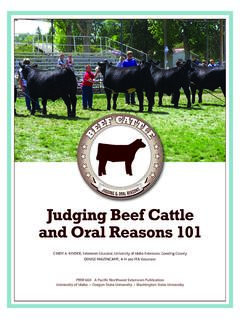
Judging Beef Cattle and Oral Reasons 101 - uidaho.edu
www.extension.uidaho.edubeef cattle: (1) growth and frame or skeletal size, (2) muscling, (3) volume, performance, (4) condition, trimness, and (5) structure, soundness, balance. Growth and frame or skeletal size the beef industry has ideal final live weights of 1250–1400 pounds and carcass weights of 700–900 pounds. Market-ready animals that are too
Related documents
What is Organic Farming?
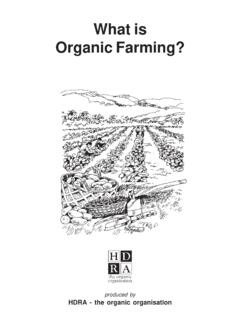
www.organicconsumers.orggrowth and yield. Organic farming avoids the use of herbicides which, like pesticides, leave harmful residues in the environment. Beneficial plant life such as host plants for useful insects may also be destroyed by herbicides. On an organic farm, weeds are controlled using a …

WRIGHT - ORGANIC ARCHITECTURE
www.flwright.orgproportion, rhythm, and growth are all demonstrated in nature. Organic architecture does not imitate nature but is concerned with natural materials, the site, and the people who will occupy the buildings. Repose Quiet, serene, tranquil space is a fitting …
Introduction to Organic Practices
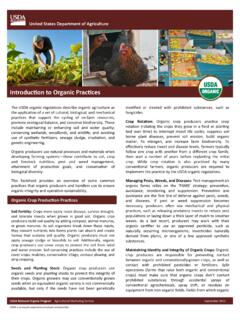
www.ams.usda.govmeasures are common; antibiotics and growth hormones are prohibited. Organic livestock producers work to manage exposure to disease and parasites through grazing management, proper sanitation, and preventing the introduction of disease agents. Organic Feed: Organic livestock must eat certified organic feed.

Effects of organic fertilizers on growth, yield, quality ...
scihub.orgAug 16, 2008 · organic fertilizers for vegetable production and therefore the objective of this study was to asses the effects of different sources of organic fertilizers on growth, yield, quality and organoleptic properties of red lettuce (Lactuca sativa) in Swaziland.
Organic vs. Non-Organic Learn the difference between ...
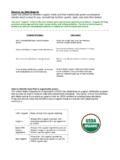
district.schoolnutritionandfitness.comOrganic vs. Non-Organic Learn the difference between organic foods and their traditionally grown counterparts. Decide which is best for you, considering nutrition, quality, taste, cost and other factors. The word “organic” refers to the way farmers grow and process agricultural products. Organic farming

ORGANIC CANNABIS GROWERS GUIDE - Dr Earth
drearth.comthat is needed for plant growth. It is best to use well-rounded organic fertilizers and soil amendments for healthy plants and soil on a regular basis. You never know how much of any one nutrient is needed at a certain time of year, or time of day, for that matter. For example, nitrogen requirements can vary hourly depending on the
The effect of organic fertilizers on growth and yield of ...
www.organic-systems.orgThe effect of organic fertilizers on growth and yield of broccoli ( Brassica oleracea L. var. italica Plenck cv. Top Green) Jigme 1*, Nipon Jayamangkala 1, Pathipan Sutigoolabud 2, Jirapon Inthasan 2 and Siriwat Sakhonwasee 1 1 Department of Horticulture, Faculty of Agriculture Production, Maejo University, Chiang Mai, Thailand
Biological Treatment - Attached-Growth Processes Study Guide
dnr.wi.govgrowth and reproduction. This food is mostly organic material and the more soluble the organic material is, the more easily the microorganisms can use it. Since the amount and type of organic loading in the treatment plant affects the growth of the microorganisms, primary clarifier effluent total BOD and soluble BOD are measurements an operator can
ORGANIC LIVESTOCK REQUIREMENTS
www.ams.usda.gov- Managed without antibiotics, added growth hormones, mammalian or avian byproducts, or other prohibited feed ingredients (e.g., urea, manure, or arsenic compounds). To determine if a farm complies with the USDA organic regulations, certifying agents review the farm’s written organic system plan and on-site inspection findings. Prevention ...