Partially Observable Markov Decision Processes (POMDPs)
What is a Partially Observable Markov Decision Process? Finite number of discrete states Probabilistic transitions between states and controllable actions Next state determined only by the current state and current action We’re unsure which state we’re in The current state emits observations Rewards: S1 = 10, S2 = 0 Do not know state:
Download Partially Observable Markov Decision Processes (POMDPs)

Information
Domain:
Source:
Link to this page:
Documents from same domain

b r a c e - Carnegie Mellon School of Computer …
www.cs.cmu.eduApproaches to inference Exact inference algorithms The elimination algorithm Belief propagation The junction tree algorithms (but will not cover in detail here)
Sponsored Search Acution Design Via Machine …
www.cs.cmu.eduMaria-Florina Balcan 03/30/2015 Semi-Supervised Learning Readings: • Semi-Supervised Learning. Encyclopedia of Machine Learning. Jerry Zhu, 2010

2 Information and Communications Technology (ICT)
www.cs.cmu.edu2 Information and Communications Technology ... Perspectives of Information and Communication Technologies in Development.” Swiss Agency for Development and
The glEnd() of Zelda
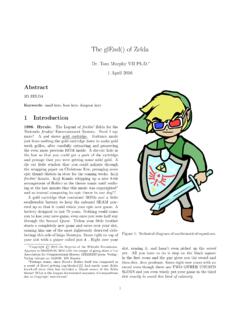
www.cs.cmu.eduThe glEnd() of Zelda Dr. Tom Murphy VII Ph.D. 1 April 2016 Abstract 3D ZELDA ... and the PPU is the Legend of Zelda. It’s just an anal-ogy.

Understanding Understanding Source Code with …
www.cs.cmu.eduUnderstanding Understanding Source Code with Functional Magnetic Resonance Imaging Janet Siegmundˇ, Christian Kästner!, Sven Apelˇ, Chris Parnin , Anja Bethmann , Thomas Leich , Gunter Saake˙, and André Brechmann ˇUniversity of Passau, Germany!Carnegie Mellon University, USA
Automatic Database Management System Tuning …
www.cs.cmu.eduAutomatic Database Management System Tuning Through Large-scale Machine Learning Dana Van Aken Andrew Pavlo Geoffrey J. Gordon Bohan Zhang Carnegie Mellon University Carnegie Mellon University Carnegie Mellon University Peking University

www.cs.cmu.edu
www.cs.cmu.eduHappy Holidays from the Myers Family, 2014 Ryan, Reid, Bernita, Brad, Grant and Ethan. (posing in front of a Portrait of Art Rooney, founding owner of the Steelers.)

Model Selection - Carnegie Mellon School of …
www.cs.cmu.eduModel Selection Machine Learning • Def: (loosely) a modeldefines the hypothesis space over which learning performs its search • Def: model parameters are the numeric values or structure selected by the learning algorithm
Sample Invitation to participate in the research …
www.cs.cmu.eduSample Invitation to participate in the research project titled: “Understanding and Broadening the Images of Computing” Dear (computer science student),
15-381 Artificial Intelligence Henry Lin
www.cs.cmu.edu1 Clustering 15-381 Artificial Intelligence Henry Lin Modified from excellent slides of Eamonn Keogh, Ziv Bar-Joseph, and Andrew Moore • …
Related documents
Sample Learning Objectives: Observable and/or Measurable
imiaweb.orgSample Learning Objectives: Observable and/or Measurable Samples Students must demonstrate that they can: x Identify an appropriate contemporary media issue x Analyze the assumptions and evaluate the worth of the evidence used by the popular media x Select academic evidence about the issue and evaluate its worth x Compare and contract the media …

Lecture 13 Linear quadratic Lyapunov theory
web.stanford.edugeneralization: if A stable, Q ≥ 0, and (Q,A) observable, then P > 0 to see this, the Lyapunov integral shows P ≥ 0 if Pz = 0, then 0 = zTPz = zT Z ∞ 0 etA T QetA dt z = Z ∞ 0 Q1/2etAz 2 dt so we conclude Q1/2etAz = 0 for all t ≥ 0 this implies that Qz = 0, QAz = 0, . . . , QAn−1z = 0, contradicting (Q,A) observable Linear quadratic ...
2nd Grade - Lesson 1.1 Classifying Objects Based on their ...
www.acs.orgClassifying Objects Based on their Observable Properties . Objective . Students will develop an understanding that objects and materials have characteristics or properties. Students will be able to recognize similarities between the properties of certain objects and materials and will be able to group the objects based on these similarities.

Developing Evaluation Indicators
www.cdc.govObservable: “interviewed within 7 days from the date of specimen collection” Measurable: “proportion of gonorrhea cases” 4. Include baseline data for inputs and outcomes if you are trying to measure change. For example, increased adherence of clinical staff to STD guidelines from time period 1 to time period 2. 5. Determine whether the ...

Three approaches to valuing intangible assets
www.cgma.orgObservable (one might say “findable”) market based transactions of identical or substantially similar intangible assets recently exchanged in an arm’s length transaction are often difficult to obtain. Publicly traded data usually represents a market capitalisation of the enterprise, not singular intangible assets. Market

Operationally Defining Behavior: Target and replacement ...
www.ci3t.orgway that is observable, measurable, and repeatable. A behavior has validity only if it enables observers to capture what the behavior is and what it is not. As such there should be four elements to operationally defining a behavior. These include a …

Massachusetts Model System for Educator Evaluation
www.doe.mass.eduDescriptors:Performance descriptors are observable and measurable statements of educator actions and behaviors aligned to each element and serve as the basis for identifying the level of performance in one of four categories: Unsatisfactory, Needs Improvement, Proficient, or Exemplary. Use of the Teacher Rubric
APPENDIX D: VALUATION PROTOCOL - HUD
www.hud.govCheck readily observable evidence of hazardous substances in the soil. Conditions that could indicate soil contamination include pools of liquid, pits, ponds, lagoons, stressed vegetation, stained soils or pavement, drums or odors. If any of these conditions exist further analysis or testing is required.