
PRACTICAL GUIDE Focus Group Discussions
A focus group discussion is a qualitative data collection method that engages 6 to 12 people—with shared characteristics pertinent to the specific discussion topic—and is led by a trained facilitator. The shared characteristics may relate to a particular problem, livelihoods occupation, age, social group, place of residence, experience of ...
Download PRACTICAL GUIDE Focus Group Discussions

Information
Domain:
Source:
Link to this page:
Documents from same domain

Chapter 10: Monitoring and Evaluation (M&E) - CRS
www.crs.org2 MONiTOriNg ANd EvALuATiON prOCESS MAp Developing an M&E Framework Process 10.1 do you have objectives that will drive your Monitoring and Evaluation …

Chapter 9: Information and Communication …
www.crs.org1 ChApTEr 9: INFOrmATION ANd COmmuNICATION TEChNOLOgy 1 Niramure Joselyne, 19, of Rwanda, sews an item for her client. Joselyne is …
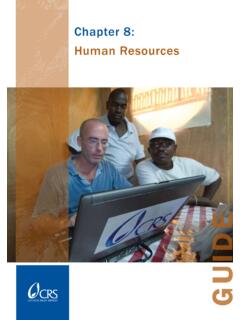
Chapter 8: Human Resources - CRS
www.crs.orgSHRM Society for Human Resource Management. CHApTER 8: HUmAN RESOURCES 1 In Pakistan, a CRS community organizer shakes hands with ... This human resources management guide addresses the need to use good business practices, systematize the HR process, ensure the effective and
Meeting the Challenges of the World’s Refugee Crisis
www.crs.orgMeeting the Challenges of the World’s Refugee Crisis ... According to the United Nations High Commissioner for Refugees, in 2015, 1 in every 113 people worldwide was forced ... 6 Global Trends: Forced Displacement in 2015“ .” UNHCR, page 20. 7 …

CASE STUDY - CRS
www.crs.orgCASE STUDY WINDOWS OF SLOVYANSK CONFLICT CRS/Caritas bank transfers enabled ... the program to select contractors. CRS ... registration information CRS …

Child Migration - CRS
www.crs.orgChild Migration The Detention and Repatriation of Unaccompanied Central American Children from Mexico Research study January 2010

Quality Early Childhood Environments for Young …
www.crs.orgQUALITY EARLY CHILDHOOD ENVIRONMENTS FOR YOUNG CHILDREN i MODULE 4 RESOURCE GUIDE Quality Early Childhood Environments for Young Children TRAINING FOR EARLY CHILDHOOD ...

A Guiding Framework for Integrating Child Health ...
www.crs.orgfor integrating early Childhood Development (eCD) within and between sectors, focus areas, and projects. The result is a bio-ecological model that considers eCD at multiple levels and through key lenses including; life-course developmental changes with a

Develop a communication plan in nine steps - CRS
www.crs.orgexample of how to develop the plan as a team, see . ... CRS staff may support partners to develop a communication plan—for example, by providing the template as a . resource or cofacilitating a session to develop a plan. TEMPLATE: DEVELOP A COMMUNICATION PLAN IN NINE STEPS ... TEMPLATE: DEVELOP A COMMUNICATION PLAN IN NINE STEPS.

Best Practices in Water and Sanitation - CRS
www.crs.orgadviser for water and sanitation, Catholic Relief Services Graphic design by Jim Doyle Cover photos: David Snyder, Sean Sprague ... • Water supply for other domestic uses such as cooking, bathing, and clothes washing • Environmentally friendly erosion control through tree and shrub planting and silt-
Related documents
Focus Group Brief - Project Management Tools
www.mmgconnect.comFocus groups are group interviews that give the researcher the ability to capture deeper information more economically than individual interviews. Economy is an important benefit but there are other benefits of focus groups when compared to interviews. Group interaction and non-verbal communication are primary benefits of focus groups.

Qualitative Data Collection
www.sagepub.comInterviews: one-on-one question-and-answer sessions where the researcher may use a variety of techniques. Interviews average 30–45 minutes per person. Focus groups: group interviews, using the same variety of techniques and taking approximately the same length of time as interviews. Data collected directly in words from people (Continued)

Anthropological Approaches: Uncovering Unexpected Insights ...
pcmh.ahrq.gov3. Skillful group facilitation by a trained focus group moderator. 4. The presence of an observer who keeps process notes, operates the recording equipment, and assists the moderator as needed. Focus groups usually include 6 to 12 participants, and last 1 to 2 hours. Discussions are audio . recorded and transcribed with participants ...
BASIC TOOLS FOR DATA COLLECTION - INTRAC
www.intrac.orgset of basic tools. These include interviews, focus group discussions, observation, photography, video, surveys, questionnaires and case studies. Data may also be generated through direct measurement, reviewing secondary data, and informal project / programme management processes. Many different methodologies can be used for data
Data collection in qualitative research
ebn.bmj.comFocus groups The focus group is a method of data collection in which a moderator/facilitator (usually a coresearcher) speaks with a group of 6–12 participants about issues related to the research question. As an approach, the focus group offers qualitative researchers an efficient method of gathering the views of many participants at one time.

Focus Groups as Qualitative Research
study.sagepub.comwhere focus groups depart most from standard practices in other qualitative methods. The fact that they are group interviews is the source of most of these planning needs. In particular, the need to bring together several participants requires attention to who the participants are and how the researcher will interact with them as a group. Once
Qualitative data collection techniques
www.gfmer.chconduct observation • Understand the practical communication skills for interviews to ask good questions , probe and follow up questions • Able to prepare for interview • Understand the characteristics and uses of focus group discussions • Conduct focus group discussions

Data Gathering Methods and Instruments Introduction
www.icao.int(b) Interviews (c) Focus groups (d) Surveys (e) Observation or testing. While each has many possible variations, we will discuss their typical use here. Basic Principles . Here are some basic principles to keep in mind when selecting methods. 1. Consider the characteristics of your target population. A target population is the group of people