Practice Principle 8: Reflective Practice
to ongoing learning, professional development and reflective practice in environments that are respectful and responsive to children, families and professionals • Reflective practice provides a common goal for professionals working across agencies in early childhood
Download Practice Principle 8: Reflective Practice

Information
Domain:
Source:
Link to this page:
Documents from same domain
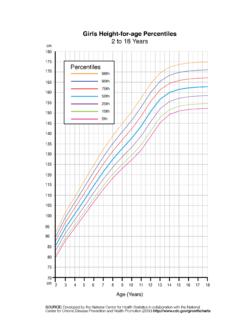
Girls Height-for-age Percentiles 2 to 18 Years
www.education.vic.gov.auSOURCE: Developed by the National Center for Health Statistics in collaboration with the National Center for Chronic Disease Prevention and Health Promotion (2000) http://www.cdc.gov/growthcharts
THERE’S MORE TO COUNTING THAN MEETS THE …
www.education.vic.gov.auwww.education.vic.gov.au/studentlearning/teachingresources/maths Di Siemon/SWARM 2/Janueary 9, 2007 Page 1 THERE’S MORE TO COUNTING THAN MEETS THE EYE …
The Developmental Learning Framework for …
www.education.vic.gov.au1 The Developmental Learning Framework for School Leaders represents a significant milestone in the Department’s endeavour to support the work of leaders.
Welcome to Country and Acknowledgement of …
www.education.vic.gov.auAboriginal Victorian Timeline Schools are encouraged to visit the link below. It was produced by the Koorie Heritage Trust, and provides an overview of Aboriginal
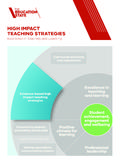
HIGH IMPACT TEACHING STRATEGIES
www.education.vic.gov.au1 | HIGH IMPACT TEACHING STRATEGIES Excellence in Teaching and Learning Curriculum planning and assessment Evaluating impact on learning Parents and carers

Promoting Breastfeeding - Department of …
www.education.vic.gov.au1 Promoting Breastfeeding: Victorian Breastfeeding Guidelines 1.1 Background 1.1.1 Purpose The purpose of the Victorian Breastfeeding Guidelines is to protect, promote and support breastfeeding in Victoria.

Victorian Government Schools Agreement 2017
www.education.vic.gov.auVictorian Government Schools Agreement 2017 Page | 4 (2) Executive class, teacher class, paraprofessional class and the education support class 1 April 2017 3.25% 1 April 2018 1.50%
Guidelines to assist in responding to attempted …
www.education.vic.gov.auGuidelines to assist in responding to attempted suicide or suicide by a student 3 Introduction and legal issues 4 Section A: Immediate response to a suicide …
Every Toddler Talking Phase 1 Final Report
www.education.vic.gov.auEvery Toddler Talking (Phase One): Final Report Prepared by: Murdoch Childrens Research Institute Prepared for: Department of Education and Training
Guidelines for School Playgrounds
www.education.vic.gov.au4 1. Introduction Opportunities for play must be nurtured if children are to develop physically, emotionally and socially. While playground
Related documents
Individual Professional Development Plan (IPDP) for Early ...
center-elp.orgDec 01, 2014 · Individual Professional Development Plan (IPDP) for Early Childhood Teachers, Early Interventionists, and Early Childhood Special Educators Instructions This document has been developed to help early learning educators create individual professional development plans (IPDPs) for their professional growth and improvement.
Early Childhood Assessment Handbook
concordia.csp.eduInitial and Advanced Early Childhood Professional Preparation Programs. 1. and the National Board for Professional Teaching Standards (NBPTS) Early Childhood Generalist Standards, 2. the learning segment should include developmentally appropriate …
Early Childhood Generalist Standards - NBPTS
nbpts.orgEarly Childhood Generalist Standards 9 modify their practice, and respond to students’ needs. They also demonstrate a commitment towards learning about new strategies, instructional resources, and technology that can be of assistance. Their instructional repertoire and professional judgment allow them to generate multiple paths to knowledge
Collaborative Practice in Victorian Early Years Services
www.education.vic.gov.auIn November 2009, the Department of Education and Early Childhood Development (DEECD) released an early childhood workforce strategy titled Improving Victoria’s Early Childhood Workforce: Working to Give Victoria’s Children the Best Start in Life (Workforce Strategy), containing four goals to: • attract an adequate supply of qualified ...

Early Childhood Environmental Education Rating Scale - …
naaee.orgThe Early Childhood Environmental Education Rating Scale (ECEERS) is a formative evaluation tool designed to assist programs in improving their environmental education curriculum. Private and public early childhood programs, be it center-based child development or family day care
Virginia's Early Learning & Development Standards (ELDS ...
www.doe.virginia.govDevelopment Standards (ELDS) provide all early childhood providers (i.e., parents/families, caregivers, educators, and program leaders) with a resource for understanding what children should know and be able to do as they grow and change from birth until they enter kindergarten.
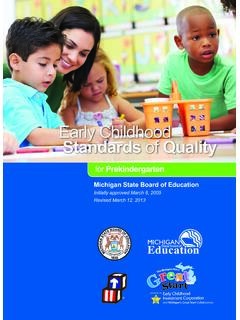
Early Childhood Standards of Quality for Prekindergarten
www.michigan.govMar 08, 2005 · Early Childhood Standards of Quality for Infant and Toddler Programs and Early Childhood Standards of Quality for Prekindergarten from 2011-13. This revision reflects current initiatives to show continuity of development and programming from birth through age eight. The 2005 document included alignment with kindergarten standards and

A position statement of the National Association for the ...
www.naeyc.orgFor young children to develop and learn optimally, the early childhood professional must be prepared to meet their diverse developmental, cultural, linguistic, and educational needs. Early childhood educators face the challenge of how best to respond to these needs. The acquisition of language is essential to children’s cogni-
Advancing Equity in Early Childhood Education - NAEYC
www.naeyc.orgprovided for early childhood educators; administrators of schools, centers, family child care homes, and other early childhood education settings; facilitators of educator preparation and professional development in higher education and other spheres; and public policymakers. The recommendations are followed by a synthesis of current early
The role and potential of ICT in early childhood ... - NZCER
www.nzcer.org.nzprofessional development and teacher education, sector capability, administration, infrastructure, and information management and communications. Data from NZCER’s 2003 national survey of early childhood education services are used to develop a picture of current access to and use of ICT in New Zealand early childhood education.
Related search queries
Professional development, Early, Early childhood, Professional, Early childhood professional, Early Childhood Generalist Standards, Early Childhood Development, Rating Scale, Development, Early Learning & Development Standards ELDS, Early Childhood Standards of Quality, Advancing Equity in Early Childhood Education, NAEYC