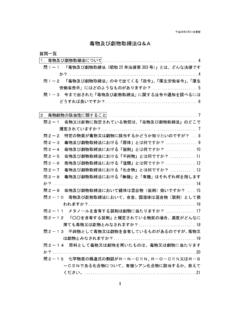
毒物及び劇物取締法Q&A - NIHS
4 目次へ戻る 1.毒物及び劇物取締法について 問1-1 「毒物及び劇物取締法(昭和25年法律第303号)」とは、どんな法律
Download 毒物及び劇物取締法Q&A - NIHS

Information
Domain:
Source:
Link to this page:
Documents from same domain
NIHS 医薬品安全性情報 Vol.16 No.012018/0111/
www.nihs.go.jpCarafate’]の製品表示が改訂され, 販売名が[‘Carafate suspension’]から [‘Carafate oral suspension’]に変更さ
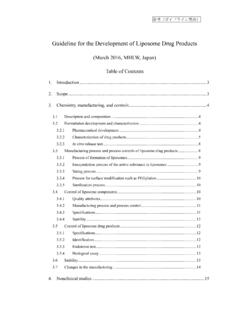
Guideline for the Development of Liposome Drug …
www.nihs.go.jp4 described in this document are also subject to other relevant notifications and guidelines. The active substances mentioned here include a low-molecular-weight chemical entity, a
Guideline for Bioequivalence Studies of Generic …
www.nihs.go.jp1 Guideline for Bioequivalence Studies of Generic Products for Topical Use July 7, 2003 局所皮膚適用製剤の後発医薬品のための 生物学的同等性試験ガイドライン
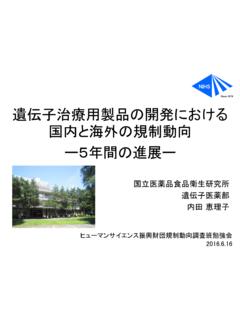
Since 1874 遺伝子治療用製品の開発における 国内 …
www.nihs.go.jp遺伝子治療の現状 海外の遺伝子治療の規制と国際調和 日本の遺伝子治療と関連規制 遺伝子治療指針の改正
Guideline for Bioequivalence Studies for Different ...
www.nihs.go.jp2 Section 1: Introduction This guideline describes the principles of procedures of bioequivalence studies for oral solid dosage forms that contains a different quantity of the active ingredient from an
Clinical Pharmacokinetic Studies of Pharmaceuticals
www.nihs.go.jp- 1 - Clinical Pharmacokinetic Studies of Pharmaceuticals This document is an informal translation of the official text that was promulgated in Japanese on
平成 25 年度報告 毒物劇物指定の ... - nihs.go.jp
www.nihs.go.jp平成. 25 年度報告 毒物劇物指定のための有害性情報の収集・評価. 物質名: n-(2-
毒物及び劇物取締法Q&A - nihs.go.jp
www.nihs.go.jp1 平成29年3月31日更新 毒物及び劇物取締法Q&A 質問一覧 1.毒物及び劇物取締法について ..... 4
European Medicines Agency - NIHS
www.nihs.go.jpWhat is Quality Risk Management? • Proposed ICH Q9 definition: “Quality risk management is a systematic process for the identification, assessment
ICH Q9 ‘Quality Risk Management’ - NIHS
www.nihs.go.jpICH Q9 ‘Quality Risk Management’ - an industry view Peter H. Gough, Eli Lilly and Company
Related documents

Surveying - U.S. Scouting Service Project
www.usscouts.orgExplain to your counselor why a surveyor should be able to identify the poisonous plants and poisonous animals that are found in your area. 2. Find and mark the corners of a five-sided lot that has been laid out by your counselor to fit the land available.
Subject: AN ACT PROVIDING FOR A COMPREHENSIVE AIR
emb.gov.pht) "Poisonous and toxic fumes" mean any emissions and fumes which are beyond internationally-accepted standards, including but not limited to World Health Organization (WHO) guideline values; u) "Pollution control device" means any device or apparatus used to prevent, control or abate the pollution of air caused by emissions from identified ...

What You Should Know About Mothballs
ldh.la.govWhat You Should Know About Mothballs FACTS (continued) an effective, multipronged and safe way to monitor, identify, prevent and control pests. IPM includes the

TANK CAR LOADING, UNLOADING AND TRANSLOADING …
railroads.dot.govDefinition of Terms •Transportation or Transport is the movement of property and the loading, unloading or storage incidental to that movement

Garden plants poisonous to people - Department of Primary ...
www.dpi.nsw.gov.aupoisonous plants should be avoided or removed from the garden. It is best to teach children never to eat seeds, berries or other plant parts without first asking an adult. The plants in Tables 2−7 are often found in home gardens or grow wild in bushland surrounding homes.

Disinfectants - World Health Organization
www.who.intbowls) as they contain potentially poisonous additives. When preparing chlorine solutions for use note that: • chlorine solutions gradually lose strength, and freshly diluted solutions must therefore be prepared daily; • clear water should be used because organic matter destroys chlorine; • 1:10 bleach solution is caustic.