Quick Reference Guide - Diabetes Canada
Adults with type 2 diabetes to reduce the risk of CKD and retinopathy if at low risk of hypoglycemia* ≤7. 0 MOST ADULTS WITH TYPE 1 OR TYPE 2 DIABETES 7. 1 8. 5 Functionally dependent*: 7.1-8.0% Recurrent severe hypoglycemia and/or hypoglycemia unawareness: 7.1-8.5% Limited life expectancy: 7.1-8.5% Frail elderly and/or with dementia †:
Download Quick Reference Guide - Diabetes Canada

Information
Domain:
Source:
Link to this page:
Documents from same domain
Canadian Journal of Diabetes
guidelines.diabetes.caindependence is lost and/or life expectancy shortens, the benefit of lower glycemic targets is diminished and the risk of hypoglyce-mia increases (40–42).

DiabetesCanadaClinicalPracticeGuidelinesExpertCommittee ...
guidelines.diabetes.caType2DiabetesinChildrenandAdolescents,p.S247 DiabetesandPregnancy,p.S255 Relevant Appendices Appendix 5. Self-Monitoring of Blood Glucose (SMBG) RecommendationToolforHealth-CareProviders

ÉTAPE 1 - guidelines.diabetes.ca
guidelines.diabetes.caSuggestions pour l’amorçage et le titrage de l’insuline dans les cas de diabète de type 2 Les personnes qui commencent à prendre de l’insuline doivent être renseignées sur la prévention, la reconnaissance et le traitement de l’hypoglycémie.
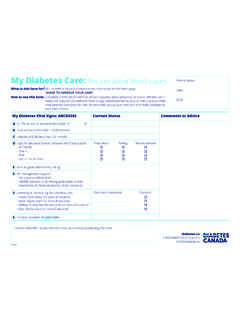
My Diabetes Care: Patient Name
guidelines.diabetes.caA1C The A1C is a blood test that will help you know whether your blood sugar has been at target over the past 3 months. A lower A1C will reduce your risk A lower A1C will reduce your risk of heart disease, stroke, kidney disease, eye problems, nerve damage, and foot problems.

High blood pressure and diabetes - guidelines.diabetes.ca
guidelines.diabetes.caWhy is controlling blood pressure important for people with diabetes? When blood pressure is high, it puts stress on the body. This can cause damage to the heart, brain, kidneys,
<insert self-management goal> Quick Reference Guide
guidelines.diabetes.caA1C <1.5% above target A1C ≥1.5% above target Symptomatic hyperglycemia and/or metabolic decompensation* Add additional antihyperglycemic agent best suited to the individual based on the following: Clinical Considerations Choice of Agent Avoidance of hypoglycemia and/or weight gain with adequate glycemic effi cacy

Pharmacologic Glycemic Management of Type 2 Diabetes in ...
guidelines.diabetes.ca2018 (1). New evidence has been published since the 2018 guide-lines, prompting this update to our recommendations for Chapter 13, “Pharmacologic Glycemic Management of Type 2 Diabetes in Adults” (1). What’s New in 2020 First, additional agents approved for use in Canada have been shown to have cardiovascular (CV) benefits in patients ...

Glycemic Index Food Guide - Diabetes Canada
guidelines.diabetes.caTry these meal planning ideas to lower meal GI: &RRN\RXUSDVWDDOGHQWH 4UP &KHFN\RXU pasta package instructions for cooking time. Make fruits and milk part of your meal plate (Figure 1). These foods often have a low GI and make a healthy dessert. Try lower GI grains, such as barley and bulgur. Pulses can be grains and starches or meat and
Glycemic Index Food Guide - Diabetes Canada
guidelines.diabetes.caThe glycemic index (GI) is a scale that ranks a carbohydrate-containing food or drink by how much it raises blood sugar levels after it is eaten or drank. Foods with a high GI increase blood sugar higher and faster than foods with a low GI. There are three GI categories:

Lows and highs: blood sugar levels - Diabetes Canada
guidelines.diabetes.caWhat is LOW blood sugar? When the amount of blood glucose (sugar in your blood) has dropped below your target range (less than 4 mmol/L), it is called low blood sugar or hypoglycemia. What are the signs of a LOW blood sugar level? You may feel: • Shaky, light-headed, nauseated • Nervous, irritable, anxious • Confused, unable to concentrate
Related documents
Type 2 Diabetes: Recently Diagnosed
www.northshore.orgoverweight, get little or no exercise, or have diabetes in the family are more likely to get type 2 diabetes. Type 2 diabetes is usually found in adults, which is why it used to be called adult-onset diabetes. But now more and more children and teens are getting it too.
Diabetes 101: A Brief Overview of Diabetes and the ...
professional.diabetes.org•Yes, we can reduce the chances of developing type 2 diabetes in high-risk people (weight loss, exercise, medications) •Yes, we can reduce the chances of developing diabetes complications through: •Blood glucose control (diet, monitoring, medication) •Blood pressure control •Cholesterol control •Regular visits to healthcare providers

Your Diabetes Care and Management Plan
professional.diabetes.orgDiabetes Care Team. Type 2 diabetes progresses over time as your body slowly makes less insulin and becomes unable to use the insulin you make as well as before. These changes mean your medications and diabetes management plan need to change too. The plan that works for you is going to be different from anyone else. Taking steps to

Managing Type 2 Diabetes through Diet - Hopkins Medicine
www.hopkinsmedicine.orgDiabetes Education – #12. Managing Type 2 Diabetes through Diet . Bring your weight and blood sugar levels close to normal ranges. This will help you prevent long term problems from diabetes. A large number of US adults have type 2 diabetes. There are more than 18 million with this disease. This number is currently on the rise. Most people ...

Eating Healthy with Diabetes and Kidney Disease
www.kidneyfund.orgCKD & Diabetes: Considerations •A1c is a diabetes blood test •Its accuracy may be affected by anemia –Low Hemoglobin and iron deficiency –Shorter red blood cell life span –A1c may appear normal despite hyperglycemia –Continue to check blood sugar –A1c target: 7% up to 8% to avoid low blood sugar

ICMR GUIDELINES FOR - Indian Council of Medical Research
main.icmr.nic.inThe treatment of type 2 diabetes has undergone rapid changes in the last decade, and several new drugs have been introduced in the market. In 2005, the Indian Council of Medical Research (ICMR) brought out the ‘Guidelines for Management of Type 2 Diabetes’ as a small book and this has found wide application all over India.
SIGN 154 • Pharmacological management of glycaemic …
www.sign.ac.ukdiabetes.2 Given the significant volume of new evidence relating to pharmacological treatment of glucose lowering in people with type 2 diabetes that has been published since SIGN 116 was issued in 2010, and to support the publication of a revised Scottish Diabetes Prescribing Strategy, this update is published as a stand-alone guideline.