
SBTi Sector Classification Descriptions
Trading companies and other distributors of industrial equipment and products. Companies providing commercial printing services. Includes printers primarily serving the media industry. Companies providing environmental and facilities maintenance services. Includes waste management, facilities management and pollution control services.
Download SBTi Sector Classification Descriptions

Information
Domain:
Source:
Link to this page:
Documents from same domain

SBTi Criteria and Recommendations
sciencebasedtargets.orgTWG-INF-002 SBTi Criteria and Recommendations 2 3.0 SBTi Criteria and Recommendations Introduction All of the criteria listed below must be met in order for target(s) to be recognized as science-based by the

Target Validation Protocol - sciencebasedtargets.org
sciencebasedtargets.orgTWG-PRO-002 SBTi Target Validation Protocol 1.0 - 4 - 2. The SBTi and its target validation process 2.1. SBTi team structure The Science Based Targets initiative defines and promotes best practice in science-based target setting,
SBTi Criteria and Recommendations - Science Based Targets
sciencebasedtargets.orgThis document explains the criteria, which are requirements that companies must follow, and uses precise language to indicate require ments, recommendations, and allowable options that

APPAREL AND FOOTWEAR SECTOR
sciencebasedtargets.org2. Overview of the Apparel and Footwear Industry 12 2.1 Sector Economics 12 2.2 Key Trends 14 2.3 The Apparel and Footwear Value Chain 15 2.4 Value Chain Emissions 16 3. How to Set an SBT for Scope 1 and 2 Emissions 18 3.1 SBTi Criteria and Recommendations – Version 4.0 18
HOW COMPANIES ARE REDUCING EMISSIONS AT SCALE …
sciencebasedtargets.orgAs we move into this critical decade, tracking progress on emissions reductions is vital. Recommendations for reporting include disclosure through CDP, annual reports, sustainability reports and companies’ websites. Encouragingly, the vast majority of companies (87%) that have had science-based targets for over a year have publicly reported

Science Based Targets initiative Business Ambition for 1.5 ...
sciencebasedtargets.orgThe Business Ambition for 1.5°C campaign is the world’s largest and fastest -growing group of companies committed to taking urgent climate action aligned with 1.5°C and net-zero. The success of the campaign and the growing urgency for action as per the latest climate

RESPONDING TO THE CLIMATE CRISIS
sciencebasedtargets.orgBusiness Ambition for 1.5°C is an urgent call to action from a global coalition of UN agencies, businesses and industry leaders, in partnership with the Race to Zero. From 2019 to 2021, the Business Ambition for 1.5°C Commitment Letter offered two options on how to join, allowing for flexibility and recognizing differences between sectors.
SBTI CORPORATE NET-ZERO STANDARD
sciencebasedtargets.orgSBTi Corporate Net-Zero Standard Version 1.0 October 2021 8 2 THE NET-ZERO STANDARD FRAMEWORK As described in more detail in Foundations for net-zero target setting in the corporate sector, there are many different transition pathways toward achieving a state of net-zero emissions at the global level, each
The SBTi Net-Zero Corporate Manual
sciencebasedtargets.orgStandard is the first global science-based standard to guide companies in setting net-zero targets. The SBTi is undertaking a robust, inclusive, and transparent consultation with stakeholders from science, business and civil society to ensure that the SBTi’s Net-Zero Standard is the gold standard for science-based net-zero target setting.

TRANSPORT SCIENCE-BASED TARGET SETTING GUIDANCE
sciencebasedtargets.orgis a user’s general guidance on the transport categories included in the tool, the data to use in the target model-ing exercise and the output users can expect to obtain. Chapter 3 contains more specific guidance per end-user, divided into companies that own or control a fleet of ve-hicles, companies that manufacture new road vehicles,
Related documents
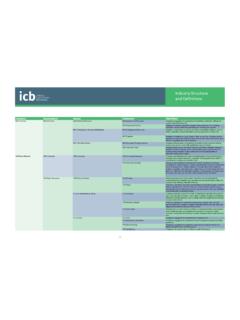
Industry Structure and Definitions
research.ftserussell.com2750 Industrial Engineering 2753 Commercial Vehicles & Trucks Manufacturers and distributors of commercial vehicles and heavy agricultural and construction machinery, including rail cars, tractors, bulldozers, cranes, buses and industrial lawn mowers. Includes non-military shipbuilders, such as builders of cruise ships and ferries.
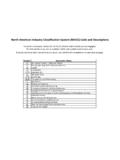
North American Industry Classification System (NAICS) Code ...
www.aztaxes.govAgriculture, Construction, and Mining Machinery Manufacturing. 325900. Other Chemical Product and Preparation Manufacturing. 331400. Nonferrous Metal (except Aluminum) Production and Processing. 333200. Industrial Machinery Manufacturing. 326100. Plastics Product Manufacturing. 331500. Foundries. 333300. Commercial and Service Industry ...

1 Table of Contents - Birmingham, Alabama
www.birminghamal.govSection 5: Commercial uses 75 Section 6: Communication uses 85 Section 7: Industrial uses 86 Section 8: Agricultural uses 107 Section 9: Transportation uses 109 Section 10: Utility uses 109 Section 11: Waste management uses 110 Section 12: Recreation and entertainment uses 116 Article III: Uses Permitted by Special Exception Section 1 ...