Structured Literacy and Typical Literacy Practices
books, written at an early-third-grade level. However, assessments in Curtis’s file showed that he had difficulty decoding many one-syllable word patterns, such as unfamiliar silent e words (e.g., tame, stripe), but his ability to read common sight words was relatively good. He also had poor spelling skills, and because he often
Download Structured Literacy and Typical Literacy Practices

Information
Domain:
Source:
Link to this page:
Documents from same domain
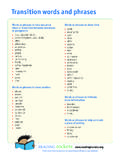
Transition words and phrases - Reading Rockets
www.readingrockets.orgREADING rockets www.readingrockets.org Transition words and phrases Words or phrases to help sequence ideas or transition between sentences or paragraphs
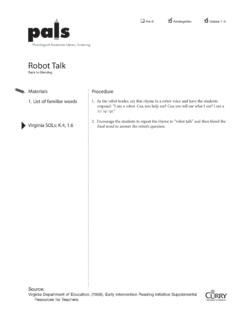
Beginning Sounds update - Reading Rockets
www.readingrockets.orgMaterials Procedure Pre-K Kindergarten Grades 1–3 Robot Talk Back to Blending 1. List of familiar words Virginia SOLs: K.4, 1.6 1. As the robot leader, say this rhyme in a robot voice and have the students
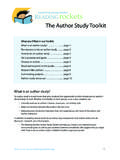
T Toolkit - Reading Rockets
www.readingrockets.orgT Toolkit V ww.readingrockets.org 2 Ten reasons to do an author study 1. Help students develop their reading skills Author studies necessarily require lots of reading, giving kids plenty of opportunities to improve their
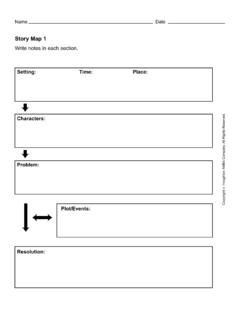
Story Map 1 - Reading Rockets
www.readingrockets.orgCopyright © Houghton Mi f flin Compan y. All Rights Reserved. Setting: Time: Place: Title _storymap1_eng.pdf Created Date: 9/16/2003 7:14:44 PM
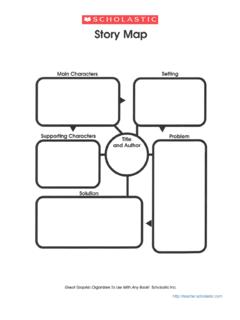
e SCHOLASTIC Story Map Main Characters …
www.readingrockets.orge SCHOLASTIC Story Map Main Characters Supporting Characters Title and Author Solution Setting Problem Great Graphic Organizers To Use With Any Book!
Making Sense in Social Studies S u m I t U p
www.readingrockets.orgTitle: Microsoft Word - pdf portrait Author: Raymond Jones Created Date: 2/15/2007 5:13:46 PM
A collaborative project of - WETA
www.readingrockets.orgwww.readingrockets.org | www.k8accesscenter.org | www.ldonline.org What this feels like to me • “I don’t know any words that rhyme with cat.” “What do …
The Dyslexia Toolkit - Reading Rockets
www.readingrockets.orgThe Dyslexia Toolkit An Essential Resource Provided by the National Center for Learning Disabilities
Teach 1 Shared Reading-FINAL
www.readingrockets.orgP-CHILD 5 TEACH 1 Extending Shared Reading: • During subsequent rereading of familiar text in the shared reading experience, a …
RAFTing Example - Reading Rockets
www.readingrockets.orgRAFTing Example Don't Let Your Car Make a Fuel Out of You! Objectives - Language Arts 1. Students will analyze details in existing …
Related documents
Sight Words (Dolch and Fry Lists) and Sight Word Phrases
www.mrsjudyaraujo.comAn IDEA: When my son was in preschool and in kindergarten, we bought a notebook, and took 5 words daily from the Dolch and Fry lists (Fry lists below), and wrote 5 …
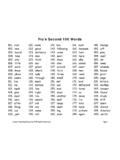
Fry’s Second 100 Words - Unique Teaching Resources
www.uniqueteachingresources.comFry’s Second 100 Words List 2A List 2B List 2C List 2D List 2F over name boy such change new good following because off sound sentence came turn play take man want here spell only think show why air little say also asked away work great around went animals know where farm men house place help three read point

How Children Learn to Read Words: Ehri’s Phases
education.ufl.edusometime in second grade and continues to develop as readers become more automatic in their word reading skills. Instruction in this phase should focus on the recognition of the various chunks within words. To promote orthographic mapping, students should pronounce each new word aloud as they read silently

K-12 Student Standards for English Language Arts
files.eric.ed.govto the fact that this is a second grade standard, and the number 1 tells you this standard refers back to anchor standard ... c. Read common high-frequency words by sight (e.g., the, of, to, you, she, my, is, are, do, does). d. Distinguish between similarly spelled words by identifying the sounds of the letters that differ. Fluency. 4.

Grade 3 Sight Words - K5 Learning
www.k5learning.comfloor cloud cannot second trade open wife birds start example sea however . Title: sight words Author: K5 Learning Subject: Grade 3 spelling list Keywords: list of grade 3 spelling words, sight for grade 3, spelling grade 3 sight words Created Date:
Three Minute High School Reading Assessment
www.spellingcity.comcount the number of words the student has read correctly during the 60-second oral read. (Words read correctly include those words that were initially errored but then later corrected by the student.) Then compare the students’ performance against the reading rates shown below for the appropriate grade and time within the year.