
TF-CBT: NAME
TF-CBT has the strongest research evidence of any treatment model for traumatized children. Multiple randomized controlled trials (RCT) and replication studies including international studies have been conducted documenting the effectiveness of TF-CBT for improving a range of problems for these children. Citation Pilot Trials/Feasibility
Download TF-CBT: NAME

Information
Domain:
Source:
Link to this page:
Documents from same domain
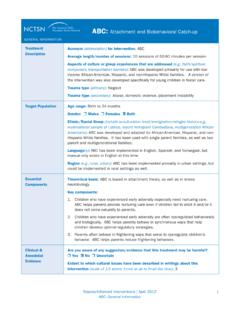
ABC: Attachment and Biobehavioral Catch-up
www.nctsn.orgThe National Child Traumatic Stress Network www.NCTSN.org 2 GENERAL INFORMATION ABC: Attachment and Biobehavioral Catch-up Clinical & Anecdotal Evidence continued This intervention is being used on the basis of …

NAME: 0000: PCIT: Parent-Child Interaction Therapy General ...
www.nctsn.orgThe National Child Traumatic Stress Network www.NCTSN.org NAME: Name Spelled Out CULTURE-SPECIFIC INFORMATION 2 PCIT: Parent-Child Interaction TherapyGeneral Information Symptom Expression continued If there are differences in symptom expression, in what ways does the theoretical/

TRAINING GUIDELINES - nctsn.org
www.nctsn.orgNCTSN Fact Sheet Available: ... and future template • Trauma experience integration: Support youth in reflecting upon, processing, and developing a narrative of traumatic experience, and integrating this into a coherent and comprehensive understanding of self
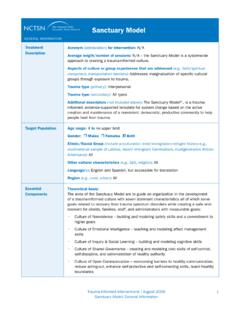
Sanctuary Model - nctsn.org
www.nctsn.orginformed, evidence-supported template for system change based on the active creation and maintenance of a nonviolent, democratic, productive community to help people heal from trauma.
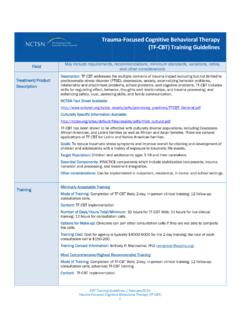
Trauma Focused Cognitive Behavioral Therapy (TF CBT ...
www.nctsn.orgTrea Des Tra con Field tment/Prod cription ining M uct Desc post relat skills enha NC T http Cult http TF-C Afric appl Goa child Targ Esse narr Othe Mini Mod cons Cont Nu m
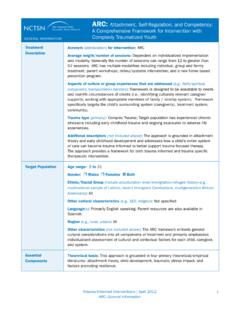
ARC: Attachment, Self-Regulation, and Competency: A ...
www.nctsn.orgSelf-Regulation, and Competency: A comprehensive intervention framework for children with complex trauma. Psychiatric Annals, ... treatment and had both a baseline and discharge data collection point exhibited a 17.2 drop in overall CBCL T-scores, with a …
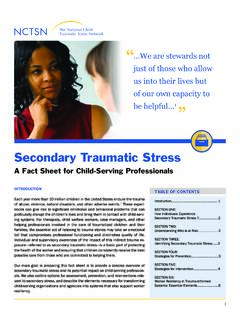
Secondary Traumatic Stress - nctsn.org
www.nctsn.orgHow Individuals Experience Secondary Traumatic Stress Secondary traumatic stress is the emotional duress that results when an indi-vidual hears about the firsthand trauma experiences of another. Its symptoms mimic those of post-traumatic …

Information for Parents and Caregivers
www.nctsn.orgSexual Development and Behavior in Young Children: The Basics Like all forms of human development, sexual development begins at birth. Sexual development includes not only the physical changes that occur as children grow, but also the sexual knowledge and beliefs they come to learn and the behaviors they show. Any given child’s sexual knowledge

SPARCS: Structured Psychotherapy
www.nctsn.orgprogress as well. Administrators in one school noted a dramatic decrease in physical confrontations between students in the school and in another school a reduction in disciplinary referrals was observed following a shortened psychoeducational adaptation of the curriculum provided for over 200 youth. Upon observing

Making the Connection: Trauma and Substance Abuse
www.nctsn.orgabuse, and substance abuse increases the likelihood that adolescents will experience trauma. Trauma as a risk factor for substance abuse According to the self-medication hypothesis of substance abuse, people develop substance abuse problems in an attempt to manage distress associated with the effects of trauma exposure and traumatic stress ...
Related documents

A REVIEW OF RESEARCH ON THE EFFECTS OF EARLY …
ecec-care.orgspending a large part of their early childhoods not in their own families but in some form of childcare“ (UNICEF, 2008 p. 3). The terms day care, child care and Early Childhood Education and Care (ECEC) have all been used to refer to various forms of non-parental child care and early education occurring before school.

Developing Math Skills in Early Childhood - ed
files.eric.ed.govfor children from low-income families, many of whom receive health care through public programs such as Medicaid and the State Children’s Health Insurance Program, or S-CHIP.37-38 Recommended well-child “checkups” are frequent in early childhood: 7 before the first birthday; 6 from age 1 through age 3. Math talk means talking about

OJJ D P B J S O G JUST I C E P R National Institute of Justice
www.ojp.govThe strongest risk factor for both male and female perpetrators and victims was a record of physically aggressive delinquent offending before age 15. More than half the males convicted of a violent crime also physically abused their partners. About 27 percent of women and 34 percent of men among the Dunedin study members reported
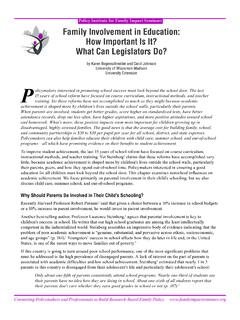
Family Involvement in Education: How Important Is It? What ...
www.purdue.eduIn fairness, however, not all types of parent involvement are equally beneficial to school success. Parents can be involved by helping their child learn at home, volunteering in school, or serving on school decision-making bodies.12 To date, the strongest evidence that parent involvement helps improve school success comes when

Treating Adults With Complex Trauma: An Evidence‐Based ...
www.shsu.edutypes of trauma exposures (Briere, Kaltman, & Green, 2008). Furthermore, the intergenerational transmission of abuse often is a key element in CT. For example, a mother’s history of child sexual abuse (CSA) is the single strongest predictor of CSA in the next generation, with daughters being at a 3.6 times greater risk for CSA.

The Negative Effects of Instability on Child Development ...
www.urban.orgunique experiences and needs of families experiencing instability and effective approaches to help them cope. Implications for Policy and Practice This research has important policy implications for programs that serve and support families with children. Having systems and policies in place in early childhood programs and schools to identify