
Today’s lecture
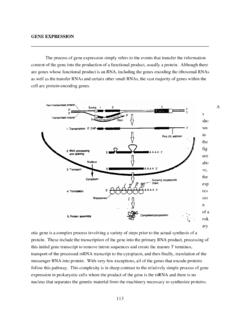
gene expression Promoter or enhancer* sequences Termination signals Splice donor and acceptor sites Ribosome binding sites *Enhancers are regulatory elements that specify where and when particular genes are expressed 6. Not all of the mutable information in a gene is “coding.” ...
Download Today’s lecture

Information
Domain:
Source:
Link to this page:
Documents from same domain
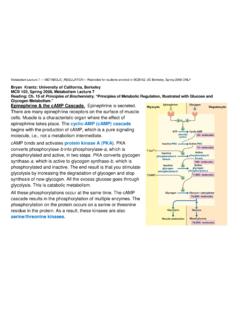
cyclic-AMP (cAMP) cascade protein kinase A (PKA). …
mcb.berkeley.eduThe cyclic-AMP (cAMP) cascade begins with the production of cAMP, which is a pure signaling molecule, i.e., not a metabolism intermediate. cAMP binds and activates protein kinase A (PKA). PKA converts phosphorylase-b into phosphorylase-a, which is phosphorylated and active, in two steps. PKA converts glycogen

PowerPoint Presentation - ALZHEIMER’S DISEASE
mcb.berkeley.eduAlzheimer’s Disease Progresses Through Distinct Stages Mild Moderate Severe Memory loss Language problems Mood swings Personality changes Diminished
Making Electrocompetent Cells - Department of …
mcb.berkeley.eduMaking Electrocompetent Cells Day 1 1. Streak out frozen glycerol stock of bacterial cells (Top 10, DH5α, etc.) onto an LB plate (no antibiotics).
NEUROBIOLOGY LABORATORY MCB 160L
mcb.berkeley.eduNeurobiology is a very diverse field. The nervous system is studied by an incredible variety of techniques in electrophysiology, biochemistry, anatomy, cell biology, molecular biology,
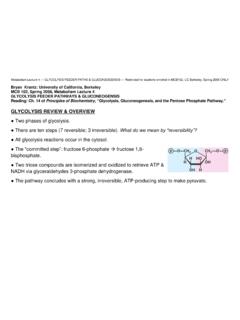
GLYCOLYSIS REVIEW & OVERVIEW
mcb.berkeley.eduThe “committed step”: fructose 6-phosphate fructose 1,6-bisphosphate. Two triose compounds are isomerized and oxidized to retrieve ATP & NADH via glyceraldehydes 3-phosphate dehydrogenase. The pathway concludes with a strong, irreversible, ATP …
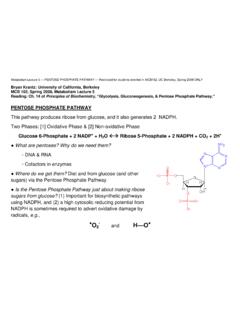
PENTOSE PHOSPHATE PATHWAY
mcb.berkeley.eduMetabolism Lecture 5 — PENTOSE PHOSPHATE PATHWAY — Restricted for students enrolled in MCB102, UC Berkeley, Spring 2008 ONLY Oxidative Phase: Glucose-6-P Ribose-5-P Glucose 6-phosphate dehydrogenase.
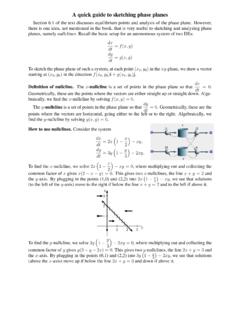
A quick guide to sketching phase planes
mcb.berkeley.eduA quick guide to sketching phase planes Section 6.1 of the text discusses equilibrium points and analysis of the phase plane. However, there is one idea, not mentioned in the book, that is very useful to sketching and analyzing phase planes, namely nullclines. Recall the basic setup for an autonomous system of two DEs: dx dt = f(x,y) dy dt = g(x,y)
Practice problems answ
mcb.berkeley.eduPractice problems (with answers) This is the degree of difficulty of the questions that will be on the test. This is not a practice test because I did not consider how long it would take to finish these problems. It also does not have a matching section, which I will include on the test. 1. DNA polymorphisms on the Y chromosome and on mtDNA ...
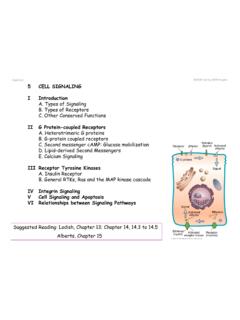
I Introduction II G Protein-coupled Receptors III Receptor ...
mcb.berkeley.eduSignaling 5 MCB110-Spring 2008-Nogales In paracrine signaling the signaling molecule affects only target cells in the proximity of the signaling cell. An example is the conduction of an electric signal from one nerve cell to another or to a muscle cell. In this case the signaling molecule is a neurotransmitter. In autocrine signaling cells ...
cyclic-AMP (cAMP) cascade protein kinase A (PKA). PKA
mcb.berkeley.eduMetabolism Lecture 7 — METABOLIC_REGULATION— Restricted for students enrolled in MCB102, UC Berkeley, Spring 2008 ONLY Phases of the TCA Cycle. [1] Acetyl-CoA production: Organic fuels Acetyl-CoA [2] Acetyl-CoA oxidation: Acetyl-CoA enters TCA and is enzymatically oxidized, but energy is conserved in electron carriers, NADH FADH 2
Related documents

Regulation of Gene Expression in Prokaryotes
www.jiwaji.eduprokaryotic Gene Expression and Regulation. Operon include following three things: 1. A set of Structural Genes (whose products are required by the prokaryotes to complete a metabolic (catabolic/anabolic) pathway 2. A Regulator Gene (whose product is required to regulate the expression of structural genes) 3. Control Elements a) Promoter b ...

MODELING THE REGULATORY SWITCHES OF THE PITX1 GENE …
media.hhmi.org• Mutations in regulatory switches affect expression of a particular gene in a particular tissue without affecting the gene’s protein product. • Changing the expression of a gene involved in body development can have profound effects in shaping the body. * There are some notable exceptions: (1) Mature red blood cells have no DNA.

Plant Growth & Development - University of Maryland ...
science.umd.eduRegulation of gene expression in eukaryotes by cis-acting elements Cis-acting control elements: regions of DNA that bind to protein transcription factors and the binding activates or represses transcription. Two types a. Upstream of structural gene or promoter b.

Pichia Expression Kit - Thermo Fisher Scientific
tools.thermofisher.comExpression of the AOX1 gene is controlled at the level of transcription. In methanol-grown cells approximately 5% of the polyA+ RNA is from the AOX1 gene. The regulation of the AOX1 gene is a two step process: a repression/derepression mechanism plus an induction mechanism (e.g., GAL1 gene in Saccharomyces (Johnston, 1987)).

Guideline on the quality, non-clinical and clinical ...
www.ema.europa.euaddition or deletion of a genetic sequence via gene silencing, exon skipping, gene regulation, gene knockdown and nucleotide changes. The term ‘therapeutic sequence’ is used in this guideline to reflect the diversity of these approaches and refers to any nucleic acids sequences that may be used in gene therapy.

GRE BIOCHEMISTRY TEST PRACTICE BOOK
www.ets.orgF. Gene Regulation Prokaryotic gene regulation including operon control Promoter recognition by RNA polymerases Prokaryotic attenuation and anti-termination . Cis-acting regulatory elements . Trans-acting regulatory factors Gene rearrangements and amplifications Small non-coding RNAs (e.g., siRNA, microRNA) G. Viruses Genome replication and ...
GENE EXPRESSION - Duke University
www2.stat.duke.eduAlthough variations in any step of gene expression can be regulatory, by far the most frequent form of gene control is the regulation of transcription initiation. Control of transcription involves the regulation of transcription factors that in teract with the critical cis -