
Understanding Soil Texture and Structure
LAB CONNECTION: Sedimentation Test of Soil Texture A simple activity can be performed to determine the percentages of sand, silt, and clay in a given soil sample. Place about 2 cups of soil in a tall, straight-sided quart jar. Add 5 tablespoons of 8 percent Calgon water-softening solution and enough water to almost fill the jar. Tighten the
Download Understanding Soil Texture and Structure

Information
Domain:
Source:
Link to this page:
Documents from same domain
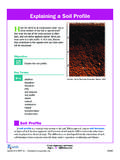
Explaining a Soil Profile
www.senecahs.orgA soil profile is usually studied to a depth of 3 to 5 feet. To see the soil profile, soil cores may be taken or holes dug to expose the pro-file.
Understanding Soil Texture and Structure
www.senecahs.orgSilt is the mid-size soil particle. Silt has good water-holding ability and good fertility char-acteristics. It feels like flour when dry and smooth like velvet when moist.
Plant Classification - Seneca High School
www.senecahs.orgCultivar Cultivars have distinguishing characteristics from the other plants in the species, but cultivars do not transfer those characteristics to offspring
Understanding Leaf Anatomy and Morphology
www.senecahs.orgare responsible for most of the photosynthesis in the leaf and are called the palisade mesophyll. Located under the palisade mesophyll are loosely packed cells called the spongy mesophyll.

STHS Random Drug Testing Program Frequently Asked …
www.senecahs.orgFrequently Asked Questions Q: Why is this drug testing policy being put into place? A: Participation in extracurricular activities is a privilege, and participants need to be exemplars. The District also wants to foster health, safety, and the welfare of its students.
Plant Classification - Seneca High School
www.senecahs.orgPlant Divisions Tracheophyta or Spermophyta – Seed Producing plants that bear flowers – Pterodophyta - a class of Tracheophyta that does not produce seeds (Ferns, reproducing with spores) Thallophyta – Fungi and bacteria
Explaining a Soil Profile - senecahs.org
www.senecahs.orgA soil profile is a vertical cross section of the soil. The differences are developed from the interaction of such soil-forming factors as parent material, slope, native vegetation, weathering, and climate. As a soil ages, horizontal layers develop and changes result. The causes of these

Understanding Horticulture
www.senecahs.orgapples, and pears. Small fruits include strawberries, raspberries, and blueberries. Almonds, pecans, and walnuts are popular nut crops. OLERICULTURE The area of horticulture that involves the production of vegetable food crops is olericulture. Olericulture includes the planting, harvesting, storing, processing, and marketing of vegeta-ble crops.

SPANISH I CURRICULUM GUIDE
www.senecahs.orgCurriculum Guide: SPANISH I Course of Study : Spanish Core Standard: Connections And Communities Level: 1 Standards for 21st Century Enduring Understandings Essential Questions 3.1 3.2 5.1, 5.2 ISBE 30A and 30B The study of language applies to many different content areas. In what ways are the other subject areas in the curriculum affected by
Understanding Leaf Anatomy and Morphology
www.senecahs.orgAxillary bud Stipule Stem Petiole Blade FIGURE 1. The major parts of a leaf. Dicots have leaves with veins that connect and branch from each other. Veins in a branch-ing pattern are called netted veins. A leaf with netted veins sometimes has several smaller
Related documents

Growing and Caring for Roses - University of Arizona
cals.arizona.eduwith soil • Fill hole with cone shape of 1:1 native soil : forest mulch or 1:1:1 of native soil : compost : sand, perlite or pumice. • Spread roots over soil cone, bud union should be 2” above soil line, cover with remaining soil and firm. • Cut canes to a length of 8-10 inches, top buds facing outward

LABORATORY 2 SOIL DENSITY I Objectives II Introduction
www.agronomy.lsu.eduSoil particle density (g / cm3) is mass of soil solids (oven-dry) per unit volume of soil ... Fill the flask about half full with air-dry soil. Weigh the flask, stopper and soil. Record the combined mass. -2 . 3. Add water to the soil slowly, mixing soil and water thoroughly by vigorous shaking

Excavation and embankment (cut and fill)
www.learncivilengineering.com3 - CY soil = CF soil/27 = 5250 ft /27 = 194.44CY Cut STATION 1+00 STATION 2+00 Existing ground Existing ground Fill 1 Fill 2 To figure out what is the total net fill between station 1+00 and 2+00. Fill 2 Step 1: figure out total fill area per station. The area is usually given. 2- STA 1+00 = Fill 1 area = 100ft-STA 2+00 = Fill 2 area = 40ft2
Excavation and Embankment (cut and fill)
www.learncivilengineering.com1. Soil Phase Diagram: Basic understanding in Phase relationship in soil. 2. Bank/Loose/Compacted Volume Conversions using Swell and Shrinkage Discussion Soil Phase Diagram: Basic understanding in Phase relationship in soil. The first most important concept to understand with soil is the components which make it up.
Operating Procedure
www.epa.govJun 11, 2020 · Soil Sampling Effective Date: June 11, 2020 _____ Page 1 of 29 . Purpose . This document describes general and specific procedures, methods and considerations to be used and observed when collecting soil samples for field screening or laboratory analysis. Scope/Application . The procedures contained in this document are to be used by field ...
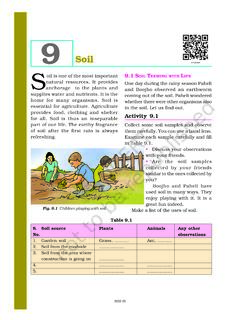
Soil S T L - NCERT
www.ncert.nic.inExamine each sample carefully and fill in Table 9.1. § Discuss your observations with your friends. § Are the soil samples collected by your friends similar to the ones collected by you? Boojho and Paheli have used soil in many ways. They enjoy playing with it. It is a great fun indeed. Fig. 9.1 Children playing with soil Make a list of the ...