
Understanding Soil Texture and Structure
Soil Structure Damage Soil structure can be destroyed. A major cause of damage is driv-ing heavy equipment over wet soil. Damage is also caused by working soil when it is either too wet or too dry. Either condition leads to the clay particles clogging the pore spaces. The soil becomes compacted and very dense; and when it dries, it becomes very ...
Download Understanding Soil Texture and Structure

Information
Domain:
Source:
Link to this page:
Documents from same domain
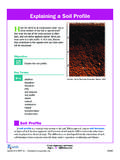
Explaining a Soil Profile
www.senecahs.orgA soil profile is usually studied to a depth of 3 to 5 feet. To see the soil profile, soil cores may be taken or holes dug to expose the pro-file.
Understanding Soil Texture and Structure
www.senecahs.orgSilt is the mid-size soil particle. Silt has good water-holding ability and good fertility char-acteristics. It feels like flour when dry and smooth like velvet when moist.
Plant Classification - Seneca High School
www.senecahs.orgCultivar Cultivars have distinguishing characteristics from the other plants in the species, but cultivars do not transfer those characteristics to offspring
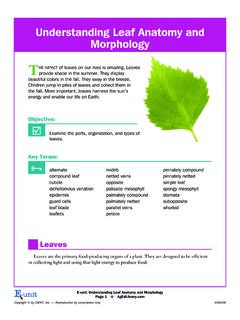
Understanding Leaf Anatomy and Morphology
www.senecahs.orgare responsible for most of the photosynthesis in the leaf and are called the palisade mesophyll. Located under the palisade mesophyll are loosely packed cells called the spongy mesophyll.

STHS Random Drug Testing Program Frequently Asked …
www.senecahs.orgFrequently Asked Questions Q: Why is this drug testing policy being put into place? A: Participation in extracurricular activities is a privilege, and participants need to be exemplars. The District also wants to foster health, safety, and the welfare of its students.
Plant Classification - Seneca High School
www.senecahs.orgPlant Divisions Tracheophyta or Spermophyta – Seed Producing plants that bear flowers – Pterodophyta - a class of Tracheophyta that does not produce seeds (Ferns, reproducing with spores) Thallophyta – Fungi and bacteria
Explaining a Soil Profile - senecahs.org
www.senecahs.orgA soil profile is a vertical cross section of the soil. The differences are developed from the interaction of such soil-forming factors as parent material, slope, native vegetation, weathering, and climate. As a soil ages, horizontal layers develop and changes result. The causes of these

Understanding Horticulture
www.senecahs.orgapples, and pears. Small fruits include strawberries, raspberries, and blueberries. Almonds, pecans, and walnuts are popular nut crops. OLERICULTURE The area of horticulture that involves the production of vegetable food crops is olericulture. Olericulture includes the planting, harvesting, storing, processing, and marketing of vegeta-ble crops.

SPANISH I CURRICULUM GUIDE
www.senecahs.orgCurriculum Guide: SPANISH I Course of Study : Spanish Core Standard: Connections And Communities Level: 1 Standards for 21st Century Enduring Understandings Essential Questions 3.1 3.2 5.1, 5.2 ISBE 30A and 30B The study of language applies to many different content areas. In what ways are the other subject areas in the curriculum affected by
Understanding Leaf Anatomy and Morphology
www.senecahs.orgAxillary bud Stipule Stem Petiole Blade FIGURE 1. The major parts of a leaf. Dicots have leaves with veins that connect and branch from each other. Veins in a branch-ing pattern are called netted veins. A leaf with netted veins sometimes has several smaller
Related documents
Soil Remediation Guide - Department of Mineral Resources
www.dmr.nd.govsoil structure and plant growth. 1. Impact of hydrocarbon on soil structure When hydrocarbons are spilled on soil, the light hydrocarbons will evaporate according to the type of hydrocarbon, temperature, and wind conditions. It is not uncommon to …

CHAPTER 1. SOIL PHYSICAL PROPERTIES
lawr.ucdavis.eduSoil Structure: The arrangement and organization of soil particles in the soil, and the tendency of individual soil particles to bind together in aggregates; Aggregation creates intra-aggregrate and inter-aggregate pore space, thereby changing flow paths for water, gases, solutes and pollutants; Effects on plant growth operates through: 1 ...

Soil Texture Structure - Purdue Agriculture
ag.purdue.eduAgronomy 105 Soil & Water: Basic Soil Properties 4 Soil Descriptors •Texture: Relative proportion of sand, silt, and clay in the soil •Structure: Forms the soil takes as particles clump together •Peds: Structural units of soil •Bulk Density: A soil’s weight per volume •Horizon: Layer of soil with somewhat uniform color, texture, and structure

Soil Texture and Structure - carlisle.k12.ky.us
www.carlisle.k12.ky.usSoil Structure Sand, silt, clay, and organic matter particles in a soil combine with one another to form larger particles of various shapes and sizes and are often referred to as aggregates, or clus-ters. Soil structure is the arrangement of the soil particles into …

Inherent Factors Affecting Soil Infiltration - USDA
www.nrcs.usda.govMay 01, 2012 · Soil texture, or the percentage of sand, silt, and clay in a soil, is the major inherent factor affecting infiltration. Water moves more quickly through the large pores in sandy soil than it does through the small pores in clayey soil, especially if the clay is compacted and has little or no structure or aggregation.

Cultivation and soil structure - Department of Primary ...
www.dpi.nsw.gov.auwith soil structure improvements. Direct drilling is therefore a recommended technique for improving soil structure. If you use direct drilling you are likely to get long-term improvements to soil structure and productivity. Direct drilling in hardsetting soils In soils with naturally poor structure, such as hardsetting soils,
Soil Lab - uwsp.edu
www3.uwsp.eduSoil structure refers to the tendency of soil particles to cluster together and function as soil units called aggregates. Aggregates or crumbs contain mostly clay, silt, and sand particles held together by a gel-type substance formed by organic matter. Aggregates absorb and hold water better than individual particles.