
Vibration Testing - NASA
materials and vibration test articles. Massive test articles can within a thermal floors. Outside the GVL enclosure are two more environment. The test testbeds, an 18,000 lbf vertical testbed and stand supports test a 20,000 lbf horizontal testbed. The GVL also articles (including fixture) houses a 8,000 lbf human up to 2,000 lb. Vibration
Download Vibration Testing - NASA

Information
Domain:
Source:
Link to this page:
Documents from same domain
Q: What do you do on the International Space …
www.nasa.govQ: What do you do on the International Space Station (ISS)? A: Astronauts and cosmonauts on the space station stay busy.There’s lots of work to operate the many science experiments on board.
NEPA RECORD OF ENVIRONMENTAL …
www.nasa.govDec 13, 2012 · JSC Form 1119 (Revised January 25, 2011)(MS Word October 2010) NEPA RECORD OF ENVIRONMENTAL CONSIDERATION (REC) Complete this form if you answered “yes” or “unknown” on any JF 1138 entries and if
Use of XSLT to transform the output of multiple …
www.nasa.govNASA IV&V International Workshop 2014 1 Use of XSLT to transform the output of multiple Static Code Analysis tools into a consistent analysis spreadsheet format
International Space Station Activity Book
www.nasa.govNational Aeronautics and Space Administration . Grades K-5 . This activity book belongs to: International Space Station Activity Book >>> For more information, check out the web sites on page 30!
Gravity, Who Needs It
www.nasa.govGravity, Who Needs It? ... six months on the space station versus three years on a Mars mission? No. ... human, being more isolated ...
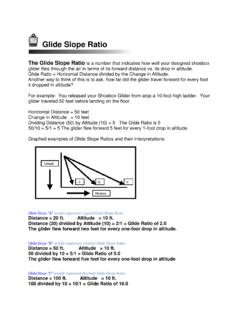
Glide Slope Ratio
www.nasa.govGlide Slope Ratio The Glide Slope Ratio is a number that indicates how well your designed shoebox glider flies through the air in terms of its forward distance vs. its drop in altitude. Glide Ratio = Horizontal Distance divided by the Change in Altitude.
Modeling, SiMulation, inforMation technology & …
www.nasa.govTA11-1 exeCuTive Summary Figure 1 is an initial draft strategic roadmap for the Modeling, Simulation, Information Technol-ogy and Processing Technology Area.
NASA Technology Roadmaps
www.nasa.gov2015 NASA Technology Roadmaps TA 11: Modeling, Simulation, Information Technology, and Processing TA 11- 2 July 2015 Foreword NASA is leading the way with a balanced program of space exploration, aeronautics, and science research.
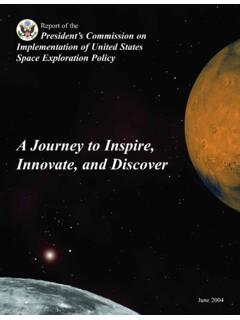
A Journey to Inspire, Innovate, and Discover
www.nasa.govReport of the President’s Commission on 2 Implementation of United States Space Exploration Policy Transmittal Letter June 4, 2004 The Honorable George W. Bush
National Aeronautics and Space Administration Headquarters
www.nasa.govGEMS is a Category 3 project (less than $250M) in Phase B, and was requesting transition from Formulation to Implementation (Phase C) where the official Agency baseline is established and external commitments are made
Related documents
YEAR 1: The Human Body and Senses - Core Knowledge UK
www.coreknowledge.org.ukYEAR 1: The Human Body and Senses . Contents Include: What our bodies can do. Eyes and Sight. Ears and Hearing . Touch, Taste and Smell . Understanding Sensory Impairment . Please Note: The activities included in this pack are suggestions only. Teachers should adapt the lessons to ensure they are pitched correctly for their pupils.

The Human Ear Hearing, Sound Intensity and Loudness Levels
courses.physics.illinois.eduThe Human Ear Hearing, Sound ... axon of a nerve fiber does not fire at the peak of every vibration cycle of the basilar membrane, but it rarely fires at any other time in the cycle. When two or more complex tones are present, things get a bit more complicated, however the pattern of electrical signals from the auditory ...

CAP 719 Fundamental Human Factors Concepts
publicapps.caa.co.ukHuman Factors in Flight, by Frank Hawkins, 1987, while parts of the conceptual approach, especially in Chapter 1, are based upon the ideas of Professor Elwyn ... vibration, heat, cold and acceleration forces. Usually, the person nearest at hand with a knowledge of physiology was a physicia n; this may have generated one of the more
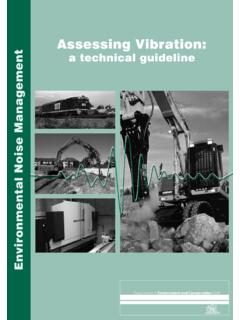
Assessing vibration: a technical guideline
www.environment.nsw.gov.auhuman exposure to whole-body vibration – Part 1: General requirements, and ISO 2631.2–1989, Evaluation of human exposure to whole-body vibration – Part 2: Continuous and shock induced vibration in buildings (1–80 Hz), contain the most recent advances in vibration evaluation.
HEARING AND NOISE IN SOUND AVIATION
www.faa.govHz cannot be perceived by the human ear. Normal conversation takes place in the frequency range from 500 to 3,000 Hz. Intensity. The correlation between sound intensity and loudness. The decibel (dB) is the unit used to measure sound intensity. The range of normal hearing sensitivity of the human ear is between -10 to +25 dB.

Operating Instructions Air Conditioner
www.panasonic.com• The human activity sensor will also scan for area of heat source and movement in a room. Human activity indicator Heat source & movement At left area of the room At right area of the room At centre area or multiple areas of the room. • The unit will determine the heat source & movement hotspot, and automatically adjust horizontal airfl ow

INTERNATIONAL IS0 STANDARD 2631-1
www.saiglobal.comMechanical vibration and shock - Evaluation of human exposure to whole-body vibration: - Part I: General requirements - Part 2: Continuous and shock-induced vibration in buildings (1 to 80 Hz) Annex A forms an integral part of this part of IS0 …