
White Clover Plant Guide - USDA
Department of Natural Resources for this plant’s current status (e.g. wetland indicator values). Weediness . This plant may become weedy or invasive in some regions or habitats and may displace desirable vegetation if not properly managed. Consult your local NRCS Field Office, Cooperative Extension Service office, or state
Download White Clover Plant Guide - USDA

Information
Domain:
Source:
Link to this page:
Documents from same domain
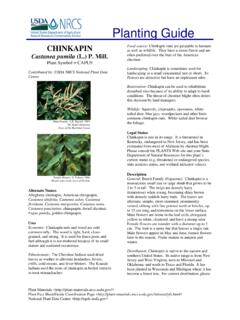
Planting Guide - USDA
www.nrcs.usda.govPlanting Guide Plant Materials <http://plant-materials.nrcs.usda.gov/> ... The Quicksand, Kentucky Plant Materials Center has relocated to Alderson, ...
[Federal Register: August 31, 2007 (Volume 72, …
www.nrcs.usda.gov[Federal Register: August 31, 2007 (Volume 72, Number 169)] ... From the Federal Register Online via GPO Access ... DEPARTMENT OF AGRICULTURE .
Urban Hydrology for Small Watersheds - Home | …
www.nrcs.usda.govNatural Resources Conservation Service Conservation Engineering Division Technical Release 55 June 1986 Urban Hydrology for Small Watersheds TR-55
NATIONAL ENGINEERING HANDBOOK 210-VI …
www.nrcs.usda.govNATIONAL ENGINEERING HANDBOOK 210-VI STRUCTURAL ENGINEERING PART 636 AMENDMENT WY-1 SUBJECT: ENG – CHAPTER 52, “STRUCTURAL DESIGN OF FLEXIBLE CONDUITS” Purpose: To provide all field offices a copy of Chapter 52 and supplemental information
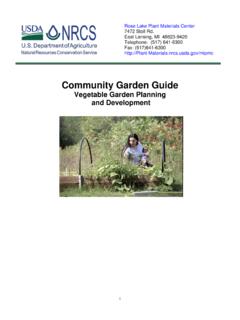
Community Garden Guide - USDA
www.nrcs.usda.gov(You will need a planting guide to determine recommended spacing, depth etc. Contact your extension office if you need a guide.) If you’ve made adjustments to the per person needs in column 2, you can estimate the amount to plant using column 4.
Tillage Equipment - USDA
www.nrcs.usda.govAbout this guide... The purpose of the guide is to help you identify commonly used farm equipment. Its color photos and line drawings will facilitate communication between NRCS and our clients by
Dealing with Difficult People - USDA
www.nrcs.usda.govDifficult People Defined and Explained The Hostile Aggressive The bully that always needs to be right. They tend to be abusive, abrupt, accusatory, intimidating,
Soil Data Viewer 6.2 User Guide - USDA
www.nrcs.usda.govSOIL DATA VIEWER OUTPUT ... relieving the user from the burden of querying the soil database, processing the data and then linking the ... After downloading this ...
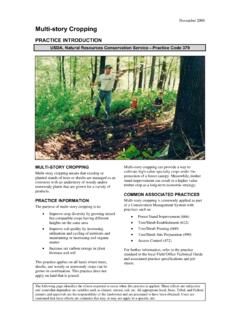
November 2008 Multi-story Cropping - USDA
www.nrcs.usda.govNovember 2008 The diagram above identifies the effects expected to occur when this practice is applied according to NRCS practice standards and specifications.
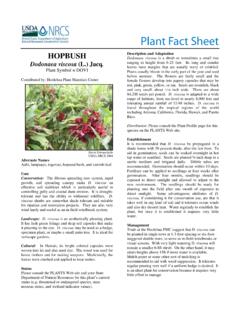
hop bush Plant Fact Sheet - USDA
www.nrcs.usda.govbefore summer. The flowers are fairly small and the female flowers develop into papery capsules that may be red, pink, green, yellow, or tan. Seeds are roundish, black and very small; about 1/16 inch wide. There are about 84,200 seeds per pound. D. viscosa is adapted to a wide range of habitats, from sea-level to nearly 8,000 feet and
Related documents

INVASIVE PLANT SPECIES FACT SHEET Asian Bush Honeysuckle
www.in.govfor invasive species, and remove invasives before they become a problem. If plants can’t be removed, at least prevent them from going to seed. 4. Clean your boots before and after visiting a natural area to prevent the spread of invasive plant seeds. 5. Don’t release aquarium plants into the wild. 6. Volunteer at local parks and natural ...

Wildlife Services Nutria, An Invasive Rodent
www.aphis.usda.govAnimal and Plant Health Inspection Service (APHIS), provides Federal leadership and expertise in managing conflicts between people and wildlife to help protect the Nation’s agricultural and natural resources, property and infrastructure, and public health and safety. Increased populations and ranges of invasive species can harm native ecosystems,
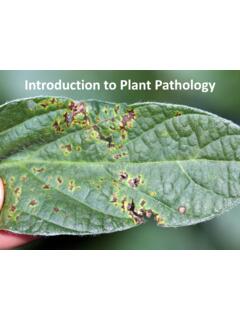
Introduction to Plant Pathology - Integrated Pest …
www.ipm.iastate.edu•Infectious plant diseases are caused by living organisms that attack and obtain their nutrition from the plant they infect. The parasitic organism that causes a disease is a pathogen. Numerous fungi, bacteria, viruses, and nematodes are pathogens of corn and soybean in Iowa. •The plant invaded by the pathogen and serving as its

The disease triangle and the disease cycle
archive.lib.msu.eduthat the plant is considered to be infected. As the pathogen continues to grow between and within cells of the host plant, it can rapidly invade adjacent tissues and organs. It is during this invasive stage that plant symptoms become The disease cycle apparent. Eventually a new batch of spores are produced on and within infected plant tissues.
Queensland biosecurity manual
www.daf.qld.gov.aubiosecurity of Queensland (a biosecurity risk). Biosecurity matter includes, but is not limited to, plant pests and pathogens, invasive animals, animal diseases, and contaminants. The Act defines two types of biosecurity matter: prohibited matter, and restricted matter. Prohibited

Environmental Science
www.usscouts.orgInvasive Species c 1. Learn to identify the major invasive plant species in your community or camp and explain to your counselor what can be done to either eradicate or control their spread. c 2. Do research on two invasive plant or animal species in your community or camp. Find out where the species
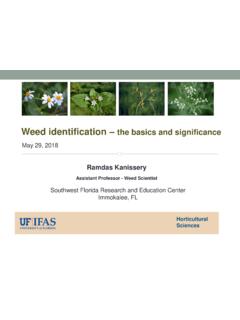
Weed identification the basics and significance
swfrec.ifas.ufl.eduWeed identification – the basics and significance Ramdas Kanissery Assistant Professor - Weed Scientist May 29, 2018 Southwest Florida Research and Education Center Immokalee, FL

Kochia, Bassia scoparia, Plant Guide
www.nrcs.usda.govCaution: This plant is highly invasive. Caution: This plant can be toxic. Uses . Wildlife and Livestock: During early stages of growth, Bassia scoparia is palatable and has high forage value for all classes of livestock and can be hayed or grazed (Everitt et al., 1983; Stubbendieck et al., 2003). Kochia provides cover and the seeds are used as ...