Transcription of 1 Introduction 1 - VKC-Water
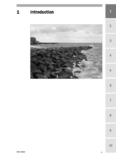
1 CIRIA C683111 IInnttrroodduuccttiioonn1133441100998877 66552211 IInnttrroodduuccttiioonnCIRIA C6832 CCHHAAPPTTEERR 11 Use of rock.. Background to the manual .. Structure of the manual .. Chapters.. Use of the manual .. Target readership and experience .. Scope .. Changes from earlier manuals .. Structure types considered .. Marine structures .. Closure works .. River and canal structures .. References .. UUssee ooff rroocckkCIRIA C683311 IInnttrroodduuccttiioonnThis flow chart shows the links between the technical chapters that follow this introductorychapter.
2 It is repeated at the start of each chapter and expanded to show more detail of thecontents of the relevant chapter. Use it in conjunction with the contents page and the indexto navigate the OOFF RROOCCKKRock is a commonly used construction material in the hydraulic environment. It is used inthe marine and fluvial environments to provide protection against scour and erosion and tolimit wave overtopping and is quarried to produce armourstone, defined as coarse aggregate used in hydraulicstructures and other civil engineering works.
3 This may be produced in masses ranging fromapproximately 1 kg up to 20 30 tonnes. Rock may be employed as an armouring material, asa filter or underlayer, or as a fill armourstone of sufficient size or quality is not available then artificial units (generallyof concrete) may be used. Gabion boxes or mattresses filled with smaller armourstone areanother alternative. Other materials, such as industrial by-products, may also be used insteadof quarried solutions do not generally exist in this field of engineering.
4 To develop a robust,site-specific rock-based solution for a project it is necessary to consider a wide range of issuesincluding materials, environmental conditions, construction methodology, maintenanceregime and health and safety for construction personnel and the general Physical site conditions anddata collection3 Materials9 Construction6 Design of marine structures7 Design of closure works8 Design of river and canal structures10 Monitoring, inspection,maintenance and repair2 Planning and designingrock works 5 Physical processes anddesign tools113344110099887766552211 IInnttrroodduuccttiioonnCIRIA TTOO TTHHEE MMAANNUUAALLIn 1991 CIRIA/CUR published the original manual on the use of rock in coastal and shorelineengineering, commonly referred to as The Rock manual .
5 This was followed in 1995 by theManual on the use of rock in hydraulic engineeringby CUR. Two French reference books wereproduced during the late 1980s: Le dimensionnement des digues talus(EDF-LNH, 1987) andLes Enrochements(LCPC, 1989). Since these books were published there have been manyadvances in the understanding of rock as a material and of the design and behaviour of rockstructures in the hydraulic environment. This new edition of The Rock Manualpresentscurrent good practice for the design and construction of rock structures.
6 Where appropriate,it presents new or emerging technologies that have not, at the time of writing, becomestandard practice, to allow the reader to be fully aware of, and make best use of, the latestresearch findings. Section defines the scope of this updated manual and includes a list ofchanges from the earlier manual has been updated by a principally British, Dutch and French team and hasbenefited from extensive international review to ensure that it provides guidance on currentgood practice worldwide.
7 The manual collates available research data and technicalinformation together with practical experience gained by practitioners. In doing this, carehas been taken to indicate current limitations in the design processes and the extent to whichempirical methods and engineering judgement are full list of acknowledgements to the organisations and individuals who have contributed tothe updating of The Rock Manualis provided at the beginning of this OOFF TTHHEE Introductionexplains the philosophy behind the manual .
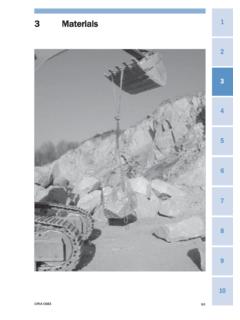
8 The key features of the updateand the structure of the Planning and designing rock worksdiscusses key considerations for a rock project inthe hydraulic environment. This chapter is an important first point of reference in themanual, as it provides an aide memoireof issues that should be addressed. Readers areencouraged to read this chapter before proceeding with other chapters. The contentshave been kept concise and focused to aid Materialsdiscusses the range of issues with regard to armourstone and other materialselection, including concrete armour units.
9 The chapter considers source evaluation,properties, performance prediction, quarry yields and quarry operations. It describesthe various testing methods to determine rock and armourstone properties. It cross-references to the European armourstone specification EN Physical site conditions and data collection describes how to derive hydraulic,geotechnical and ice conditions and summarises data collection. Designers can use thischapter as the starting point for design, but it is also relevant to contractors andsuppliers who need information on environmental conditions for Physical processes and design toolspresents design methods for rock structures in bothmarine and fluvial environments.
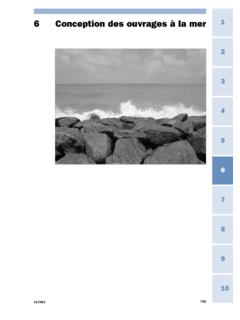
10 It covers hydraulic performance, structural stabilityand geotechnical behaviour. The hydraulic and geotechnical parameters derived inChapter 4 and the material characteristics derived from Chapter 3 are the key inputs tothis SSttrruuccttuurree ooff tthhee mmaannuuaallCIRIA C68356 Design of marine Design of closure works. See Design of river and canal 6, 7 and 8 provide practical guidance for the design of different types ofstructure. These chapters take the outputs from the design methods in Chapter 5 andprovide guidance for the geometry (plan layout, cross-section) and structure detailstaking into account the constraints that exist, such as buildability and access (discussed inChapter 9), availability of resources (discussed in Chapter 3) and maintenance (discussedin Chapter 10).