Transcription of ECHO 720 Agricultural Fungicide - cdms.net
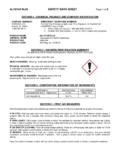
1 ECHO 720 Agricultural Fungicide Revision: December 29, 2016 Page: 1/8 SECTION 1: PRODUCT AND COMPANY IDENTIFICATION Product identifier Chemical Name 1,3-Benzenedicarbonitrile, 2,4,5,6-tetrachloro Trade Names ECHO 720 Agricultural Fungicide CAS No. 1897-45-6 EPA Identification Number EPA Reg. No. 60063-7 Relevant identified uses of the substance or mixture and uses advised against Identified Use(s) Fungicide Uses Advised Against Do NOT aerosolize or atomize to produce inhalable-size particles. Details of the supplier of the safety data sheet Company Identification Sipcam Agro USA, Inc.
2 2525 Meridian Parkway, Suite 350 Durham, NC 27713 United States of America Telephone (919) 226-1195 Emergency telephone number Emergency Phone No. CHEMTREC 24 hr. 1-800-424-9300 / 1 (703) 527-3887 (Collect calls accepted) SECTION 2: HAZARDS IDENTIFICATION Classification of the substance or mixture OSHA HCS (29 CFR ) Acute Tox. 2; Eye Dam. 1; Carc. 2; STOT SE 3 Label elements This chemical is a pesticide product registered by the United States Environmental Protection Agency and is subject to certain labeling requirements under federal pesticide law. These requirements differ from the classification criteria and hazard information required for safety data sheets (SDS) and for workplace labels of non pesticide chemicals.
3 The labeling information below applies to non-pesticide workplace labels. For pesticide label information, refer to Section 15. Hazard Symbol(s) Signal Word(s) DANGER Hazard Statement(s) Fatal if inhaled (Aerosol / Mist). Causes serious eye damage. Suspected of causing cancer. May cause respiratory irritation (Aerosol / Mist). SAFETY DATA SHEET OSHA HCS (29 CFR ) ECHO 720 Agricultural Fungicide Revision: December 29, 2016 Page: 2/8 Precautionary Statement(s) Obtain special instructions before use.
4 Do not handle until all safety precautions have been read and understood. Do not breathe dust/mist/spray. Wear protective gloves/protective clothing/eye protection/face protection. Use of high-pressure spray may cause toxic aerosols. Use only outdoors or in a well-ventilated area. In case of inadequate ventilation wear respiratory protection. Wash hands and exposed skin after use. Contaminated work clothing should not be allowed out of the workplace. IF IN EYES: Rinse cautiously with water for several minutes. Remove contact lenses, if present and easy to do. Continue rinsing. Get immediate medical advice/attention.
5 IF ON SKIN: Wash with plenty of soap and water. If skin irritation or rash occurs: Get medical advice/attention. IF INHALED: Remove person to fresh air and keep comfortable for breathing. Immediately call a POISON CENTER or doctor/physician. IF SWALLOWED: Call a POISON CENTER or doctor/physician if you feel unwell. Treat symptomatically. Other hazards May cause an allergic skin reaction. Very toxic to aquatic life. Very toxic to aquatic life with long lasting effects. Additional Information None SECTION 3: COMPOSITION/INFORMATION ON INGREDIENTS Composition/information on ingredients %W/W CAS No.
6 Hazard Statement(s) Chlorothalonil 54 1897-45-6 Acute Tox. 2; H330 Eye Dam. 1; H318 Carc. 2; H351 STOT SE 3; H335 Aquatic Acute 1; H400 Aquatic Chronic 1; H410 Propylene glycol < 5 57-55-6 Not classified as dangerous for supply/use. Additional Information Contains trace amounts of Hexachlorobenzene, (CAS# 118-45-6) SECTION 4: FIRST AID MEASURES Description of first aid measures Inhalation Remove person to fresh air and keep comfortable for breathing. Immediately call a POISON CENTER or doctor/physician. Skin Contact Wash with plenty of soap and water. If skin irritation or rash occurs: Get medical advice/attention.
7 Take off contaminated clothing and wash it before reuse. Eye Contact Rinse cautiously with water for several minutes. Remove contact lenses, if present and easy to do. Continue rinsing. Get immediate medical advice/attention. ECHO 720 Agricultural Fungicide Revision: December 29, 2016 Page: 3/8 Ingestion Not normally required. Call a POISON CENTER or doctor/physician if you feel unwell. Treat symptomatically. Most important symptoms and effects, both acute and delayed Fatal if inhaled (Aerosol / Mist).
8 Causes serious eye damage. May cause an allergic skin reaction. Indication of any immediate medical attention and special treatment needed IF INHALED: Immediately call a POISON CENTER or doctor/physician. SECTION 5: FIRE-FIGHTING MEASURES Extinguishing Media -Suitable Extinguishing Media Extinguish with carbon dioxide, dry chemical, foam or water spray. -Unsuitable Extinguishing Media Do not use water jet. Special hazards arising from the substance or mixture Combustion or thermal decomposition will evolve toxic and irritant vapours. Forms oxides of carbon and nitrogen, also chlorine and chlorinated compounds.
9 Decontaminate equipment or materials used in pesticide fires. Advice for fire-fighters Fire fighters should wear complete protective clothing including self-contained breathing apparatus. SECTION 6: ACCIDENTAL RELEASE MEASURES Personal precautions, protective equipment and emergency procedures Do not get in eyes. Avoid contact with skin. Do not breathe dust/mist/spray. Wear protective gloves/protective clothing/eye protection/face protection. Environmental precautions Prevent substance entering sewers. Methods and material for containment and cleaning up Cover spills with inert absorbent material.
10 Transfer to a container for disposal or recovery. Collect spillage. Wash the spillage area with water. If possible prevent water running into sewers. Reference to other sections None Additional Information None SECTION 7: HANDLING AND STORAGE Precautions for safe handling Do not handle until all safety precautions have been read and understood. Do not get in eyes. Avoid contact with skin. Do not breathe mist/spray. Wear protective gloves/protective clothing/eye protection/face protection. Use only outdoors or in a well-ventilated area. In case of inadequate ventilation wear respiratory protection.