Transcription of NPUAP Staging System for PU
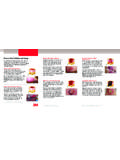
1 National Pressure injury Advisory Panel ( NPUAP ) Staging System for Pressure Injuries (Updated 2016) deep Stage I Stage II Stage III Stage IV Unstageable tissue injury Reproduction of the National Pressure injury Advisory Panel ( NPUAP ) materials in this document does not imply endorsement by the NPUAP of any products, organizations, companies or statements made by any organization or company. Descriptions deep tissue injury Persistent non-blanchable deep red, maroon, purple discoloration Intact or non-intact skin May present as a blood filled blister Pain and temperature change often precede skin color change With appropriate interventions, may resolve without tissue loss.
2 Otherwise, may quickly evolve into an open injury Stage I Persistent non-blanchable erythema (redness) Intact skin Blanchable erythema or changes in skin sensation, temperature or firmness may precede skin color change With appropriate interventions, may resolve without tissue loss. Otherwise, may evolve into an open injury Stage II Loss of the epidermis with partial thickness loss of the dermis Shallow open injury with a moist red/pink wound bed Includes intact or open/ruptured serum-filled blister Stage III Loss of the epidermis and dermis.
3 Subcutaneous fat may be visible but bone, tendon, cartilage, ligament, fascia or muscle are not exposed or directly palpable Slough may be present but does not obscure the depth of tissue loss May include undermining and tunneling Depth varies by anatomical location: Shallow on bridge of the nose, ear, occiput and malleolus Extremely deep in areas like the buttocks Stage IV Loss of the epidermis and dermis with exposed (or directly palpable) bone, tendon, cartilage, ligament, fascia or muscle Slough or eschar may be present on some parts of the wound bed Often include undermining and tunneling The depth of a stage IV pressure injury varies by anatomical location Unstageable Full thickness skin and tissue loss in which the base of the injury is obscured by slough and/or eschar Until enough slough and/or eschar is removed to expose the base of the wound, the true depth, and therefore stage, cannot be determined Stable (dry, adherent, intact without erythema or fluctuance)
4 Eschar on the heels serves as "the body's natural (biological) cover" and should not be removed Medical Device Related Pressure injury Pressure injury directly related to the use of a medical device, a blood pressure cuff, compression stockings, nasogastric tube, oxygen tubing, etc. injury usually closely mirrors the shape of the offending device Staged using the NPUAP Staging System Mucosal Membrane Pressure injury Pressure injury on a mucous membrane, usually caused by a medical device Due to the anatomy of the tissue , these injuries cannot be staged using the NPUAP Staging System