Transcription of Simple receive only loop antenna constructed by …
1 Simple receive only loop antenna constructed by Phil VK5 SRP Page 1 The first article is by Thomas (PA1M) and is on this web site at: With acknowledgements to the original design by John (G8 CQX) upon which this antenna is based An improved design from G8 CXQ has been published by Des (M0 AYF) with additional protection while transmitting using an additional relays. It looks like the original inspiration for this design came from an article in the "Technical Topics" column of the June 1986 edition of "RadCom" (The monthly publication). To quote from Thomas - Living in a nice neighbour hood with neighbours is mostly very fine but mostly not when you are a Ham operator. There are many plasma televisions and other devices nearby which give a lot of noise on especially the lower Ham bands. At my QTH reception on the low ham bands and especially AM on Medium Wave is dramatic.
2 As a result I need reception antennas which are less susceptible to these noises. Loop antennas (magnetic) are known to accomplish this. So I build this Simple active receive loop antenna to see if they work and they do. The noise has reduced a lot and listening to the low bands is not annoying any more. As constructed by Phil, VK5 SRP I have designed a circuit board for the amplifier and three different boards for shack interfaces to supply the 12 Volt DC over the coax cable. Will add more details of these when I have finalised the designs, they are still only at the prototype stage. The antenna should be built in an IP65 sealed junction box. The original designs used 10mm by 1mm aluminium strip but I found the local hard ware shops have 3 Metre lengths of 25mm by 3mm and this makes a look with a finished diameter of about 950mm. Quoting from the original article:- The antenna works well with a pair of BC547B.
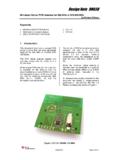
3 Many local noises on the wire antennas are not heard and stations hard to hear on medium wave can be heard again. Much less man-made noise is heard which makes stations hard to hear on my wire antennas. Stations on the low bands can be heard again. Using a rotator below the loop antenna gives the possibility to null some sources of interference. As the diameter of the loop used is rather small the signals are not very loud. The BC547 transistors are of course are limited in their HF performance and it is amazing they work as well as they do. I have used 2N2222 devices but 2N5109, Philips BFW16A or 2N3688 would also be a better choice. I also suggest heat sinking the transistors. Here is a photo of the prototype loop with a paper circuit board taken before I made the first prototype board. The amplifier board is now up to its fifth version. Simple receive only loop antenna constructed by Phil VK5 SRP Page 2 The schematic below is based on the 1984 design of John G8 CXQ (G4 UAZ) Simple receive only loop antenna constructed by Phil VK5 SRP Page 3 An improved design from G8 CXQ has been published by Des (M0 AYF) with additional protection while transmitting using an additional relay.
4 Simple receive only loop antenna constructed by Phil VK5 SRP Page 4 While nothing can protect the antenna from a direct lightening strike the open relay contacts do offer some protection from surges caused by nearby thunderstorms. The loop can also have a gas discharge device connected across its terminals providing a second line of defence against surges. These are available from Element14. Transformer (T1) serves a dual function of both RF transformer and choke. Because most of the local QRM is thought to be due to conducted and radiated emissions from the mains wiring the antenna is out in the garden, as far away from the local noise sources as possible. The signal is fed back to the shack via 75 Ohm RG59 coax only because I have a lot of it and will not use it for anything else. The same coax provides a +12 Volts DC supply from the shack to power the loop amplifier.
5 The supply unit to feed power down the coax follows standard practice except for the optional inductor L2 which is to prevent surges or DC from entering the receiver antenna input in the event of the DC blocking capacitor (C1) failing. If such a failure should occur then L2 would provide a low resistance path for the supply to ground blowing the fuse and protecting the receiver input from damage. In normal operation the inductive reactance of L2 is high enough such that it will not effect the passage of signals to the receiver. 2 MHz high pass filter I also included an optional 2 MHz low pass filer in one of the interface boxes and this can be selected or bypassed using header pins and the jumpers used on computer boards. This was designed with the aid of an application on Ian Purdie's Introduction to high pass filters - and an on-line calculator from WA4 DSY: In a comment by John (G8 CQX), he pointed out that If you keep the collector resistors high and double the supply voltage you might find it works better as the increased open loop voltage gain will increase the feedback and reduce the input impedance further improving the linearity of the amplifier.
6 Comment from VK5 SRP - The only problems with this solution is the higher supply voltage is not easily available in most radio shacks as modern equipment operates from 12 volt and it is very convenient to use a 12 Volt battery supply trickled charged, and the extra collector dissipation may be a problem. Simple receive only loop antenna constructed by Phil VK5 SRP Page 5 In particularly difficult circumstances, like a small building allotment or apartment dwelling, RFI from neighbouring properties and your own will give rise to an unacceptable noise level much of the time. I suggest try a vertical antenna for transmit and a receive only broad band loop like this one for receive . If you wish to work the 160M band then a vertical transmit antenna of metre with a suitable ground plane will work well. The ground plane may simply be the roof of a veranda or shed or several wires radiating out from the mounting base of the antenna .
7 If the 160M band is not required then the vertical antenna can be shorter. I have a similar vertical antenna set up at my QTH and it is tuned with an SGC Auto Tuner but a Simple manual tuner could also be used. Here is a Simple PCB for the interface circuit included in this document. It has provision for the low pass filter and the jumpers to connect it in or out. This is to be used if you only intend to use this antenna with receivers, not transceivers. See the low pass filter circuit for the component values. The RF choke is L2 mentioned above. To automate the antenna change over you will need to find where your rig provides a PTT control line but a quick read of the manual for the rig should shed light on that. The components are as indicated in the circuit of the Loop Amplifier Supply. If you would like Sprint PCB ver 6 files for these boards email me at: Simple receive only loop antenna constructed by Phil VK5 SRP Page 6 As an alternative you could construct this Simple circuit and let the transmit RF do it for you.
8 Simple receive only loop antenna constructed by Phil VK5 SRP Page 7 I have added 100uH RF chokes bypassed by capacitors from the supply line to the collector resistors of the two transistors and 100K resistors to dissipate any static on the loop.