Transcription of NEW LOGIC RESEARCH Application V SEP Filtration …
1 V SEP .. A New Standard in Rapid SeparationApplication NoteNEW LOGIC RESEARCHO verviewNew LOGIC has developed a uniquemembrane Filtration system for treatmentof all types of glycol based fluids. Theobjective is to recover as much glycolas possible and to remove contaminantsand particulates added by usage. Theprocess involves use of New LOGIC sproprietary V SEP (Vibratory ShearEnhanced Process) vibrating membranefiltration have many uses includingaircraft deicing, automobile anti-freeze,and manufacturing quenchants.
2 They arealso used in chemical processes to makeresins, plasticizers, solvents, inks,surfactants, and many other consumergoods. In all cases, the V SEP processcan be used to purify and recover thespent or processed glycol up of Glycol Deicing FluidThere are three main kinds of glycoldeicing fluids. These are ethylene glycolmonoethyl ether (EGME), diethlyleneglycol monoethyl ether (DiEGME), andpropylene glycol (PEG). Ethylene glycolis the most popular form of deicing fluidon the market. These are the samecompounds used in conventional radiatoranti-freeze for automobiles.
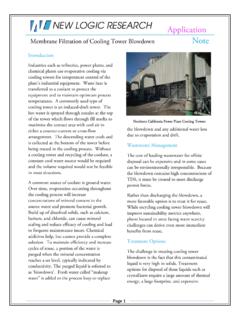
3 ADF(Aircraft Deicing Fluid) is supplied inconcentrated form and containsapproximately 88% by weight fluid has a true freezing point ofapproximately -65 C. ADF Concentratemust be mixed with the proper amountof water to create a solution for thedesired freezing point. Measuring theliquid s refraction can effectively monitorthe freezing point of the solution. Themagnitude of the refraction is related tothe concentration of ethylene glycolcontained in the solution. ADF willcontain a number of chemical additivesincluding surfactants for surface wettingADF (Aircraft Deicing Fluid) is applied hot by high pressure washingto melt and remove ice, snow, and frost fromthe airplane surfacesV SEP Filtration for Glycol RecoveryA cost-effective and energy efficient processing solutionand biocides.
4 One other component ofaircraft deicing fluid is the corrosioninhibitor methylbenzotriazole, (MeBT),which is toxic to fish, algae, and bacteria,and under certain conditions DeicingIn less sophisticated airports creativemeans of getting snow and ice offairplanes are used. Some use brooms,squeegees, and rope on the fuselage. Thereason for de-icing planes is that frost andsnow can affect flight control gear. Also,the lift a plane needs to get off the runwaycan be affected as even small amounts ofroughness caused by ice, snow, or frostcan disrupt airflow over the wing surfacesreducing the amount of airports in areas subject to freezingtemperatures use an anti-freeze materialthat is sprayed onto the plane just priorto take-off.
5 The fluid contains wettingagents that facilitate the uniform wettingand spreading of aqueous dilutions of thefluid on the aircraft surfaces when usedin accordance with appropriateapplication procedures. Thoroughcoverage of aircraft surfaces by thedeicing fluid is necessary to eliminate allfrozen accumulations and prevent thefreezing of residual fluid on aircraftsurfaces. An orange dye is added to thefluid to act as a visual aid, assisting theapplication and detection of the fluid onaircraft surfaces.
6 Although some airportsutilize collection and treatment systems,the majority of ADF used is released intothe RegulationAs a result of governmental regulationand the inadequacies of existingconventional treatment methods, aircraftdeicing fluid wastewater has become bothan economic and environmental liabilityfor airports throughout the US andCanada. About 200 to 600 million gallonsof spent aircraft deicing fluid containing1 to 35 vol% glycol are generated per yearat over 1,500 airports throughout the SEP .. A New Standard in Rapid SeparationApplication NoteNEW LOGIC RESEARCHand Canada today.
7 The EPA has classifiedthis material as a regulated industrialprocess wastewater under the NPDES 40 CFR Part 122. As a result, disposal ofspent deicing fluid has become both anenvironmental and economic liability andvery few airports today have successfullyfulfilled the requirements set forth by theEPA. One of the most importantenvironmental issues facing manyairports is the runoff and consequentialcontamination of waterways from glycolpollution. In March of 1992, US Air flight407 crashed on takeoff at New York sLaguardia Airport during a winter stormdue to inadequate the aftermath, the Federal AviationAdministration (FAA) imposed morestringent requirements on deicingactivities in order to increase the marginof safety for aircraft operating duringwinter conditions.
8 These revised FAAprotocols (14 CFR part 121) increased thequantities of deicer used by , this increase has led togreater levels of deicer in the is sprayed on aircraft to keep themfrom icing up before takeoff and earlyentry into the atmosphere. Without propercontainment, glycol flows into drainsystems and into local waterways. Thisis where the damage is done. Even withelaborate containment systems, wind canblow the hot mist out of bounds where itcan escape. Glycol breaks down veryquickly and doesn t present a threat towater treatment for humans.
9 Whereglycol can be damaging is during thedegradation process where it consumeslarge quantities of oxygen. This robs localfish arid plant life of essential other proven alternative for glycolbased deicing fluid is of airport stormwaterdischarges containing deicing fluids hasbeen, and currently is, a focus of severalstate regulatory actions (EPA-bulletin-March 99). With the increase of federalsafety regulations regarding glycol,airports are forced to spend millions ofdollars to trap, treat and release glycol-free fluids into the remedial technology in this areais bulky, expensive and barbaric at acceptable forms of natural orchemically produced compounds havebeen developed to lessen the effects ofglycol before it hits the waterways.
10 Agreat deal of study is being done to finda Best Practices technology for deicingwastewater associated with conventionaldeicing fluid technology treatmentsAerobic Digester -The glycol cannot be recovered. Thetypical Aerobic Digester treatmentsystem includes the construction of a flowrouting structure (to segregate dilute andconcentrated deicing flows), three 2million gallon aerobic treatment lagoons,and two 62,000 gallon steel storage deicing fluid flows are treated inthe lagoons to meet permit limits prior todischarge to the POTW or local -This can be an effective means ofrecycling the glycol.