Transcription of Neptune Reading Comprehension - tlsbooks.com
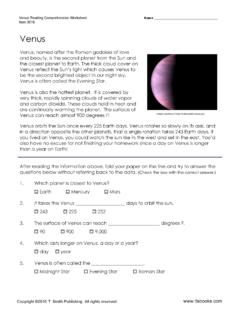
1 Neptune Reading Comprehension WorksheetItem Neptune Neptune , named after the Roman god of the sea, is a large gas planet and is the eighth, and farthest, planet from the Sun. Scientists believe the atmosphere of Neptune is made up of hydrogen, helium, silicates, and water. Neptune is surrounded by clouds moving up to 700 mph. Some of the clouds are composed mostly of frozen methane, giving Neptune its blue color. Neptune rotates on its axis in hours and takes Earth years to orbit the Sun. Neptune has thirteen natural satellites (moons) and six rings. The rings of Neptune consist mostly of dust. Triton is Neptune s largest moon and orbits the planet in a direction opposite to Neptune s other moons. Triton orbits Neptune once every six days. Triton was the last solid object visited by NASA's Voyager 2 spacecraft as it made its way toward the edge of our solar system. After Reading the information above, fold your paper on the line and try to answer the questions below without referring back to the data.
2 (Check the box with the correct answer.) rings of Neptune consist mostly of _____? water ice many moons does Neptune have? thirteen thirty thirty-six frequently does Triton orbit Neptune ? every 16 hours every 6 days every 164 years gas do scientists believe contributes to Neptune s blue color? methane hydrogen is surrounded by fast moving _____. spacecraft debris cloudsImage courtesy of Copyright 2010 T. Smith Publishing. All rights Reading Comprehension Worksheet Answer KeyItem Neptune , named after the Roman god of the sea, is a large gas planet and is the eighth, and farthest, planet from the Sun. Scientists believe the atmosphere of Neptune is made up of hydrogen, helium, silicates, and water. Neptune is surrounded by clouds moving up to 700 mph. Some of the clouds are composed mostly of frozen methane, giving Neptune its blue color.
3 Neptune rotates on its axis in hours and takes Earth years to orbit the Sun. Neptune has thirteen natural satellites (moons) and six rings. The rings of Neptune consist mostly of dust. Triton is Neptune s largest moon and orbits the planet in a direction opposite to Neptune s other moons. Triton orbits Neptune once every six days. Triton was the last solid object visited by NASA's Voyager 2 spacecraft as it made its way toward the edge of our solar system. After Reading the information above, fold your paper on the line and try to answer the questions below without referring back to the data. (Check the box with the correct answer.) rings of Neptune consist mostly of _____? water ice ; many moons does Neptune have?; thirteen thirty thirty-six frequently does Triton orbit Neptune ? every 16 hours ; every 6 days every 164 years gas do scientist believe contributes to Neptune s blue color?; methane hydrogen is surrounded by fast moving _____.
4 Spacecraft debris ; cloudsImage courtesy of Copyright 2010 T. Smith Publishing. All rights reserved.